
COP30, agreement signed without fossil fuel plan
The agreement was reached by consensus but avoids naming fossil fuels, despite pressure from the European Union and more than eighty countries

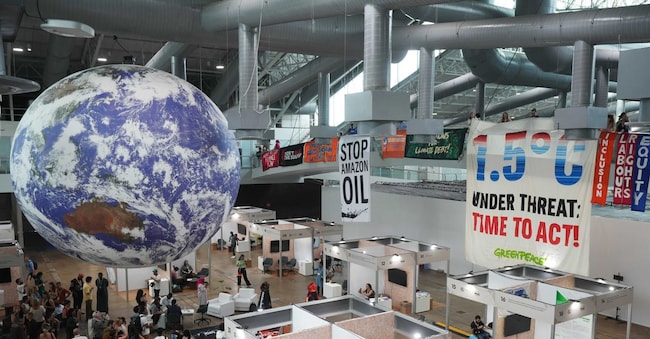
In Belém, in the dense heat of the Amazon, when the gavel of the COP30 president André Corrêa do Lago banged on the wood, the plenary exploded in relieved applause. After two weeks of gruelling negotiations,the almost two hundred countries present adopted by consensus an agreement that is intended to mark a new chapter in the fight against global warming. But behind the celebration a clear feeling has remained suspended: diplomacy has kept the multilateral process alive, but the substance of the agreement remains far from the level of ambition invoked by science and a large part of the international community. This is demonstrated by the fact that, despite the efforts of the European Union and more than eighty countries, no reference to fossil fuel phase-out appears in the final text.
The heart of the agreement is contained in the 'Global Mutirão decision', a document that explicitly recognises the inadequacy of current policies to maintain the +1.5°C target. In response to this gap, the Brazilian presidency has introduced a new voluntary initiative dedicated to accelerating the implementation of national commitments, aiming to close the gap between what countries declare and what they actually do. This is flanked by the 'Belém Mission to 1.5', an institutional pathway to help governments and technical bodies operationalise their emission reduction pledges. These are instruments designed to give concrete form to an agenda that, at least on paper, remains oriented towards climate stabilisation. But neither, inevitably, unravels the political knot of the energy transition.
It was precisely on this issue that the hardest battle was fought. The European Union had clearly announced that it would not accept a text without an explicit reference to the need to move beyond oil, gas and coal. Its negotiators, together with a broad coalition of vulnerable countries and states in favour of rapid decarbonisation, insisted to the last to include a sentence that would chart a clear path away from fossil fuels. But the resistance of the big producers - led by Saudi Arabia, Russia, India and other members of the bloc that sees the transition as an economic and political risk - was impenetrable. Already in the penultimate draft the strongest wording had been removed, triggering formal protests from island nations and groups of countries dependent on the survival of coastal borders.
In the end, Brussels gave in. Faced with the real risk that the entire negotiation would collapse, many European diplomats admitted, albeit with frustration, that a weak agreement was preferable to a no deal. The failure to get a word in edgewise - 'fossils' - showed a crucial truth of the multilateral process: without consensus, no progress is possible, and the need to include economies that base their wealth on hydrocarbons continues to impose tight limits on collective ambition.
On the climate finance front, the compromise was equally delicate.The final text calls for a tripling of global adaptation funding by 2030, compared to 2025 levels. This is an important political goal, but it does not contain binding figures or define a burden sharing. Estimates circulated during the COP, which quantified this tripling at around $120 billion annually, were not included in the decision. A political difference even before the technical one: many vulnerable countries pointed out that without measurable commitments the risk is to be faced with another ambitious target on paper but lacking real implementation mechanisms. Moreover, the year set - 2030 - marks an acceleration compared to the drafts circulated in previous days, but it still comes late compared to the most pressing demands of the global South.


