
Cop30 towards final declaration. Guterres' call for a balanced agreement
A short circuit interrupted the work of Cop30 as Guterres urges flexibility to overcome divisions over funding and abandoning fossil fuels.
Key points
- The nightmare of an impasse just hours before the end of the summit
- Flexibility and political will to deliver on commitments
- The first text speaks of a shared 'roadmap'
From our Belem correspondent
Flames and fear. The fire that broke out yesterday afternoon at the Cop30 in Belem generated panic, tension and 13 intoxicated people. A simple short circuit in a pavilion overshadowed the penultimate day of work. Today the final stages of the Summit.
The Cop30 presidency and the UN climate secretariat 'are currently working closely together to finalise a plan for the resumption of COP activities, which will focus on negotiations, once the venue has been thoroughly assessed and deemed completely safe by fire and health authorities'. This was announced by the organisers of Cop30 in Belem to the participants of the climate conference after the fire that led to the evacuation of the Blue zone.
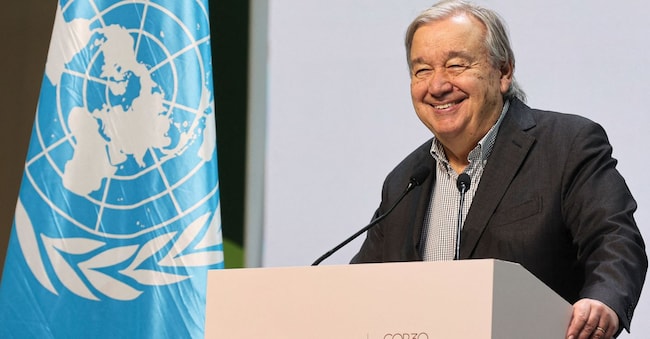
In recent hours, Brazilian President Lula da Silva and UN Secretary General Antonio Guterres have worked in tandem to give strength to today's declaration. Guterres, urged the representatives of the countries gathered at Cop30 in Belém to reach a 'balanced' agreement to overcome the stalemate in negotiations on increased funding for climate change initiatives and on the roadmap for phasing out fossil fuels.
Guterres called an understanding 'possible' and stressed that it is 'too early to talk about failure', despite the lack of progress on the most controversial issues. According to the Secretary-General, a compromise can emerge if developed countries commit to increasing financial flows, reiterating support for the developing countries' request to triple the resources allocated to initiatives. The Secretary-General added that the demand of advanced economies for a faster cut in fossil fuel emissions, the main cause of global warming, must also be met and welcomed the 'growing number of countries' in favour of an accelerated energy transition. The first negotiating text proposed by Brazil includes the hypothesis of a 'roadmap' to move beyond fossil fuels, an option contested by a group of oil producers. In the face of disagreement, Guterres called for 'flexibility' and 'political will' to keep the goal of limiting temperature rise to within 1.5 degrees alive. "No delegation will leave with everything it wants," he warned.

