The Antalya Summit

COP31 hits a snag over fossil fuels. The EU is leading the push for a ‘phase-out’, in opposition to Saudi Arabia, Russia and India

The political agreement has fallen through after two days of extra negotiations. For Europe, the red lines were progress on the gradual phase-out of oil, gas and coal, and the defence of science. China took a back seat (the US did not participate). This is another blow to multilateralism, though it does not nullify the commitments already agreed at previous summits, nor the Paris Agreement

by Gianluca Di Donfrancesco

Aggiornato il 22 novembre 2026, ore 17:05

Aggiungi Il Sole 24 Ore
ai preferiti su Google
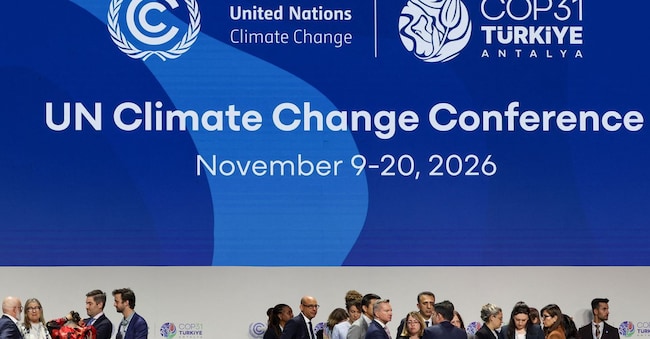
La plenaria della Cop31) ad Antalya in Turchia (REUTERS) REUTERS

5' min read

Translated by AI
Versione italiana

5' min read

Translated by AI
Versione italiana

No political agreement was reached at COP31 in Antalya. The European Union rejected the proposed framework decision, which did not even mention fossil fuels – the main cause of climate change. During the plenary session, Darragh O’Brien, the Irish Minister for Climate, foreshadowed the rejection by speaking even before the document was put up for debate. Ireland currently holds the rotating presidency of the EU Council.

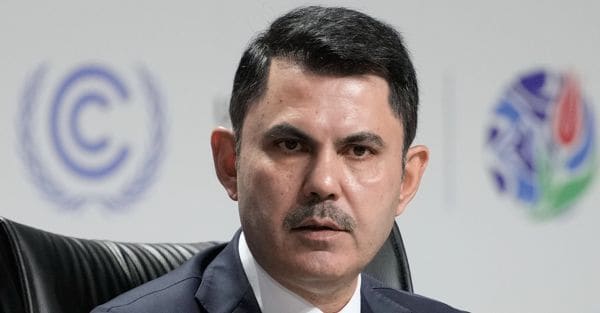
The Turkish COP President, Murat Kurum, presented the document – which was subsequently rejected – assuring that no one would ‘get everything they wanted’, but that everyone would be able to find something in it. Clearly, this is not the case. Saudi Arabia, Russia and the oil-producing states managed to block any explicit reference to phasing out fossil fuels. Over a hundred countries were calling for this and refused to back down.

Loading...

Time to say no

Irish Minister O’Brien stated in the plenary session that the European Union does not ‘accept a decision that fails to take science into account, that ignores the implementation gap and that risks widening the gap between global commitments and the actions needed to bring the 1.5-degree target back within our reach’, the safety threshold set out in the Paris Agreement and which has now been exceeded. Based on the policies implemented by governments around the world, we are heading towards a temperature rise of 2.8 degrees by the end of the century, according to UNEP.

For these reasons, “we will not endorse a token decision or an Antalya agreement that does not even mention fossil fuels. Nor will we accept a return to the past, or a COP that engages in greenwashing,” said O’Brien. He added: “The draft framework decisions presented to us do not address the climate emergency in the slightest; therefore, the European Union cannot accept them.” These points were reiterated by Commissioner Wopke Hoekstra when the discussion on the framework decision began.
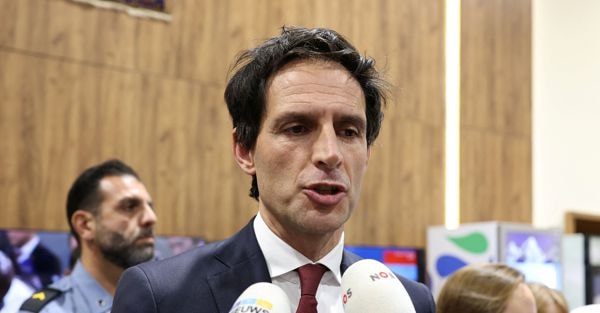
Il commissario Ue per il Clima, il target Net Zero e la crescita pulita, Wopke Hoekstra alla Cop31 di Antalya (REUTERS)

Panama’s statement was extremely harsh; in recent days, it had denounced the ‘oil mafia’. Meanwhile, the Marshall Islands ask: ‘Are we so out of touch with reality that we are taking steps backwards, just as the climate crisis threatens to overwhelm us?’
The group of least developed countries (the 44 countries known by the acronym LDCs) also rejected the text.

On the Fossil Line

Saudi Arabia and India have taken refuge behind their historical greenhouse gas emissions, shifting the blame for global warming onto developed countries. Riyadh has also returned to defending the potential (though, for now, science-fiction-like) technologies for carbon capture and storage, which have always been the solution championed by the fossil fuel industry. And, incredibly, it has levelled the accusation at Europe of cherry-picking the solutions it prefers from among those examined by science to eliminate and offset polluting emissions. Carbon capture and storage (CCS) will play a role, but a marginal one, limited to sectors that cannot avoid generating emissions (hard-to-abate).

Russia has criticised the European CBAM, which other countries also regard as a full-fledged tariff. It serves to level the playing field in international competition for European companies covered by the ETS.

China’s response was succinct: it has already decided on its transition, driven by a desire for power – it needs this to reduce its dependence on energy imports and dominate green technologies.

Il presidente della Cop31, Murat Kurum (AP)

The Turkish COP President, Kurum, who, in a fit of nervousness, cut off Ghana’s Environment Minister, tried to bring the discussion to a premature close in order to put a stop to the exchange of accusations. He was unsuccessful in this too.

Loading...

After hours of cross-fire between the parties and criticism of his handling of the situation, Kurum stepped down from the chair, leaving it to Elchin Allahverdiyev of Azerbaijan to announce the surrender. ‘Unfortunately, we have been unable to reach agreement on a framework decision. And that is disappointing, very disappointing,” said Australia’s Chris Bowen, co-chair of the negotiations at this unusual dual-chair conference. For Turkey, it is a blow: no ambitious Antalya Pact; it will remain tied to a ‘failed’ COP.”

What remains of the trial

COP31 managed to make only marginal progress on the less controversial issues.

“This year, some countries have drawn a line in the sand and refused to settle for the lowest common denominator, just for the sake of it,” commented Linda Kalcher, director of the Strategic Perspectives think tank and a COP veteran.

According to the Italian think tank Ecco, ‘negotiations on the political text have failed, but climate action continues in the real economy’: around 80 countries support the target of increasing the share of electricity in global energy consumption to 35 per cent by 2035, a proposal that Turkey had hoped to include in the final package, which was subsequently dropped.

In Copenhagen in 2009, too, divisions between developed and developing countries prevented a far-reaching agreement, but that failure laid the foundations for the Paris Agreement six years later.

Furthermore, the failure to reach a political agreement in Antalya does not spell the end of the COP conferences, nor does it remove the technical and legal frameworks governing multilateral action against climate change, nor does it nullify the obligations agreed at previous conferences. For example, the commitment to a ‘transition’ away from fossil fuels signed in Dubai in 2023. Whatever that may mean.

Inside and outside the COP

“COP31 cannot be viewed in isolation from what is happening in the world”, including wars and the energy crisis, emphasised Ilana Seid, Palau’s ambassador to the UN and chair of the Alliance of Small Island States. And conflicts and rising oil and gas prices certainly did feature at the Antalya conference.

It is, however, yet another blow to multilateralism, which is being undermined by the corrosive influence of sovereignty at every level. And it is a betrayal of the expectations of the younger generations.

The energy transition requires a transformation of economies’ production and consumption patterns, of people’s ways of life, and of their mindset. This is a momentous shift, necessitated by the severity of the climate crisis. It requires awareness, cooperation and a fair process that cushions the impact of this transformation, without leaving any countries, industrial sectors or people behind. And it requires political will.

Low-income countries, already burdened by debt and struggling to tackle poverty, are finding it difficult to secure the resources needed for mitigation (reducing greenhouse gas emissions) and adaptation (prevention and response to extreme weather events). The same applies to many emerging and developing countries. This is where aid from advanced economies and the private sector, in the form of climate finance, should come into play. Yet even on this front, efforts fall short. For developing countries, this was supposed to be the ‘COP of implementation’, particularly with regard to this aspect, which has instead been pushed into the background, overshadowed by the clash over oil, gas and coal. The EU had ruled out any new climate funding even before the negotiations began.

Renewables are growing within the global energy mix, partly thanks to substantial Chinese investment. The trend is not strong enough to drastically cut greenhouse gas emissions and curb global warming. However, even if the 1.5-degree threshold is exceeded, every decimal place counts, as Carlo Buontempo, director of the European Climate Change Service Copernicus (C3S), says.

Copyright reserved ©
Loading...

Brand connect

Loading...

Newsletter

Notizie e approfondimenti sugli avvenimenti politici, economici e finanziari.

Iscriviti