The climate conference

COP31: the moment of truth. Brussels pushes for a phase-out of oil, gas and coal: delegates in the plenary session

Disagreement over the inclusion of a phased phase-out of fossil fuels in the framework decision and over the capture and storage of greenhouse gases

by Gianluca Di Donfrancesco

Aggiornato il 22 novembre 2026 alle 11:52

Aggiungi Il Sole 24 Ore
ai preferiti su Google
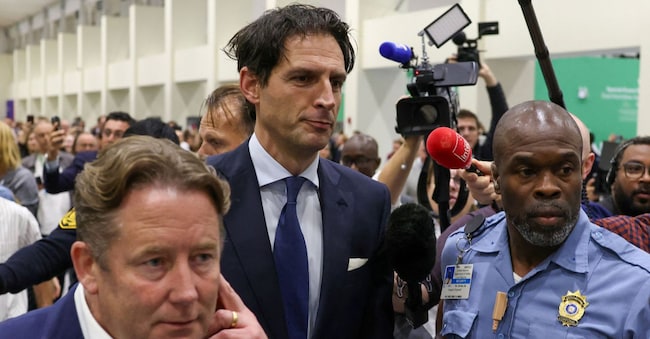
Il commissario Ue per il Clima, Wopke Hoekstra,  durante la Cop31 di Antalya (REUTERS) REUTERS

4' min read

Translated by AI
Versione italiana

4' min read

Translated by AI
Versione italiana

An extra day, beyond the scheduled timetable, was not enough to reach an agreement at COP31, which is still underway in Turkey. The conference began on the 9th and was due to end on Friday the 20th. Instead, negotiations continued into Sunday as delegates sought a compromise on the framework decision and the entire climate package.

The COP Presidency convened the plenary session at around 1.00 pm (local time), presented a final proposal and split what it would like to rename the ‘Antalya Pact’ into two separate decisions: one under the UN Framework Convention on Climate Change (the UNFCCC, for which the COP serves as the decision-making body), covering the less controversial issues. The most divisive part has been separated. There is no substantial change on the most contentious issues, such as phasing out fossil fuels.

Loading...

The night brings no wisdom

Shortly after midnight on Saturday 21st, a plenary session was convened unexpectedly. The aim was to finalise at least the non-controversial chapters, but the agenda quickly became muddled and controversy immediately arose over the lack of transparency on the part of the Turkish-Australian presidency, which in turn appeared very uncertain.

Outcome: talks suspended – though not for the delegates – and a new draft framework decision tabled after 3 am. In this latest attempt, there was still no direct reference to a phased-out transition from fossil fuels, the main cause of global warming. The word ‘fossil’ is conspicuously absent, having already been omitted from the second draft. There is an indirect reference to the 2023 Dubai package, where the ambiguous phrase ‘transition away’ from oil, gas and coal was devised. Several hours later, a new document was released.

Midway through Saturday evening, dozens of delegates gathered at the entrance to the presidency’s offices before being granted permission to speak to the chief negotiators. “We have never seen anything like this before,” said Nana Antwi-Boasiako Amoah, chair of the African Group of climate change negotiators.
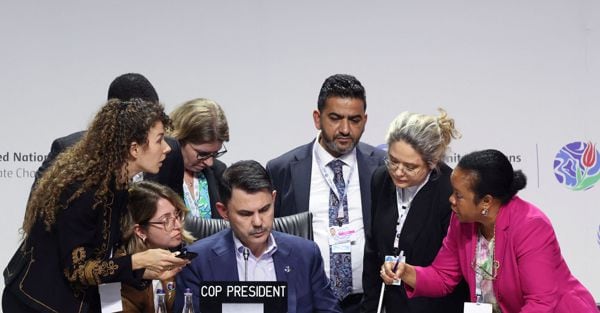
There is utter chaos under the Antalya sky.

Il presidente della Cop31, Murat Kurum, circondato dai suoi consiglieri durante la sessione nella notte della Cop di Antalya

The EU’s red line

The European Union has decided to stand its ground in the face of demands from the oil-producing states, led by Saudi Arabia (with Russia at its side). “Either we reach a good deal, or there will be no deal at all,” said EU Commissioner Wopke Hoekstra on Saturday. He then added: “Let’s be honest, there really is a risk of a ‘no-deal’ scenario.”

The dispute, therefore, centres on the gradual phasing out of oil, gas and coal. Countries and lobbies, which have built their wealth and influence on the production of fossil fuels, have always opposed this. So far, they have achieved two significant results: the censorship of the word ‘fossil’ and the reference to future technologies for CO₂ capture and storage: this means envisaging the cleaning of chimney emissions and the atmosphere (to put it simply), rather than generating fewer greenhouse gases. This will also be necessary, but it can only play a marginal role, as explained, amongst others, by the International Energy Agency.

Alongside the 27 EU member states, nearly 150 countries are fighting for more ambitious outcomes, with Panama at the forefront: it, too, is threatening to use its veto rather than accept what it dismisses as steps backwards.

China has signalled a willingness to increase the share of electricity to up to 35 per cent of total consumption.

Loading...

The row over fossil fuels is overshadowing everything else. It would be surreal if there were no strong signal in the fight against global warming, given that this year fires, extreme heatwaves and floods caused by climate change have claimed thousands of lives and caused hundreds of billions in damage.

Yet some observers maintain that, beyond the compromise measures, renewables have grown nonetheless, not least for reasons of strategic autonomy. And that there are equally important issues to address, first and foremost funding for adaptation.

Save the negotiation process

Having got off to a defensive start, COP31 in Antalya risks bringing the negotiation process to a standstill. This would be a serious sign, even at this time of crisis for multilateralism and international law. To find a precedent of similar significance, one has to go back to COP15 in Copenhagen in 2009.

For Turkey, which shares the presidency of COP31 with Australia, there is also the spectre of being associated with a failure. It would be a setback. “It does no one any good to jeopardise the process by getting hung up on words or phrases,” repeats the summit’s co-chair, Murat Kurum. The Turkish official would still like to proceed to the plenary session and shift the blame for any rejection onto the member states: the blame game has already begun.

The threat of failure (though negotiations never stop) and obstructionism are recurring tactics at COP meetings. As Isatou Camara, the Gambian negotiator, explains, the aim is to wear down opponents, pushing them to accept a deal just to secure some sort of outcome.

Many ministers and delegates are being forced to leave the proceedings, with the risk that the quorum will not be met: for the plenary to reach a decision, two-thirds of the representatives of the nearly 200 members of the UN Climate Change Convention must be present.

Meanwhile, global average temperatures are already exceeding the 1.5-degree safety threshold set out in the Paris Agreement and by the scientific community – both of which are themselves under attack.

So Brenda Mwale, Malawi’s negotiator, asks: ‘Are we facing a leadership crisis? Was there really a vision for this COP?’ Many people are asking themselves this, especially the younger generations.

Copyright reserved ©
Loading...

Brand connect

Loading...

Newsletter

Notizie e approfondimenti sugli avvenimenti politici, economici e finanziari.

Iscriviti