
Copenhagen, along the canals in search of creativity and sustainability
An itinerary among the buildings and premises of the World Architecture Capital 2025, which has chosen to place a new humanism at the centre of its innovative model of urban development

5' min read
5' min read
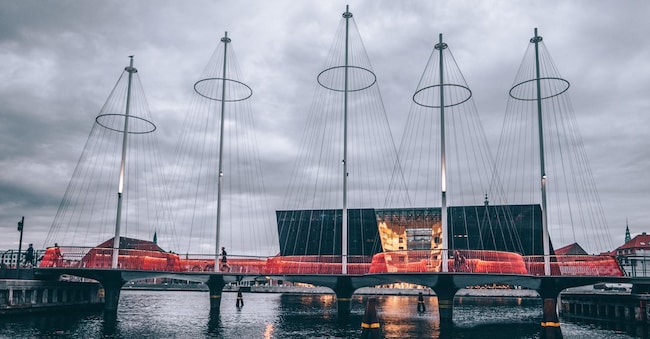
In Copenhagen, the sea is never far away with its changing colours and the sky and water merging. The city and those who live in it have an inseparable and osmotic relationship with water. The Vikings arrived in Copenhagen by sea and that port, strategically located on the Øresund Strait, became a base of choice. The maritime background is central to Danish modern history and architectural heritage, with its harbour undergoing a radical transformation: inland areas converted into residential and commercial spaces according to an innovative urban planning model based on a new humanism and people-friendly infrastructure. An example of this is Nordhavn, Denmark's ideal city 4 km from the city centre, the largest building development project in Scandinavian history. Even today, right along the canals you can immerse yourself in the local lifestyle (the bicycle is the most popular means of getting around), enjoy the best views, breathe in the vibrant and creative atmosphere of what will be the Unesco-Uia World Capital of Architecture until 2025 (it will then pass the baton to Barcelona), thanks to a constant commitment to sustainable architecture, urban liveability and innovation. It is no coincidence that around 600 people move here every month and the average age is 37. Internationally renowned architecture firms are based here (from Bjarke Ingels Group to Henning Larsen Architects, Cobe, Gehl Architects, C.F. Møller and 3XN) and design also has a deep-rooted history with brands that have made Scandinavian and world history: Fritz Hansen, Carl Hansen & Søn, Louis Poulsen, Georg Jensen and Royal Copenhagen. Craftsmanship, use of high quality materials, creativity and iconic design are also the common thread of brands that were born in Copenhagen more recently and from here set out to conquer the world.
Long Channels
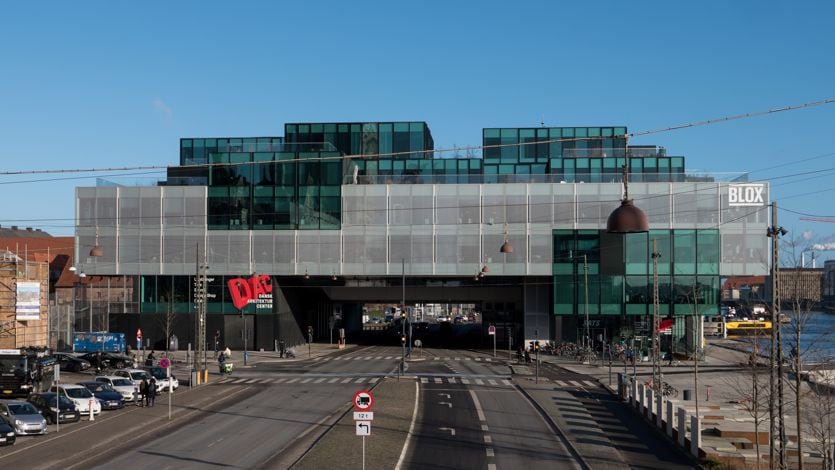
.Right along the canals there are historical and other innovative architectural works, in an interplay of the ancient and the modern that can be found throughout the city. If at 12 Frederiksholms Kanal there is the National Museum (editor's note: don't miss "The Viking Witch", an exhibition that explores the mystical world of the Vikings and their relationship with their time and precisely the sea) housed in the old Prince's Mansion, a beautiful 18th-century rococo building, at number 30 between the Royal Library and Langebro, practically at the end of the canal where until a few years ago there was a disused port area, today there is the heart of Copenhagen's cultural district, with BLOX, emblem of Danish creativity and leader of urban development projects aimed at giving the city a new identity with new bridges, public squares, and areas for pedestrians and cyclists. Designed by the internationally renowned architects OMA and funded by the philanthropic association Realdania, BLOX houses DAC - (Danish Architecture Center), a reference for architecture and design enthusiasts from all over the world, Creative Denmark where knowledge and experience come together to create engagement and inspire people to take a stand on architecture and design, and BLOXHUB, a multidisciplinary incubator for sustainable development where the challenges of urbanisation and climate change are combined with a new collaborative approach between organisations, institutions and citizens.

Between Nyhavn and Østerbro
Our itinerary on the water returns along the Nyhavn canal, the city's most famous and photographed with its colourful buildings, moored vintage boats, cafés and restaurants. Skirting it, you arrive at the Copenhagen Opera House ( Operaen) opened in January, one of the most modern theatres in the world and also one of the most expensive (over 500 million dollars) designed by Danish architect Henning Larsen. Soon you pass the Black Diamond, an extension of the Royal Library with its shiny mirrored windows that make it look like a diamond and reflect the magnificent landscape around it. Inaugurated in 1999, one also goes there just to sip a coffee, while not far away are the jetties from which kids jump into the water and bathe in the (clean) canal. In the same Kulturkvarter (cultural district), one cannot overlook the beautiful Tivoli Park (the famous amusement park with its rides, gardens, restaurants and concerts) and Christiansborg Palace, the official royal palace of the Danish crown, where one can visit the audience and party rooms, admire the tapestries created by the artist Bjørn Nørgaard that tell more than a thousand years of Danish history and the collection of copper kitchen utensils that remain as they were in 1937. Not far away in the neighbourhood of Østerbro is the characteristic Kartoffelrækkerne (potato row) district, a small area with beautiful and very expensive London-style terraced houses, which has become famous since Lily Collins, the star of the hit Netflix series 'Emily in Paris', bought a house there. Not to be missed in the neighbourhood are the small galleries including Dybdahl Co, a voyage of discovery of the visual aspects of rare books found in auctions, archives, libraries and museums that become posters, visual treasures of the past never drawn, engraved or printed. A little further on is Olufsvej, a delightful little street between the city's largest park, Fælledparken, and the district's main shopping street, Østerbrogade.
Walking through the neighbourhoods
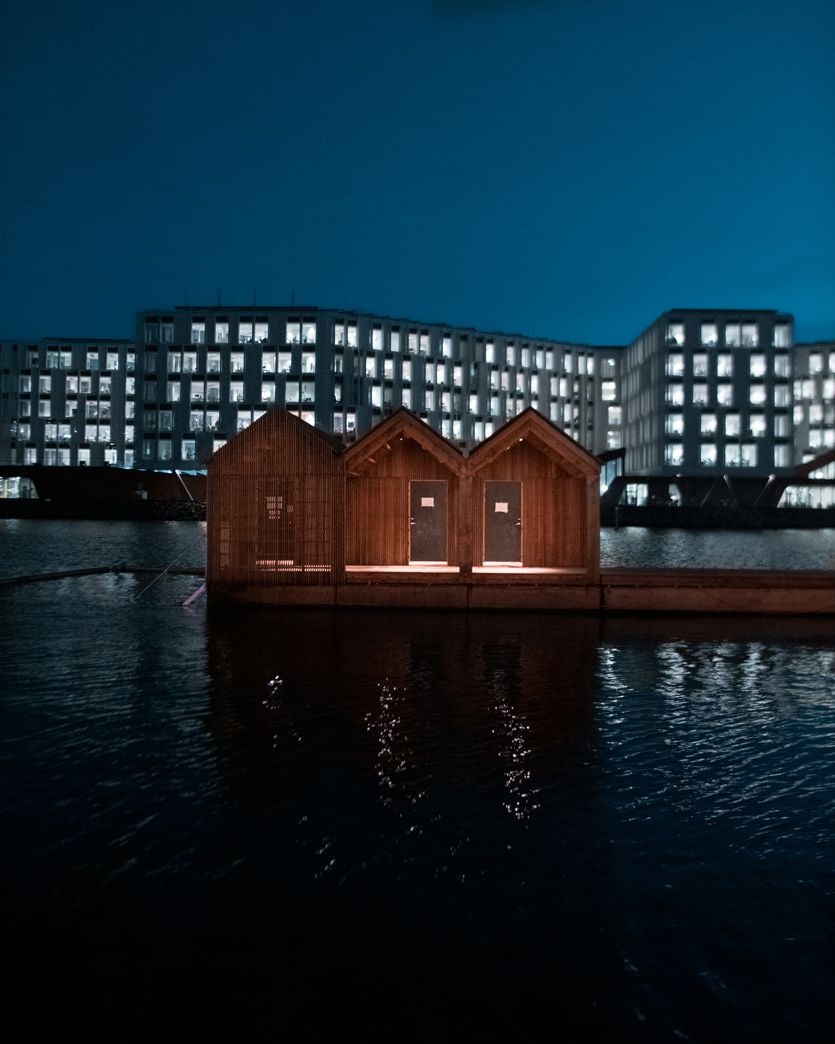
.One of the most popular places for young people is Kødbyen, the meatpacking district. Here you will find a mix of bars and restaurants, such as Fiskebar, where you can enjoy only local fish amidst floor-to-ceiling windows and rough concrete walls. There are also small independent shops and design studios. This is Vesterbro, a very popular destination even if it is outside the centre. The same goes for Nørrebro, a former working-class neighbourhood with characteristic cobbled streets north of Copenhagen's city centre and lakes, Søerne. From here, a few minutes' walk across the Sortedams So canal on the Dronning Louises Bro bridge, where there is only a hustle and bustle of bicycles, takes you to the tables of Aamaan's, chef Adam Aamann's restaurant: everything is fresh and homemade, even the smokes. Definitely try his delicious smørrebrød, a kind of stuffed sandwich, made with organic ingredients. Hospitality can count on some noteworthy design hotels such as 25hours Hotel Indre By, which is located in a 19th century building, a former porcelain factory and later a university. Centrally located near the Round Tower, it offers 243 unique rooms and hidden treasures such as the Vinyl Room. In the city centre is the luxurious Villa Copenhagen as well as the Nobis Hotel Copenhagen housed in a neoclassical building from 1903, originally designed by Danish architect Martin Borch. As one of the first concrete buildings in Copenhagen, it housed the Royal Danish Academy of Music before being transformed into a hotel under the guidance of Swedish architectural firm Wingärdhs. All-round luxury at the centrally located d'Angleterre, a member of the Leading Hotels of the world and a true Copenhagen icon since 1755, is the only 5-star superior luxury hotel in Denmark. Centrally located on Kongens Nytorv, a few steps from the Royal Danish Theatre, the Nyhavn Canal and the pedestrian shopping street Strøget, it also houses the Michelin-starred Marchal restaurant, Balthazar Champagne Bar, the patisserie and the renowned Amazing Space Spa.
Museums outside the city
Not to be missed outside the city is the Louisiana Museum of Contemporary Art (35 minutes by train from København H station towards Helsingør) in Humlebæk. The location is magnificent and inside, the halls and exhibition areas are connected by a characteristic glass corridor: here, all the buildings and the surrounding park are as beautiful a work of art as the exhibitions.


