
The challenge of sustainable tourism starts in Copenhagen with Destinationpay
Tourists who perform sustainable actions are rewarded; in Italia Ravenna will follow the Danish initiative

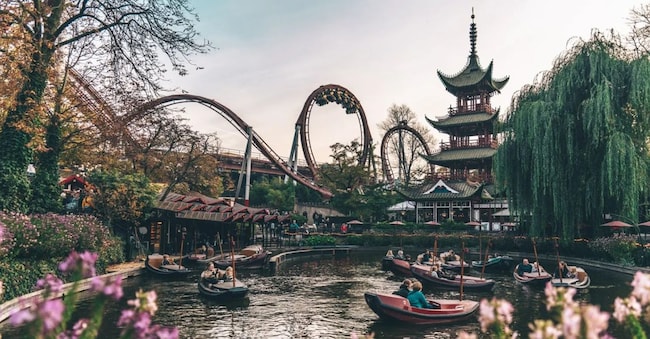
Arrive by train instead of plane to secure free entry to the sauna. Riding a bike to earn a hot coffee. Or pick up a bag of rubbish along the city canals in exchange for a kayak ride. What began in Copenhagen in 2024 as a bold summer experiment is ready to turn into a permanent reality. From 22 June next, the innovative CopenPay tourism programme will become a permanent, year-round platform, eliminating any expiry date and redefining the way travellers interact with the Danish capital.
Positive Impact Actions
The basic idea is as simple as it is disruptive: to replace classic passive tourism with concrete actions with a positive impact. After the success of the pilot editions, which have already registered over 30,000 participants and the involvement of more than 100 local attractions, the city has decided to significantly expand the offer. Visitors will be able to engage in a variety of hands-on activities throughout the city: from recycling used clothes at Designmuseum Danmark to getting discounts for cultural events by bike, to receiving a free organic meal at BaneGaarden after cleaning up an urban area. Mobility is also a central pillar of the project: those who choose the train to travel to Copenhagen are incentivised with free bicycle rental and lessons on safe cycling in a city that already has more bicycles than inhabitants and with 45 per cent of all journeys for work or study taking place using this means of transport.
The background investigation
But what really motivates a tourist to devote their time to caring for their host destination? This is revealed by a recent survey conducted by analysis agency Maple, which challenges conventional thinking about tourism. Contrary to what one might assume, it is not the mere material reward that moves people: only 23% of respondents said they were motivated by the reward itself. The real drive lies in the experience: 48% of respondents are looking for a unique, meaningful and educational opportunity to actively connect with the territory. The most relevant aspect concerns the long-term impact on individual behaviour: as many as 70% of tourists (7 out of 10) claim to have changed their daily habits once back home.
An export model
The success of CopenhagenPay quickly crossed Danish borders. In the wake of these results, Copenhagen decided to share the structure of the programme free of charge under the name 'DestinationPay', enabling other destinations around the world to adopt and adapt this virtuous model. Since then, more than 350 international realities have expressed strong interest or initiated similar projects. While Berlin has already led the way with its own initiative, nations such as Germany, France, the United States, Canada, Japan and Australia are preparing to launch their own programmes later this year. In this global transition towards a new travel philosophy, Italia is demonstrating a distinct sensitivity. Among the first cities to take up the challenge is Ravenna. "Ravenna and Copenhagen share the firm belief that tourism can be more than just a visit: it can be participation," said Maria Grazia Marini, director of Ravenna Turismo. "CopenPay inspired us because it shows how positive actions can become a natural and rewarding part of the visitor experience. Alongside Ravenna, Florence has also recently announced the adoption of this model, demonstrating how the interest in solutions capable of mitigating the impact of mass tourism and fostering valuable tourism is also infecting our main cities of art. At a time when tourist overcrowding often generates tensions in local communities, the Danish experience points to an alternative path, where the protection and enhancement of the territory become an integral part of the journey. As Rikke Holm Petersen, behavioural director at Wonderful Copenhagen, points out, "inspiration and contribution seem to be the new souvenir.""

