
Copper, zinc and aluminium at risk: structural shortages by 2035
A Coface report highlights how the energy transition is driving demand, whilst supply is facing increasing difficulties. Access to critical metals is becoming an increasingly strategic issue for businesses

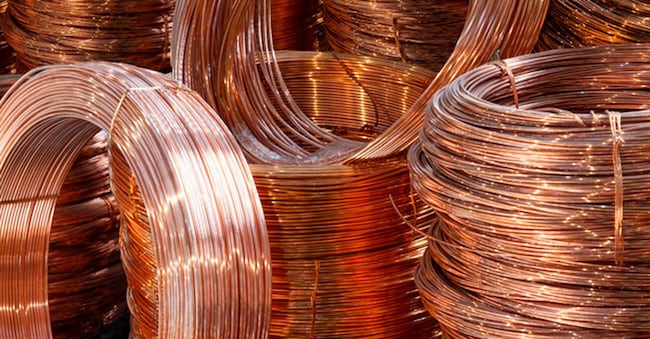
(Il Sole 24 Ore Radiocor) - The energy transition and the push towards electrification will radically transform the global metals market. With demand rising rapidly and production increasingly constrained, key metals such as copper, nickel and aluminium are at risk of facing structural shortages by 2035, triggering a new phase of price rises. This is highlighted in a new analysis by Coface, one of the world’s leading providers of credit insurance and commercial risk management. “The energy transition is making access to critical metals an increasingly strategic issue for businesses. The growth in demand for copper, nickel and aluminium is, in fact, coming up against an inflexible supply, very long lead times for the development of new production capacity and supply chains that are heavily concentrated in just a few countries,” explains Ernesto De Martinis, CEO of Coface’s Mediterranean & Africa Region. “For companies, the risk therefore concerns not only a possible rise in prices, but also the continuity of supply and the ability to keep their production processes competitive. Diversifying supply sources, investing in recycling and reducing dependence on the most critical raw materials will become increasingly important for strengthening the resilience of supply chains.”
The driving force behind the energy transition
Even before the widespread adoption of low-emission technologies, demand for metals was driven by established structural trends. Urbanisation, infrastructure development and growth in emerging economies will continue to fuel global consumption in the coming years. The construction sector alone accounts for almost 50 per cent of global steel consumption, whilst electrification already accounts for almost three-quarters of global demand for copper. Added to this demand is that linked to the energy transition and digitalisation. Renewable energy, electric vehicles, batteries, electricity grids and data centres require particularly large quantities of metals. According to the International Energy Agency’s APS (Announced Pledges Scenario), by 2035 clean technologies could account for 35 per cent of global demand for copper and nickel.
Against the backdrop of this acceleration, supply is facing increasing difficulties. Fewer than 1 per cent of mineral exploration projects reach the actual production stage, and developing new capacity in existing projects can take on average nearly 20 years, compared with less than 15 years in the early 2000s. The rise in production is also being held back by reduced returns on investment, the gradual decline in ore concentration in deposits and rising costs. Added to this is a high geographical concentration of supply chains. Indonesia produces 67 per cent of the world’s nickel ore, whilst China accounts for over half of global refining capacity for various metals. Trade restrictions are also on the rise. By the end of 2025, 1,138 measures relating to the import or export of critical minerals were in force, compared with just 357 ten years earlier.
Copper, nickel and aluminium heading for a structural deficit
The imbalance between supply and demand will be particularly evident for metals that are essential to the energy transition. Over the next decade, demand for aluminium, copper and nickel is expected to grow faster than supply, even without a further acceleration of the decarbonisation process. However, the dynamics will vary from metal to metal. Copper, which is essential for the electrification of economies and the development of digital infrastructure, could face a shortfall of between 1.5 and 6.5 million tonnes by 2035, depending on the scenario considered. In a Net Zero Emissions scenario, the shortfall could account for as much as 17 per cent of global demand. The strong growth of data centres also risks further exacerbating these pressures. Nickel appears to be the metal most exposed to the effects of the energy transition, particularly due to its use in batteries and electric mobility. In a Net Zero scenario, by 2035 the refined nickel market could face a deficit of around 6.5 million tonnes, equivalent to almost 35 per cent of projected demand. The market for aluminium is also set to become tighter. Theshortfall could reach 5–15 million tonnes, around 10 per cent of projected demand. In this case, the main constraint lies not so much in the availability of resources as in industrial capacity, the investment required to expand it, and access to competitively priced electricity.
Towards a new bull market for metals
These imbalances are set to exert sustained pressure on prices. According to Coface’s forecasts, the price of copper and nickel could almost double over the next decade, whilst aluminium is also expected to see a significant rise. Steel and zinc, on the other hand, appear less vulnerable, thanks to less constrained supply conditions and lower exposure to the new demand generated by the energy transition. For manufacturing companies, the challenge will therefore be less and less about price alone. Securing access to critical metals, developing recycling and reducing the quantity of raw materials used in production processes could become increasingly important factors for competitiveness


