
Cork stoppers are going ‘organic’. A boost for foreign markets
After years of work, companies are now ready to certify their products in accordance with EU Regulation 848
Key points
- The entire supply chain has been certified
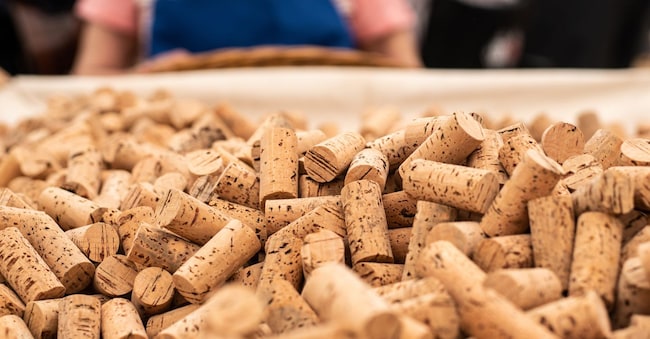
Cork stoppers are now certified as ‘organic’, just like agricultural products such as wine, olive oil and fruit and vegetables: excellent news for a niche sector that is nonetheless one of the jewels in the crown of Italian manufacturing.
Italia ranks third in cork production
Italia alone, thanks in particular to the forests of Sardinia, produces and processes around 10% of the cork traded globally, trailing Spain and Portugal – which account for 70% of production – and ahead of the Maghreb and France. Much of this production is used specifically for making bottle stoppers, mainly for wine, and now Italian companies, following a three-year process of compliance with EU Regulation 848, are ready to certify their cork stoppers as organic.
“A concrete opportunity for competitive differentiation, particularly in high-value-added markets, to further highlight the sustainability and traceability characteristics inherent in this material, which aims to become the sole natural closure on national and international markets,” explains Alessandro Canepari, head of the Cork Group at Assoimballaggi, part of FederlegnoArredo.
A driver of competitiveness
It was precisely the teamwork between FederlegnoArredo, the European Commission and the Ministry of Agriculture, Food Sovereignty and Forestry that made it possible to achieve this milestone, which marks “a decisive step forward in promoting the circular economy and the excellence of our sector”, adds Canepari.
It is also a strategic lever for the sector’s recovery, which comprises around 480 companies and 2,370 employees (FederlegnoArredo figures) and is currently facing a challenging market phase: in 2025, the sector recorded a 2.5% decline in turnover, standing at €342 million, confirming the slowdown that began in 2023 following two years of growth. Exports, accounting for 10% of total turnover, are worth €34 million, 87% of which relates specifically to cork stoppers, which are currently being adversely affected by both the global decline in wine consumption and competition from alternative closure systems.

