
Corporate fleets and private channel: growing share of Chinese brands

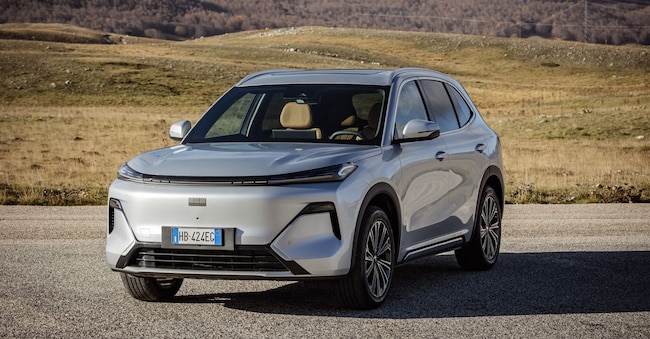
It represents one of the key market trends in the first quarter of this year. It is the growth in market share of Chinese manufacturers, both for private vehicle registrations and for the company fleet channel, in both short-term and long-term rental (see other report on page 5). This is a significant trend, so much so that volumes in the long-term (Nlt) channel have multiplied by three compared to a year ago.
According to an analysis conducted by Aniasa (an association that groups together rental companies in Confindustria) and Dataforce, around 490 thousand cars were registered on the domestic market from January to March 2026, 60 thousand of which belonged to Chinese manufacturers or were built in China and distributed by brands that source their supplies in the Asian country, adding processing and assembly operations in Italia, as the Dr Automobiles group does for example. In the first quarter of 2025, this was exactly half.
Chinese cars have reached a market share of 12.4 per cent while last year they were stationary at 6.7 per cent. "If the Chinese cars sold to private individuals follow the same trend as the market as a whole, i.e., they have doubled, in the rental sector the growth is even more evident," the Aniasa note highlights: in the first quarter of the year, for example, 7,145 were registered in the long term, three times as many as the previous year. This is, Aniasa points out, a 'clear sign that they have now concretely entered the car policies of companies,' comments the association led by president Italo Folonari.
Even more evident, on the numbers front, is the spread of Chinese brands in short-term rental: in 2026 this channel registered 10,820 Chinese cars, with a growth of 60 per cent over the first three months of 2025 and a market share of 18 per cent.
Influencing these macro-trends recorded by the rental sector is, on the one hand, the general market trend, which has seen an increase in the share of registered full electrics - in the first quarter of the year, Italy recorded a share of 7.8%, almost two points higher than the previous year - and, on the other, the commercial policies of Chinese manufacturers, which in Europe and Italia are also pushing the rental channel. However, the incentives assigned in October were also an important variable, which generated an increase in registrations of full electric cars and also helped fuel the long-term rental (Nlt) channel, with volumes tripling, and short-term (+60% compared to the January-March 2025 period).


