
Liability of entities, boom of predicate offences
In 25 years, violations have risen from 15 to over 200. The largest family is that of environmental and corporate offences
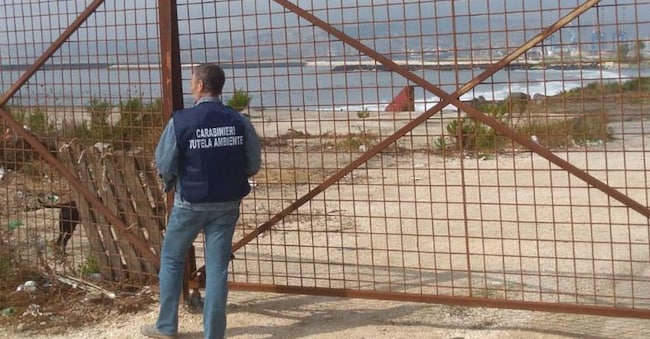
Key points
In 25 years the predicate offences that trigger corporate liability have only risen from 15 to over 200. Introduced in 2001, Legislative Decree 231 in fact provided for a limited and homogeneous group of offences, all of them intentional, included in the Criminal Code and focused on the relationship between the company and the public administration.
Today, after a quarter of a century, the catalogue of offences - which since 2007 has also included negligent offences - runs to 26 articles and, even if one limits oneself to the expressly typified cases, excluding open references (as for terrorist offences) and elastic clauses (as for organised crime), the inventory leads to more than 200 cases.
The most recent new entries are the four offences concerning violation of EU restrictive measures introduced by Legislative Decree 211/2025 and in force since Saturday 24 January. But others are on the way. Last week, the Council of Ministers gave its preliminary approval to the Legislative Decree implementing EU Directive 2024/1203 on the protection of the environment through criminal law, which further expands the catalogue.
A continuous expansion achieved both through closed lists of offences, and through open references (all offences with a specific purpose) and elastic clauses to categories of offences (such as organised crime, where any offence committed by facilitating the activity of mafia-type associations is a potential predicate offence) that has made the overall perimeter of the entity's liability increasingly blurred.
The largest families
Few families of offences are worth a very large share of the entire '231 risk' of the entity. The heaviest family is that of environmental offences: Article 25-undecies counts 40 offences, almost three times as many as those contained in the original catalogue. It is a critical mass that, as a result of regulatory stratification and subsequent grafts, has transformed environmental compliance into one of the main drivers of the organisation, management and control model: mapping, delegations, waste cycle controls, supplier qualification, documentary controls and traceability are no longer just best practice, but conditions for the system to be held.

