
Corsica Ferries, investments of 30 million launched
The company focuses on green interventions for ships and the renewal of the concession in the port of Vado, building the electrical connection at the quay
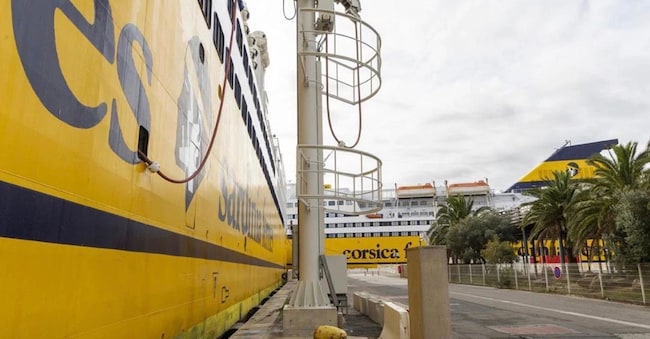
Corsica Sardinia Ferries, the ferry company serving France and Italy, has launched investments totalling almost EUR 30 million, which include the refitting of ships with a view to energy transition and an industrial plan for the renewal of the concession for the docks of the port of Vado Ligure (Savona), which includes, among other things, the installation of a cold ironing system (i.e. power supply from land, at berth, to reduce emissions) for the company's vessels, which already use this mode in the French ports of Toulon and Sete.
Explaining the projects in the pipeline is Sébastian Romani, CEO, for just over a year, of the company chaired (and controlled) by Pierre Mattei. As far as the Vado concession is concerned, says the manager, 'it has just been renewed for two years. But the company has drawn up a plan to obtain a further, much longer renewal, from 2028 onwards. 'We intend to ask,' Romani continues, 'to be able to stay on those docks for another 25 years. Among other things, our project envisages investing in creating a shore connection in the port of vado and carrying out cold ironing, with an investment, for that alone, of 4 or 5 million euro".
But the plan does not stop there: 'We want to create a true green port,' he clarifies, 'with solar panels, state-of-the-art ecological islands for the differentiated treatment of waste, electric car columns, plus, of course, a portion of investment for refitting the passenger areas and improving reception: the service to customers waiting for the ship. In short, we want to make a lot of green investments'. Romani does not say how much the company's economic commitment to this project might be worth. But market rumours put it at EUR 10 million in total, including cold ironing.
In order to be able to power the ships electrically from land, however, they must have the equipment on board to enable this operation. And this is another aspect on which Corsica Sardinia Ferries is concentrating its efforts. "We are making significant investments," emphasises the CEO, "to adapt our units to the energy transition; our fleet now has 10 ships and we have already committed resources to half of them, to equip them with shore connection, i.e. the socket to connect the ships electrically to the quay. It takes 1.5 million euro investment per ship to implement this system. And since the other half of the fleet will be ready by the end of 2026, we are talking about 15 million in total'.
Romani clarifies that cold ironing is currently possible in the French ports of Toulon and Sète. "Toulon is our home port in France while in Sète we make fewer calls, although we have increased the rotations a little, because last year the traffic was interesting and so we have increased the traffic, also for 2026. Cold ironing is a very important issue for us, on which Italy is lagging behind. Although in Vado, our Italian home port, we could connect the ships that were laid up in the winter to electricity. We had created an electrical cabin that was fine, however, with the ship almost switched off: it didn't have enough current for a ship at a standstill. That's why we came up with a plan to renew the concession and implement cold ironing.


