Mountain

Cortina sets its sights on the ‘treasure’ of the two years following the Olympics

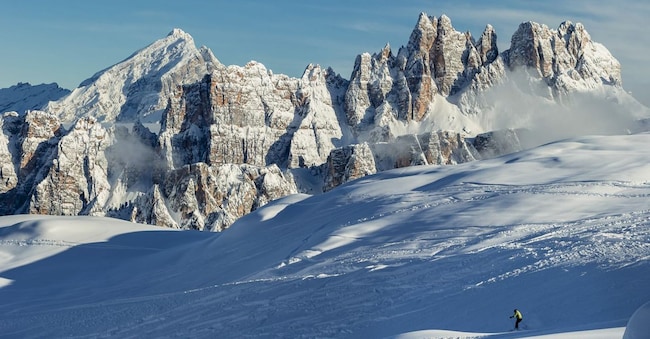
Tomorrow, Col Gallina kicks off the 2026/27 winter season. There’s a lot at stake for the ‘Pearl of the Dolomites’, with a mountain that’s a joy to experience for much of the year

6' min read

Translated by AI
Versione italiana

6' min read

Translated by AI
Versione italiana

Tomorrow, Col Gallina kicks off the 2026/27 season in the Ampezzo resort. The ‘Pearl of the Dolomites’ has a lot riding on its post-Olympic strategy, which spans everything from the ‘local area’ to the product itself, from intercontinental markets to the five-star trend. In short, a mountain that aims to be a destination for nine months of the year. With one caveat: the fame generated by the Games will not last forever.

Start of the season at Col Gallina

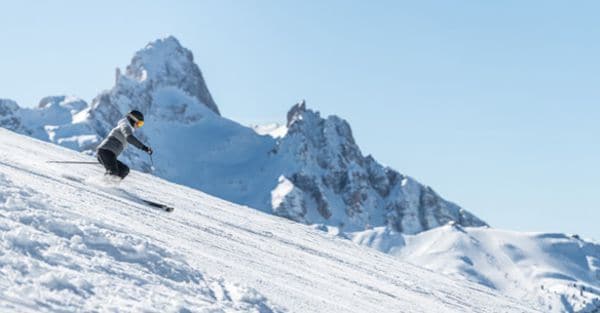
As is traditional, it is Col Gallina’s turn to kick off the 2026/27 season in Cortina d’Ampezzo. On Friday 27 November, the opening of the first ski lifts will mark the start of the ski season – the first since the Milan-Cortina 2026 Olympic and Paralympic Games, which have made the Queen of the Dolomites the only Italian resort to have hosted two Olympic Games. The slopes will remain open until early May. The calendar is already packed with major events, but the real challenge – according to those shaping the tourism strategy for the Ampezzo valley – hinges on another factor: the weather. “Once the Games are over, the profile a destination gains from hosting them remains ‘high’ for about two years, because then the profile of the destination set to host the next Olympics begins to rise,” warns Josep Ejarque, destination manager at Cortina Marketing. So, if the 2030 Winter Games are set to bring visibility to the French Alps, with one of the four competition venues in Briançon, “and they’re really pushing ahead and doing brilliantly,” Ejarque points out, “then I know I have two years to capitalise on the momentum.”
Loading...

Three Olympic Games, one method

It’s an unusual perspective. ‘I’ve been involved in three Olympic Games during my career: Barcelona ’92 (I was just a lad), Turin 2006 and Milan-Cortina 2026. The destination manager plans, organises, manages, promotes and coordinates the destination, but the crux of the matter is balance: you must keep one eye constantly on the market and tourist demand, and the other on your local area.” Those who focus solely on demand risk building something the place cannot sustain; those who cater only to local aspirations bring something to the market for which there is no demand. The picture he started with, four years ago, was a harsh one. “Cortina was very well known in Italia, but little known abroad. Essentially, it was a mature destination that was functioning fairly well, but was gradually losing its appeal. This was particularly true beyond Italia’s borders, where competitors such as Davos, Gstaad and Kitzbühel had made significant progress.”
A specific three-year strategy was drawn up for the Games, “which aimed to capitalise on the Olympic Games to secure our legacy afterwards – that is, growth”. And the figures speak for themselves: “In September, we had an 88 per cent occupancy rate, a record figure that even exceeded that of August”. At the same time, figures compiled by Cortina Marketing indicate a rise in occupancy of almost 9 percentage points for April–September 2026 compared with the previous year, whilst the new season is looking very promising, with bookings for December and January already exceeding 44 per cent.

‘Territorio’ cannot be translated

The method stems from a criticism levelled by Ejarque at many Italian destinations: they focus on and market the ‘territory’, whilst demand is moving in the opposite direction. ‘There is no destination that excels at everything, especially when it comes to appealing to today’s tourist, who is entirely niche-oriented. Those who travel for wine are looking for wine; those who go to the seaside are looking for the beach.”
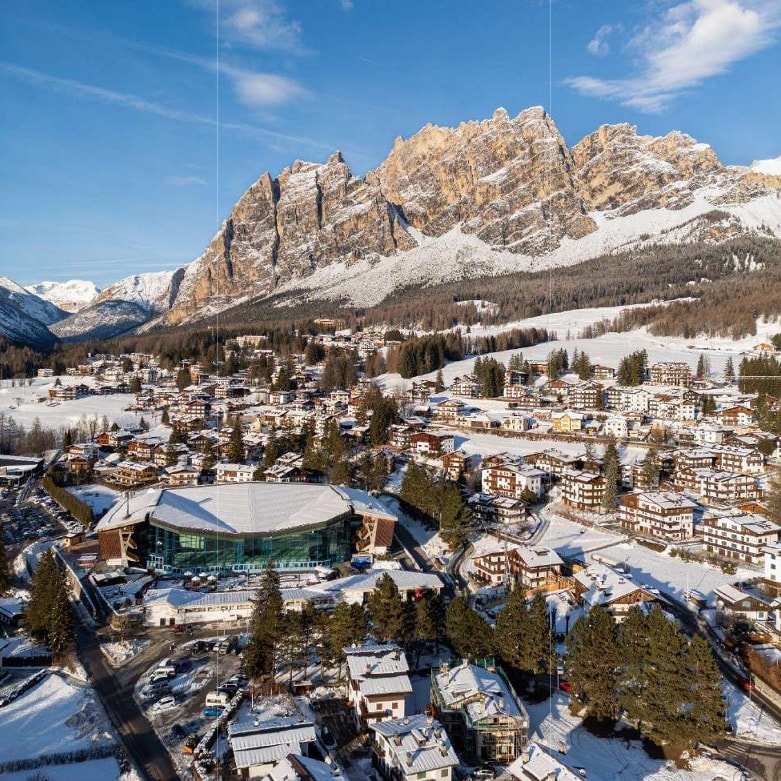
For Cortina, therefore, the shift from a ‘territorial’ approach to a ‘destination product’ approach is crucial, with offerings tailored to specific segments, networks of operators who share service standards, ideas and a common vision, as well as targeted communication. With an eye also on the summer season, because following the Covid pandemic, the mountains ‘have undergone a momentous change’.

The stated aim is ‘to position Cortina as a premium destination. However, it is not enough simply to say this or to want it; you have to restructure, organise and demonstrate it’. In this context, the Games served as the means to this end: ‘they helped us to build a value proposition for a destination that is advanced, in step with the times and, above all, in line with the changing demands of the tourism market’.

Cortina signature products

The work carried out over recent months is looking to the long term, towards international and intercontinental markets. “Americans plan a year ahead; Australians do the same,” explains Ejarque.

This year’s new initiative has an English name: “Cortina Signature Products”. These are experiences devised and organised by local businesses, which the resort supports and promotes, designed to be exclusive or unique. An example: “watching the sunrise over the Faloria at 5 am with a picnic, or skiing alongside champions such as Ghedina, as well as a food and wine programme featuring workshops where you can learn to cook, as well as taking part in wine tastings”. For Ejarque, the focus is not solely on winter. Cortina “needs to be reimagined as an all-year-round mountain resort destination, even if the target is nine months”. The main driving force is cycling, “which today has its own identity and personality. It’s a niche market, but a significant one compared to walking and trekking.”

The Five Star Movement

This repositioning is most evident in the hospitality sector. Ejarque speaks of ‘a boom in 5-star hotels’ and of investment by international groups. This winter, according to Cortina Marketing, Le Graal (The Leading Hotels of the World) and The First Cortina (The Pavilions Hotels & Resorts) are set to open. The historic Cristallo is coming under the management of Mandarin Oriental, which states on its website that the Cortina property is due to open in early 2027. There is also the refurbishment of historic hotels, such as the Bellevue. With the openings scheduled for 2027, Cortina will have 11 five-star hotels – and the historic Hotel de la Poste will subsequently begin work to become a five-star luxury hotel. The dining scene is also evolving. The 2027 Michelin Guide Italia has awarded a star to 1224 Restaurant Cortina, located within the Grand Hotel Savoia, bringing the total number of starred restaurants in the resort to three, alongside SanBrite and Tivoli. The 2026 Snomad Ski Resort Awards, based on 153,854 reviews from skiers and snowboarders covering the 2025/2026 season, awarded Cortina gold for ‘Best for Eating Out’ and bronze for ‘Best for Lift Efficiency’, with a score of 4.89.

Loading...

*In quota*, the first guide to Italia’s best mountain clubs, written by Andrea Guolo for Morellini Editore, has selected 109 establishments, six of which are in Cortina, the most heavily represented destination. The top rating – three stars – goes to Rifugio Scoiattoli, Rifugio Averau and Capanna Tondi; two stars to Super G – Faloria Mountain Club and Masi Wine Bar at Drusciè; and one star to Son Forca. The Scoiattoli, with its view of the 5 Torri, has also been awarded the title ‘Best View Mountain Club Italia 2026’.

On the slopes with the World Cup

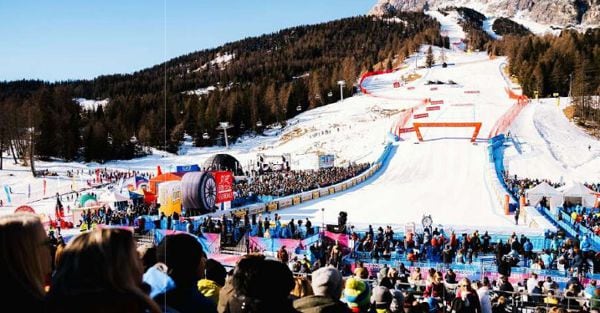
The sporting calendar, organised by Fondazione Cortina, gets underway on 12 December at Faloria with the Snowboard World Cup, featuring a night-time parallel giant slalom on the Tondi run. From 14 to 20 December, the IBSF Bobsleigh and Skeleton World Cup brings top-level competition back to the rebuilt Eugenio Monti Olympic Track; from 15 to 17 January 2027, the Women’s Alpine Skiing World Cup returns to the Olympia delle Tofane, featuring two downhill races and a super-G; in February, again on the Eugenio Monti track, the Luge World Cup. Before that, from 4 to 8 December, the Cortina Fashion Weekend for Us, this year themed ‘Afterglow – Style becomes lifestyle’. The Olympic legacy also becomes an experience. From this season onwards, visitors will be able to ride down the Eugenio Monti track in a ‘Taxi Bob’, aboard a bobsleigh driven by a professional pilot; experienced skiers can tackle the Olympia, the venue for the 1956 Olympic downhill and the 2026 women’s races; the Olympic Ice Stadium offers ice skating and curling. Also new is Ski & Dine: ten evenings when you can ski on the floodlit Tondi run after sunset, with dinner at Capanna Tondi by reservation.

As regards transport, the new Apollonio–Socrepes cable car, which links the town centre to the Tofana ski area, where the Lacedel–Socrepes cable car has been in operation since last winter.

Cortina Skiworld – the consortium comprising eight ski lift companies across Cortina, San Vito di Cadore, Auronzo and Misurina – comprises five ski areas, 120 kilometres, over 70 runs (13 black runs) and 35 ski lifts. An adult day pass costs between 76 and 84 euros; the Cortina Skiworld season ticket costs 785 euros until 24 December, and 845 euros thereafter; the Dolomiti Superski season ticket costs 990 euros and then 1,060 euros.

Copyright reserved ©
Loading...

Brand connect

Loading...

Newsletter

Notizie e approfondimenti sugli avvenimenti politici, economici e finanziari.

Iscriviti