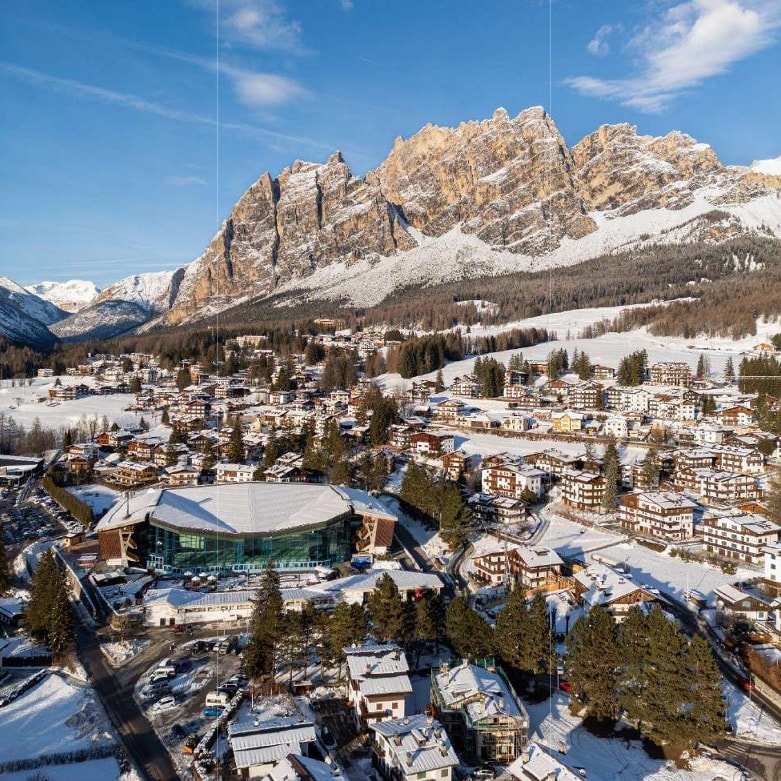
Cortina sets its sights on the ‘treasure’ of the two years following the Olympics
Tomorrow, Col Gallina kicks off the 2026/27 winter season. There’s a lot at stake for the ‘Pearl of the Dolomites’, with a mountain that’s a joy to experience for much of the year

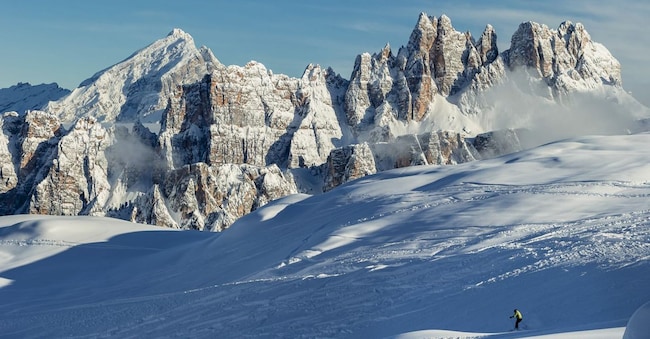
Tomorrow, Col Gallina kicks off the 2026/27 season in the Ampezzo resort. The ‘Pearl of the Dolomites’ has a lot riding on its post-Olympic strategy, which spans everything from the ‘local area’ to the product itself, from intercontinental markets to the five-star trend. In short, a mountain that aims to be a destination for nine months of the year. With one caveat: the fame generated by the Games will not last forever.
Start of the season at Col Gallina
As is traditional, it is Col Gallina’s turn to kick off the 2026/27 season in Cortina d’Ampezzo. On Friday 27 November, the opening of the first ski lifts will mark the start of the ski season – the first since the Milan-Cortina 2026 Olympic and Paralympic Games, which have made the Queen of the Dolomites the only Italian resort to have hosted two Olympic Games. The slopes will remain open until early May. The calendar is already packed with major events, but the real challenge – according to those shaping the tourism strategy for the Ampezzo valley – hinges on another factor: the weather. “Once the Games are over, the profile a destination gains from hosting them remains ‘high’ for about two years, because then the profile of the destination set to host the next Olympics begins to rise,” warns Josep Ejarque, destination manager at Cortina Marketing. So, if the 2030 Winter Games are set to bring visibility to the French Alps, with one of the four competition venues in Briançon, “and they’re really pushing ahead and doing brilliantly,” Ejarque points out, “then I know I have two years to capitalise on the momentum.”

Three Olympic Games, one method
It’s an unusual perspective. ‘I’ve been involved in three Olympic Games during my career: Barcelona ’92 (I was just a lad), Turin 2006 and Milan-Cortina 2026. The destination manager plans, organises, manages, promotes and coordinates the destination, but the crux of the matter is balance: you must keep one eye constantly on the market and tourist demand, and the other on your local area.” Those who focus solely on demand risk building something the place cannot sustain; those who cater only to local aspirations bring something to the market for which there is no demand. The picture he started with, four years ago, was a harsh one. “Cortina was very well known in Italia, but little known abroad. Essentially, it was a mature destination that was functioning fairly well, but was gradually losing its appeal. This was particularly true beyond Italia’s borders, where competitors such as Davos, Gstaad and Kitzbühel had made significant progress.”
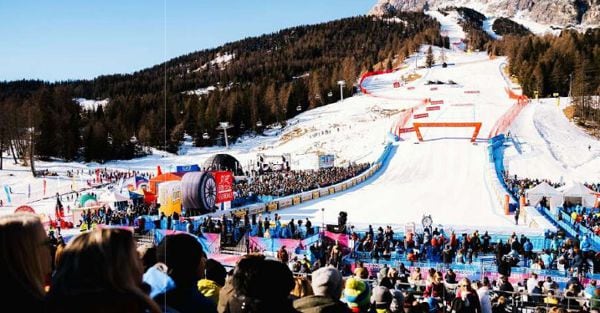
A specific three-year strategy was drawn up for the Games, “which aimed to capitalise on the Olympic Games to secure our legacy afterwards – that is, growth”. And the figures speak for themselves: “In September, we had an 88 per cent occupancy rate, a record figure that even exceeded that of August”. At the same time, figures compiled by Cortina Marketing indicate a rise in occupancy of almost 9 percentage points for April–September 2026 compared with the previous year, whilst the new season is looking very promising, with bookings for December and January already exceeding 44 per cent.
‘Territorio’ cannot be translated
The method stems from a criticism levelled by Ejarque at many Italian destinations: they focus on and market the ‘territory’, whilst demand is moving in the opposite direction. ‘There is no destination that excels at everything, especially when it comes to appealing to today’s tourist, who is entirely niche-oriented. Those who travel for wine are looking for wine; those who go to the seaside are looking for the beach.”