
Cosenza, young people seeking qualified opportunities, but return for the holidays
More and more Calabrians are seeking opportunities abroad, at least 7,000 in the city of Bruzia, adding up the last three years

2' min read
Key points
2' min read
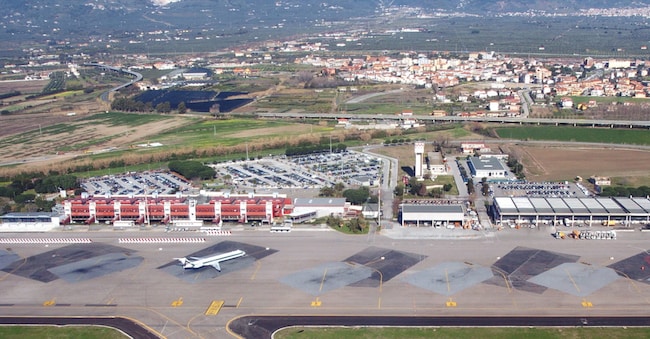
The phenomenon is most evident when they return, during public holidays, on long weekends or bridges: the city comes alive, pulsates, lives in a different way. Above all, they are counted when they leave, when in Cosenza, for example, a tide of young people invades the bus station square, the platforms of the nearby Paola station, or Lamezia airport.
The numbers
.They are leaving again, and not always for the North: more and more calabresi are looking for opportunities abroad, at least 7 thousand in the city of Bruzia, adding up the last three years. A human capital, mostly young, that would make a difference in Calabria. In 2024 Cosenza's emigrants abroad were 800 more than the year before (2,979) and almost 1,300 more considering the figures for 2022. The incidence, equal to about ten emigrants for every thousand residents, also concerns Vibo Valentia. In Reggio Calabria it is slightly lower.
'Today, it is not only the asphyxiated economy of our region that is driving young people away,' explains Calabrian economist Domenico Cersosimo. 'The movements are also linked to cultural reasons, to the search for new opportunities. There is a strong urge to leave contexts that are inadequate to one's expectations. Before, the mirage was full employment, when people went to look for work in Milan or Turin. Now it is work itself, impoverished, precarious and poorly paid, that has lost its appeal'. And now it is mainly qualified people who are leaving. "Calabrian families bear the costs of training, but the benefits fall to other regions or across the border,' Cersosimo continues. It used to be that workers who worked outside sent part of their salary to their families'.
Solutions Against Exodus
.There are no recipes to stop the exodus: 'These are long processes,' continues the economist, 'but we must invest in education. Continuous training, from childhood onwards, to equip male and female students with skills capable of changing the context. How do we overcome clientelism and affiliations in Calabria?'.
Education, in short, as a precondition for halting the demographic desertification. "But it would also take a transformation at the institutional level," Cersosimo urges, "if the ruling class has no interest in intervening, the social demand for change is lacking. Otherwise, in 70 years' time, Calabria could have half its current inhabitants. 'Something is needed,' adds the economist, 'that destabilises by indicating Calabria as a case of national interest. We do not need commissioners, but structures from other regions, capable of transferring competences to local subjects'.

