The interview

Costa (Citigroup): 'For luxury transitory slowdown, in 2025 recovery also in M&A'

Interview. Roberto Costa. The head of global luxury investment at Citigroup: it's not a real crisis and we need to distinguish. Many companies like Moncler and Prada continue to increase revenues

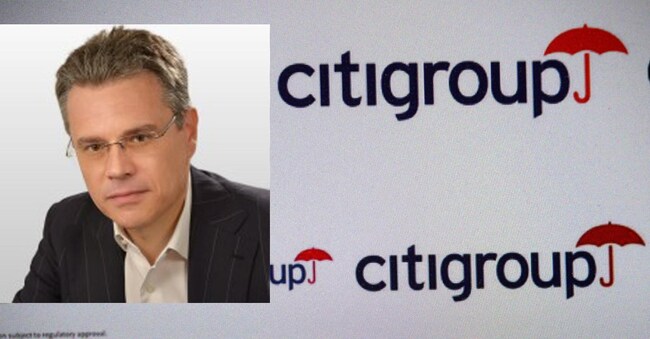
Roberto Costa - Citigroup

4' min read

4' min read

"The luxury sector in crisis? Not so. There is certainly a temporary phase of slowing demand, especially in China. But the slowdown does not affect all players in the sector. And the secular growth trend in luxury is set to resume. This also applies to development through acquisitions, which were declining in 2024 but may increase again in 2025'. Speaking in this interview with Il Sole 24 Ore is Roberto Costa, head of global luxury investment at Citigroup, the Italian investment banker who has been advisor to some of the biggest M&A transactions globally in recent years, including the merger between Luxottica and Essilor, the IPOs of Porsche and Douglas, the acquisition of Selfridge by Central Group, the sale of the Florence Group and the acquisition of Stone Island by Moncler .

For the luxury sector, 2024 was a difficult year, in some cases even a crisis. What are the causes? Is it a transitory phenomenon?

Loading...

One reason is certainly the drop in demand in China. But I would not speak of a luxury crisis, but rather of the cyclical slowdown of a strong growth trend that had been going on for ten years. By the way, it would be more appropriate to distinguish: not all groups in the sector had revenue contractions in 2024, as Brunello Cucinelli demonstrated. And it would also be appropriate to look not only at the immediate but at the perspective of the next ten years, as some sovereign wealth funds are doing when considering investing.

Are luxury groups paying for excessive price increases?

For years, we lived in a market where global consumers were willing to buy at increasing prices. Rising prices were driven by increasing demand. A relative but temporary peak was reached. I remain convinced that the secular upward trend in the luxury sector, driven by an increase in the number of new consumers who see their income capacity rise, especially in the populous Asian continent, is set to resume after a lull.

The slowdown in revenues and profits has often led to a heavy de-rating of stock market prices in the sector. Is a de-rating of valuation multiples taking place?

Again, I would urge against generalisations. Hermès continues to have 'its' valuation multiples. In general, I would say that at this stage luxury multiples have fallen to more normal levels. But on average the price-to-earnings ratio is still around 20, a level enviable by other industries.

Does the fall in quotations make the prospect of an M&A recovery more likely or more distant?

It is clear that, in a phase of slowing demand, the focus of the management of luxury groups is more on business management than on acquisitions. But already those who are stronger are evaluating the opportunities on the market. The M&A is set to restart.

Looking at stock market multiples, Hermès seems not to have been affected at all by the crisis and continues to quote over 40 times earnings. Do you think it will take advantage of this to make acquisitions?

The strategy of Hermès, like that of Chanel, is clear and successful: business growth without the need to make acquisitions. I would be surprised if the strategy were to change.

The European giant Lvmh is in the throes of a top management reorganisation that sees the role in the group of the second generation of the Arnault family increase. Will something also change in the strategy? Or will growth through acquisitions continue?

The changes at the top have taken place as part of a continuity strategy. I see no shake-ups on the horizon. Lvmh has become a global giant that spans various luxury sectors. I expect that in the future they will acquire other brands to strengthen the vertical channels they have already built.

Since the beginning of the year, Kering, which controls Gucci among others, and Burberry have lost over 40% of their stock market value. Do you think that the relaunch will only require industrial actions or will it also pass through M&A operations? The uncertainty concerns above all Burberry, which for months has been considered a 'prey' on the market....

Kering has a highly effective shareholder base and top management. Gucci's temporary crisis should be compared with the growth of the previous ten years. As for Burberry, the new CEO was well received by the market, which showed appreciation for the relaunch strategy.

Moncler and Prada are the two Italian biggies worth the most on the stock market. Do you think they will also grow through acquisitions?

Meanwhile, I am pleased to point out that, even in a period of market contraction, both Moncler and Prada continue to grow. They have effective shareholders, management and strategies that are yielding results that are also appreciated on the stock market. At this stage I believe that they too are focused above all on business management. But in perspective I do not exclude that they also aim to grow through acquisitions.

In the US, the antitrust has blown up the merger between Tapestry and Capri Holdings, which among other things controls Jimmy Choo and Versace. Do you think the Italian fashion house could be sold?

The management of Capri Holdings has stated that the group is now open to a review of its subsidiaries. There is no doubt that Versace is a brand with great potential, just as Michel Kors has a much larger target market than luxury.

You were advisor to the merger between Luxottica and Essilor years ago. Will the new Essilor led by CEO Francesco Milleri continue to grow?

I am certain of this. They have a clear and modern business vision and are focusing on the new 'Med-Tech' sector in which they will also grow through acquisitions.

Copyright reserved ©
Loading...

Brand connect

Loading...

Newsletter

Notizie e approfondimenti sugli avvenimenti politici, economici e finanziari.

Iscriviti