
Costa Rica, populist right-wing candidate Laura Fernandez wins elections. Here is who she is
Laura Fernández, 39, considered the political heir of outgoing president Rodrigo Chaves, won a clear victory
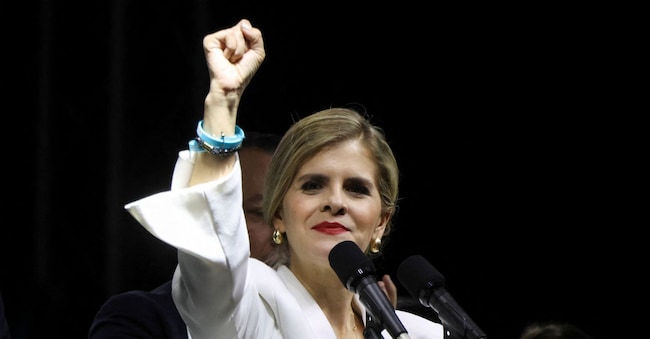
Costa Rica turns over a new leaf and hands over the country's leadership to the populist right. Laura Fernández, 39, candidate of the ruling party and considered the political heir of outgoing President Rodrigo Chaves, won a clear victory in the first round of the presidential elections held yesterday. With 69.4% of the ballots counted, Fernández garnered 49.61% of the vote, far exceeding the 40% threshold needed to avoid a runoff. Far behind was social-democratic candidate Álvaro Ramos, standing at 32.12%, according to official data from the Supreme Electoral Court.
The result also exceeds the expectations of pre-election polls, which put Fernández at around 44%, and consolidates the wave of successes of conservative forces in Latin America. An outcome enthusiastically welcomed by Salvadoran President Nayib Bukele, who has already sent his congratulations to the newly elected.
A former Minister of National Planning and Chaves' former chief of staff, Fernández has built her career within the public administration, becoming a key figure in the current establishment. According to Pilar Cisneros, leader of the governmental majority in parliament and Chaves' historical ally, the candidate was selected by a small circle of the outgoing president's loyalists: 'Few people know the state like she does. She knows where the knots are,' he declared.
During the election campaign, Fernández presented herself as a guarantor of political continuity, focusing above all on the issue of security, in a country grappling with an increase in drug-related violence. His agenda includes measures inspired by the 'Bukele model': a state of emergency in high crime areas, temporary restrictions on civil liberties, and the construction of a high-security megaprison on the model of the Salvadoran CECOT. An approach that has raised strong criticism from the opposition and sectors of civil society, concerned about a possible concentration of executive power and the erosion of democratic guarantees.
Politically, Fernández rejected accusations of being a 'puppet' of the outgoing president, while openly claiming his loyalty to the Chavista project. 'The change will be profound and irreversible,' he declared in front of supporters in San José, announcing the launch of a 'third republic' and symbolically decreeing the end of the political order born after the 1948 civil war.


