Housing crisis

Council houses, 250,000 waiting. In and around Milan 60 thousand on the list

Federcasa's figures photograph the widespread emergency in big cities

by Giuseppe Latour

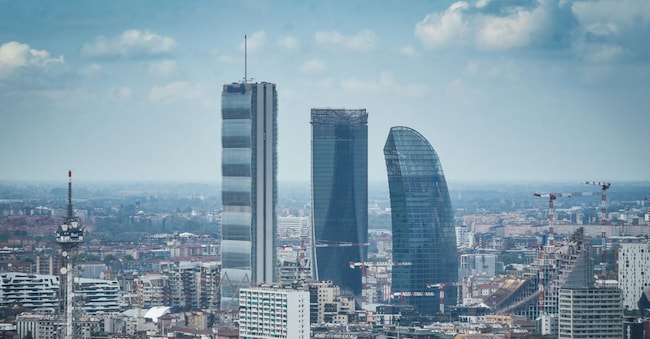
Le tre torri di Citylife nello skyline di Milano visto da Palazzo Lombardia, Milano 15 Settembre 2025 ANSA/MATTEO CORNER

4' min read

Translated by AI
Versione italiana

4' min read

Translated by AI
Versione italiana

Waiting lists forpopular housing line up 250,000 families, all over Italy. With a particular concentration in large urban centres, where the housing emergency hits hardest and cuts more people out of the market. The case of Milan - the most expensive housing market in Italy and, therefore, also the one that excludes the most people - is the most significant: 20 thousand people waiting in the city, rising to 60 thousand if we consider the entire hinterland and neighbouring municipalities. But the numbers are also high in other metropolitan areas: in Rome there are 16 thousand people on the list, in Turin about 10 thousand, in Bologna over 6 thousand.

The numbers

The numbers of Federcasa, the acronym that brings together 85 entities that, under various names (Atc, Ater, Iacp, Aler, Arca and others), manage public housing throughout Italy, intended for families withlow incomes and in socially fragile conditions. In concrete terms, this means approximately 800,000 housing units housing more than two million people. The data, still partial, are updated to 31 December 2024 and anticipate the Federcasa Observatory, which will be presented in the coming months.

Loading...

These numbers are characterised by great variability, because the allocation of housing in the different territories is continuous and occurs automatically. They serve, however, to provide orders of magnitude of the housing need. A housing need that, moreover, does not end with social housing. Outside these figures, there are also the waiting lists for students and those for subsidised housing. In short, the numbers with which the government's next housing plan will have to contend are even higher.

The House Plan

And it is precisely the housing plan that Marco Buttieri, president of Federcasa, is looking at: 'Both the European and national housing plan are starting. Within this framework, we have already asked and are still asking for a focus on public housing'. What is needed is support for the bodies that administer this heritage, which can also come through regulatory reorganisation. 'In order to put the budgets in order and do extraordinary maintenance on the properties,' says Buttieri, 'we could, for example, remove the Imu and Ires from the companies that manage them. Public housing is the social shock-absorber of the weakest segment, with average rents of about 100 euro per month. It must, however, be supported, otherwise we risk going into crisis'.

Critical issues

Going back to the national figure, the 250,000 citizens on the waiting list are, at least in part, people who will never have a council house. The reason is that, although they are eligible to apply, their scores are too low to enter the rankings in a useful position. These are, that is, families in a condition of housing distress, with difficulties in accessing the ordinary market, who try the social housing route despite having little chance of obtaining that type of property.

The other phenomenon to bear in mind, looking instead at housing, is that among the 800,000 theoretically available properties there is an important quota of houses that cannot be assigned. There are60,000 empty ones, because they are in fact uninhabitable due to problems such as non-standard installations, bathrooms to be redone, windows and doors to be replaced. The houses are often returned, once the assignment is over, in very poor condition and carrying out all this extraordinary maintenance, costing an average of 20-25 thousand euro, is too costly for the bodies that manage the properties, collecting fees of just a few dozen euro. Another 24-25 thousand dwellings are also subject tounlawful occupation. More than 80 thousand dwellings (10% of the national total) are, in short, not assignable.

The situation in Lombardy and Milan

A phenomenon that also concerns Lombardy and Milan. Here, there are almost 8,000 houses that are vacant due to lack of maintenance: 3,954 in Milan, 1,520 in Brescia, 481 in Bergamo, 955 in Varese and 906 in Pavia. To these must be added those occupied illegally. With an additional problem: regular assignments suffer from a 25 per cent delinquency rate. In total, there are 64,000 social housing units in Milan, of which about 28,000 are owned by the municipality and about 36,000 by Aler Milano. This compression of supply makes the situation even more difficult in a city in which the demand for council housing is very high: there are about 20,000 people on the waiting list in the Milan municipality alone, rising to 60,000 considering the entire hinterland and the municipalities near the Lombard capital. Housing assignments in the city alone, on the other hand, are about 1,300 per year. The rate of list evasion, in short, is low.

A figure that recounts very well the phenomenon of social exclusion and the very high costs, even for themiddle class, of large metropolitan areas. And which the Councillor for Public Housing of the Municipality of Milan, Fabio Bottero comments as follows: 'There are many questions and the problems are there for all to see, but our aim is to work to meet the housing need. We have many projects that make me optimistic, such as the zero vacant housing plan, which aims to recover 2,500 homes by 2027 and deliver them to those in need. But the work is much broader. There are the 1.4 billion euro made available by the Pnrr for the energy requalification of social housing: 'We have launched the calls for tenders and aim to move in for 13o million jobs,' says Bottero again. 'But there are also initiatives to support the concessionary rent in our municipality. Without forgetting that we are increasingly trying to move looking outside our territory, where there is a vast agglomeration of municipalities whose projects must be kept together'.

Copyright reserved ©
Loading...

Brand connect

Loading...

Newsletter

Notizie e approfondimenti sugli avvenimenti politici, economici e finanziari.

Iscriviti