The data

Countdown to funding the Sustainable Development Goals by 2030

Cuts to international aid threaten healthcare and emergency response in fragile countries

2' min read

Translated by AI
Versione italiana

2' min read

Translated by AI
Versione italiana

3,400 billion euros. This is the enormous annual funding shortfall that the world must bridge in order to achieve the United Nations’ Sustainable Development Goals by 2030.

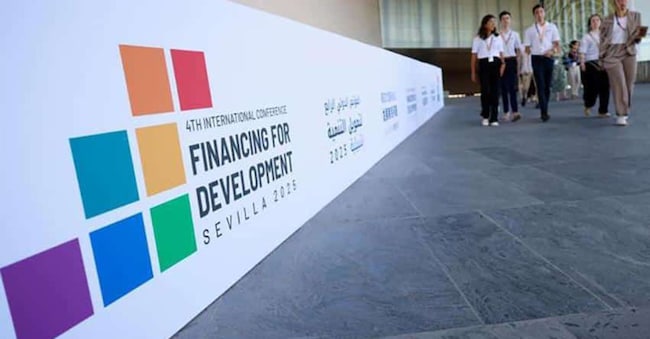
In early July, in Seville, during the Fourth International Conference on Financing for Development, a package of 130 reforms and actions – known as the Seville Compromise – was approved with the aim of reducing this gap.

Loading...

However, against a backdrop of growing conflicts and ever-increasing political and trade barriers, the prospects for a genuine revival of economic support for the Global South appear increasingly slim.

One of the most worrying signs came from the United States, which not only refused to sign the final document but also walked out of the conference. This is a significant absence, given that for decades the US has been the world’s leading donor of official development assistance, contributing between 25 per cent and 30 per cent of the global total.

This decision is not entirely unexpected: it follows the Trump administration’s decision to make a drastic 92 per cent cut to funding for the US Agency for International Development (USAID).

This shift away from foreign aid is not limited to Washington. In recent months, Belgium, France, the Netherlands, Sweden, Switzerland and the United Kingdom have also announced significant cuts to their foreign aid budgets.

These announcements are often driven by a desire to increase military spending in response to the new geopolitical landscape in Europe.

In 2024, official development assistance from developed countries fell by 9 per cent in net terms, whilst initial estimates OECD for 2025 point to a further decline of between 9% and 17%.

According to estimates by Oxfam, between 2024 and 2026 the G7 countries – which account for around three-quarters of global official development assistance – will have cut their funding for development in the Global South by 28 per cent.

TREND STORICO E PREVISIONE FUTURA DEGLI AIUTI PUBBLICI ALLO SVILUPPO PER SETTORE

Loading...

The cuts will hit crucial sectors such as healthcare hard, putting vital programmes – such as those tackling HIV – at risk. Among the countries hardest hit are Kenya, Mozambique, Uganda, South Africa and Tanzania, which are the main recipients of public development aid for the healthcare sector.

Loading...

Emergency humanitarian aid will also be severely cut back, with the cancellation of funds earmarked for people fleeing conflicts such as those in the Democratic Republic of the Congo or Sudan.

Goal 17 of the United Nations 2030 Agenda stipulates that OECD countries should allocate at least 0.7 per cent of their gross national income to official development assistance. Today, at an aggregate level, we remain at 0.33 per cent, and only a few countries – Norway, Germany, Luxembourg, Sweden and Denmark – exceed the target threshold.

And yet, these funds are more essential now than ever: in a world marked by rising debt, 3 billion people live in countries that spend more on servicing their debt than on providing healthcare or education.

Copyright reserved ©
Loading...

Brand connect

Loading...

Newsletter

Notizie e approfondimenti sugli avvenimenti politici, economici e finanziari.

Iscriviti