
Counterfeit Italian products in the US: 40 billion in losses for ‘Made in Italy’
An analysis by Coldiretti highlights the damage caused by the ‘Italian Sounding’ phenomenon, which harms Italian exports and consumers

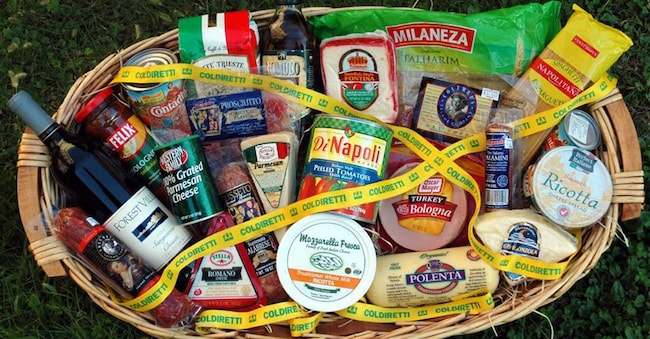
‘Italian sounding’ – that is, the practice of selling products that exploit names, images and colours (such as the flag) to appear Italian – is one of the most significant problems facing the ‘Made in Italy’ agri-food sector. According to an analysis by Coldiretti released at the opening of the Summer Fancy Food Show in New York, the phenomenon causes total economic damage exceeding 42 billion euros. Of this, around 2 billion stems from ‘Italian sounding’ products manufactured directly in Italia by exploiting the rules on ‘last substantial processing’ set out in the customs code, whilst a further 40 billion comes from the production of fake Italian food products in the United States.
Italian-sounding words in our country
According to Coldiretti, the problem concerns not only lost export opportunities, but also consumer protection. Among the examples cited by Coldiretti are several cases of foreign products which, thanks to European customs regulations, are marketed as Italian after processing. This is the case with pork legs from Germany and the Netherlands which, after salting, become ‘Italian hams’. The same mechanism applies to Chinese triple-concentrated tomato paste, to which water is added to turn it into tomato purée, or Tunisian olives that become Italian extra virgin olive oil thanks to the rules on inward processing. Even German or Polish milk is used to make mozzarella with the Italian tricolour flag on the packaging.
The American ‘Made in Italy’ fake
Alongside this phenomenon, Coldiretti draws attention to the imitation industry that has developed in the United States, which is worth 40 billion euros. According to figures from the US Department of Agriculture (USDA), approximately 222 million kilograms of ‘Parmesan’ are produced in the US every year, 170 million kilograms of ‘Provolone’, 23 million kilograms of ‘Pecorino Romano’ and almost 40 million kilograms of other cheeses inspired by Italian tradition, such as Friulano. Added to these are over 2 billion kilograms of mozzarella, bringing the total production of ‘Italian-style’ cheeses to just under 2.7 billion kilograms.
Production is concentrated mainly in the states of Wisconsin, California and New York, which together account for around 90% of the total . According to Coldiretti, the volume of these cheeses now exceeds that of certain products that have historically been symbols of the American market, such as Cheddar, Colby, Monterey and Jack.
However, this phenomenon is not limited to cheese. The cured meats sector is also seeing a proliferation of imitations of iconic ‘Made in Italy’ products, ranging from fake Parma and San Daniele hams to foreign versions of Mortadella Bologna and Salame Milano. No less significant is the case of wine, where kits and mixes are sold that allow consumers to artificially reproduce some of the most famous Italian wine appellations using powders and flavourings.

