Interview

Covip, Mario Pepe: “Pension funds to launch on 1 July without delay, with the support of the Supervisory Commission”

The Covip chairman speaks. For a one-year transitional period, there will be greater flexibility for funds in implementing the new requirements. Tax incentives can encourage institutional investors to invest in the real economy

by Giorgio Pogliotti

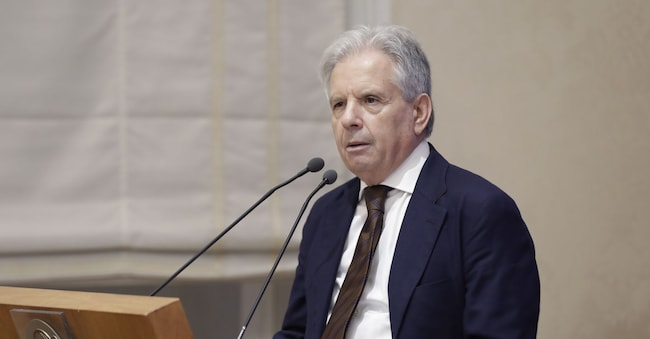
MARIO PEPE PRESIDENTE COVIP IMAGOECONOMICA

3' min read

Translated by AI
Versione italiana

3' min read

Translated by AI
Versione italiana

As 1 July approaches – the date on which new recruits will be automatically enrolled in pension funds – calls are coming from various quarters for a postponement until the end of the year to allow time to complete the necessary compliance procedures. President Pepe, is a postponement needed, and what approach will the supervisory authority take towards pension funds?

I would like to reassure the funds that we will oversee the implementation of the new rules in a balanced manner and with the utmost cooperation. For a one-year transitional period, there will be greater flexibility, but there is no need for any postponement. There are funds that already have equity sub-funds and can start immediately. We are ready and will strengthen our team with the 40 new hires we have planned.

Loading...

Does it share the concerns of the social partners who have signed a joint statement objecting to the portability, from 31 October, of employers’ contributions by members of collective pension schemes in the event of a transfer to another pension scheme?

This is a phenomenon that warrants close attention; here too, a balanced approach is needed. By adopting a collaborative and pragmatic stance, we will be able to assess the impact that portability will have on the system. It is important, however, that occupational pension funds engage with their members and explain the cost benefits involved.

How does she respond to Prime Minister Meloni’s criticism regarding the limited resources invested by pension funds in the Italian manufacturing sector?

I would like to remind Prime Minister Meloni that pension funds manage savings that are intended to guarantee future benefits for millions of citizens. They must operate in accordance with the principles of prudence, diversification, liquidity and the protection of their members. Their primary mission is not to support the productive sector. It is true that of the funds’ €227 billion in investments, only 19.3% goes to the Italian economy. The issue is making Italia more attractive to long-term pension capital. Conditions must be created so that pension reserves can find investment opportunities that are appropriate in terms of risk, return and liquidity. There are interesting initiatives, such as the indirect National Strategic Fund promoted by the Ministry of Economy and Finance, and the British government’s Mansion House Compact, which commits funds to investing a portion in the real economy. We need to look to institutional investors, with the creation of mega-funds, because critical mass can better absorb risks. However, among the 273 pension schemes operating in our country, there are many small-scale entities.

What measures could help channel more resources into the real economy?

One option would be to use tax incentives, with a targeted tax cut reducing the rate from the current 26% to 20% for pension funds investing in the real economy. Another tool to be introduced is a pension savings account from birth, modelled on the German system with a small amount of state support. If opened at one year of age, with a minimum monthly contribution of €100, by the age of 18 the balance would be €35,000, which would grow to €650,000 by retirement age. Given the current 350,000 births per year, there would be 3.5 million participants within 10 years. With a long-term agreement, a portion of these resources could finance the real economy.

The 775,000 new members in 2025 represent a ten-year high, but the participation rate among young people remains at 33.2%, whilst that of women stands at just 38.8%. How can the second pillar be extended to cover unaccounted-for businesses and sectors?

We want to ensure coverage for sectors that are currently unprotected. We have reached an agreement involving 90,000 members of religious orders in Previfonder, which will be operational by the end of the year; with the extension to staff at Catholic schools and religious healthcare facilities, a total of 500,000–600,000 people can be covered. I have proposed to Minister Crosetto that a portion of the 5% earmarked for defence be used to create a fund for the armed forces.

When will the social security arbitration body introduced by the PNRR decree become operational?

The regulations are ready; we are currently developing the IT platform, and it will be operational by the end of the year, or by early 2027 at the latest. The majority of disputes concern healthcare funds, reimbursements or compliance with contracts. Covip will serve as the forum for the out-of-court resolution of disputes. The next step is to establish Covip as the single supervisory authority for supplementary welfare, building on the expertise gained in a related field such as supplementary pensions and promoting synergies between pension funds and supplementary health funds.

Copyright reserved ©
Loading...

Brand connect

Loading...

Newsletter

Notizie e approfondimenti sugli avvenimenti politici, economici e finanziari.

Iscriviti