Made in Italy

Craft enterprises driving sustainability and innovation

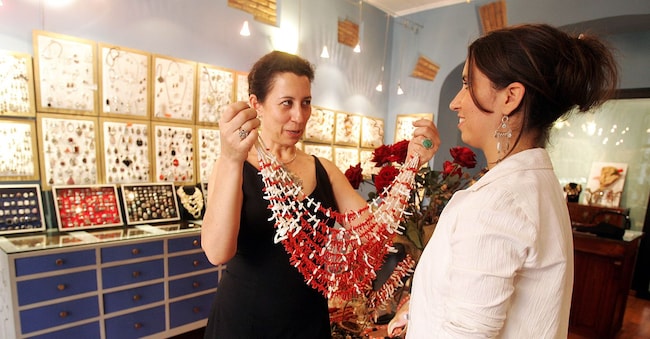
Presentation of the campaign 'Craftsmanship, the future of made in Italy': craft enterprises account for 58% of active manufacturing enterprises

CLAUDIO PERI - ANSA - KRZ

3' min read

3' min read

In Italy, more than one million enterprises are artisan, a figure equal to about a quarter of the entire Italian entrepreneurial system. Their incidence rises, however, in the manufacturing sector, where it reaches 58.5% of the total number of enterprises, and particularly in certain key sectors such as wood, food, clothing and mechanics.

These are some of the data presented on the National Made in Italy Day by the communication campaign 'Craftsmanship, the future of Made in Italy', promoted by Confartigianato, CNA, Casartigiani together with the Symbola Foundation and under the patronage of MiMit.

Loading...

More sustainable and hi-tech craft enterprises

.

Comparing the five-year periods 2015-2019 and 2019-2023 shows a growth in the share of micro and small enterprises that have made green investments, +23.2% and +45.9% respectively. These enterprises number over half a million (503,258): 67% operate in services, 33% in industry, 18% in manufacturing, 14% in construction, only 1% in public utilities. In 2024, 61.3% of the planned green jobs in Italy are related to micro and small enterprises.

Micro and small enterprises (Mpi) in Italy play a central role in the dissemination of artificial intelligence (AI) technologies: in fact, 93% of the enterprises pioneering the use of these solutions are micro and small enterprises. From a sectoral perspective, the share of micro and small enterprises using AI systems is highest in manufacturing (14.6%), followed by services (12.2%) and construction (11.5%). While an estimated 53.6% of micro and small enterprises plan to adopt AI solutions in their production processes

Export vocation

.

Italy, thanks also to the strength of the craft sector, is confirmed as the second largest manufacturing country in Europe. Handicrafts are present not only in the traditional Made in Italy sectors, but also in those that are capital-intensive and strategic for exports. In fact, 89.1% of exporting companies are micro and small: 68% export to Europe and over 30% to the rest of the world. These companies have a significant weight on the export value of the wood and textile industry. Italy is confirmed as the EU leader in terms of foreign sales made by micro and small manufacturing enterprises, with 27.8% of the EU total, followed by Germany (14%) and Spain (9.6%). Moreover, the incidence on GDP of exports by Italian SMEs is 3.3%, double the EU average (1.6%).

The success of Made in Italy is linked to the ability of Italian companies, especially micro and small ones, to collaborate in supply chains, districts and business networks. This is demonstrated by the share of network contracts headed by a micro or small enterprise, amounting to 89% of the networks activated from 2010 to 2024.

Inclusion and multiculturalism

In terms of employment, the strength of the Italian craft system is also linked to its ability to enhance diversity and integrate cultures. 99.7% of women's enterprises are micro or small. 57% of the foreign employees resident in Italy work in micro and small enterprises. 99.8% of foreign enterprises in Italy are micro and small enterprises. One in four young Italian enterprises is an artisan, and about 40% of the under-35s are attracted by the craft sector or would take up an artisan profession.

Micro and small enterprises are the engine of Italian culture and creativity. Looking at the cultural and creative sectors, these represent 99.7% of operators. An average figure ranging from the software and videogames sectors where the share of operators active in micro and small enterprises is 98.4%.

Trenching in the territory

.

Handicrafts are not only a pillar of production, but also an engine of economic development and territorial welfare. Micro and small enterprises represent, in many territories, the only social and economic stronghold. In small municipalities (less than 5,000 inhabitants) micro and small enterprises account for 99.4% of non-agricultural enterprises in the territory. Analysing the distribution of micro and small enterprises by geographical area, small municipalities in the North-West concentrate the largest share (38.7%), followed by the South (29.5%), the North-East (19.6%) and the Centre (12.2%).

Technological development

.

The integration of digital technologies and Artificial Intelligence in handicrafts is redefining the boundaries of production, improving the quality and customisation of products. The use of advanced software, digital platforms and automation enables craft businesses to be more competitive, optimise production processes and offer tailor-made solutions for an evolving market. The ability to network is an essential element in increasing the competitiveness of craft enterprises. Through territorial or supply chain collaborations, companies can share resources, know-how and strategies, strengthening their market presence and increasing the quality of their products and services. The prevalence of robots in small manufacturing enterprises is 19.1%, a higher share than the EU average (17.6%) and Germany (15.9%) - Europe's leading manufacturer. More than 10 thousand people work in Italian robotics companies, of which about 40% are employed in micro and small enterprises.

Copyright reserved ©

Brand connect

Loading...

Newsletter

Notizie e approfondimenti sugli avvenimenti politici, economici e finanziari.

Iscriviti