
Creative professionals and office workers, little time and no shared vision: what lies behind brands’ changes in direction

The attention economy has taken hold of the fashion world – and not just that, given that the microcosm and the macrocosm mirror one another. The cycle of information dissemination is continuous; it is accelerating ever more rapidly, in a manner one might describe as reckless. The prevailing belief is that the announcement of a change becomes the change itself, thereby ipso facto satisfying the demand of an increasingly distracted and ever-less interested public, when the problem is systemic and certainly lies elsewhere. What is lacking are brand visions, organically coordinated between creatives and managers.
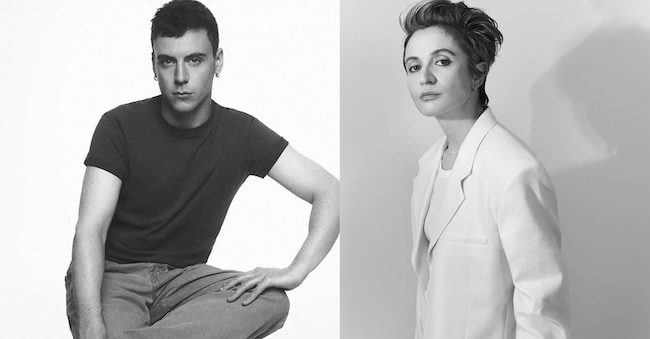
It was just a week ago that news broke of Anthony Vaccarello’s departure from Saint-Laurent, following a decade-long tenure marked by great success with both critics and the public. Today’s announcement, however, is twofold: Veronica Leoni is leaving Calvin Klein Collection and Seàn McGirr is leaving McQueen – both brief tenures, lasting less than the customary three years, but very different from one another. Whilst McGirr had, from the outset, seemed ill-suited to replace Sarah Burton and steer the fortunes of a brand built on a fierce and exaggerated sense of artistic authorship, Leoni, a chaotic minimalist, had slowly found her niche within the founder’s uncompromising purism – the collection presented in February had been her most convincing in this regard. But fashion waits for no one. Least of all today. There is no time to refine an aesthetic vision, whilst managers who are increasingly meddling in the design studio’s decisions do the rest.
The crux of the problem lies here: even creative professionals have become mere officers, mere employees, viewed as easily interchangeable cogs – and not even the key ones – in larger mechanisms. They are micromanaged, with little trust, and are allowed no margin for error – on paper, the very definition of uneconomical. They are told what to do, based on sales figures – perhaps even those of direct competitors. It is precisely here that creative visions fall apart, become watered down and fail to convince; and so the process starts all over again, with a further problem: every change at the top is a upheaval for the entire project team, with senior figures being cut out entirely along with the creative director, whilst those further down the hierarchy are left in hostile environments. There’s simply too much toxicity, that’s the problem.
Finally, it would be helpful if HR departments paid closer attention to their decisions at an early stage: not everyone is suited to recommending a creative director – certainly not the ‘queens’ of the major magazines, who are accustomed to abusing their power. In this respect, Anna Wintour has done nothing but cause harm, and it is time to acknowledge this.

