
Crespi: ‘Private partners are key to the growth of the Grande Brera’
Interview with the director-general of one of Italy’s largest museum complexes. He discusses the Art Bonus scheme and a special partnership

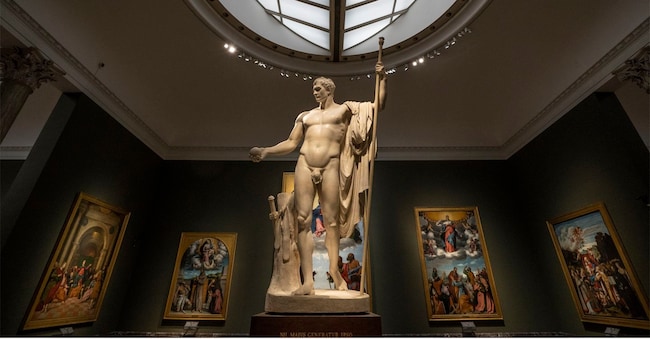
‘Nobody invites me to lunch any more, because as soon as I sit down at the table, I ask my host for 50,000 euros in sponsorship.’ Jokes Angelo Crespi, who for the past two and a half years has been director-general of Grande Brera – one of Italia’s largest museum complexes, comprising the Pinacoteca di Brera, the Braidense National Library, Palazzo Citterio and Leonardo’s Last Supper.
He’s joking, but – as with any good joke – there’s a grain of truth to it. Because the 2014 Franceschini reform, which established autonomous state museums such as Brera itself, set in motion a profound transformation of these cultural institutions which, through a managerial approach, have become efficient organisations, capable of investing to expand and improve their offerings, and a resource for the state itself, as well as being major tourist attractions.
In what way are you an asset to the state?
Unlike other public cultural institutions, such as cinemas or theatres, autonomous state museums such as Brera, the Uffizi, the Colosseum and Pompeii are receiving ever-decreasing levels of state funding. Of course, we receive significant support from the Ministry of Culture, which covers staff costs and provides funding for certain special projects, particularly for building renovations. However, we are not allocated resources comparable, for example, to the single fund for the performing arts. On the contrary, since last year we have been required to return 30 per cent of our ticket sales revenue to the MIC annually; in our case, this amounts to around 3.5 million euros for 2026. This creates a sort of solidarity fund so that the state can support smaller museums, which are unable to generate significant revenue through ticket sales. This is an ongoing process: this year we will still receive around 700,000 euros from the Ministry for operating costs – half the amount disbursed in 2025 – whilst from 2027 the museum will achieve full budgetary autonomy and will no longer receive any endowment funds.
A paradigm shift in museum management: how is the role of the director-general evolving?

