Security

Victims of Crime Directive, EU Council gives green light for final approval

Measures include a hotline for assistance, special protections for minors and faster and simplified reporting procedures
by Camilla Curcio

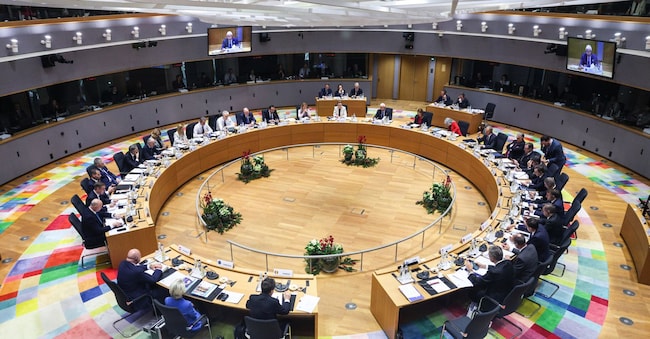
CONSIGLIO EUROPEO VISTO DALL'ALTO 7146

3' min read

Translated by AI
Versione italiana

3' min read

Translated by AI
Versione italiana

After the European Parliament, the EU Council also gave the final green light to the Directive strengthening support and protection for victims of crime. The new rules approved will make it easier for victims to report crimes they have suffered, to have access to detailed information on their rights and to an extensive and structured assistance network at European level. Not only that: victims' data will be subject to strict protection protocols.

This directive is actually not really new: it is, in fact, an update of the 2012 European law on the rights, protection and defence of victims of crime (Directive 2012/29/EU).

Loading...

"This update of the European law sends a clear message: victims deserve the right protection and an effective assistance system," said Costas Fytiris, Minister of Justice and Public Order of the Republic of Cyprus. "No one should have to face the consequences of a crime alone. With the European freephone number 116006, in any corner of Europe, victims will be able to get clarification of their rights and, if they need it, guidance on how to proceed."

There are, in fact, several measures introduced by this legislative restyling. Which, data in hand, was all the more urgent and necessary: according to the European Commission, in fact, there are about 70/75 million crime victims in the EU every year. In France alone, the hotline (116006) receives more than 72,000 calls per year. To date, only 14 European countries offer this service.

But let us try to take a step back and understand what the new features are.

116006, a telephone helpline

Victims, from anywhere in Europe, will be able to get quick assistance through a dedicated number: 116006. Through this hotline, they can be informed about their rights, but also receive emotional support and guidance on all available support services. The national numbers will still be able to continue to function.

But that is not all: the telephone line will be available in the official languages of each country and some of the services will also be provided telematically.

Simpler complaints

Member States will have to facilitate reporting procedures through the use of practical and accessible digital tools: in this way, victims will be able to report crimes online and attach evidence in digital format. In addition, effective reporting tools will have to be ensured for persons with restricted freedom, such as third-country nationals housed in immigration facilities or persons living in institutional care settings (e.g. facilities for the elderly or persons with disabilities), and simplified procedures for third-party reporting with the intermediation of civil society organisations.

Enhanced protection for minors

For minors, specific services will be provided, including age-appropriate protective measures, psychological and administrative support, medical examinations and the possibility of video recording of testimonies.

Specialised shelters

There are also support services for victims with special needs, provided only after individual assessments by experienced professionals, and for victims of sexual violence, including access to emergency contraception, post-exposure prophylaxis treatment, testing for sexually transmitted infections, and access to abortion.

Free legal assistance

Individuals involved in legal proceedings who cannot afford a lawyer will be able to enjoy free legal aid, which will help them to defend their rights and obtain just compensation.

Faster refunds

Victims who, in the course of legal proceedings, manage to obtain compensation will be able to rely on a number of far more stringent measures to speed up the payment by the perpetrator of the crime. In the case of violent intentional offences, i.e. committed with malice and with the specific aim of inflicting violence on the person concerned, if the compensation is not paid within a reasonable timeframe, Member States - in certain cases - may anticipate the payment and subsequently recover the sum from the offender.

Personal Data Protection

Protection is, of course, also talked about for the personal data of victims. Which, with the new regulations, will be subject to enhanced security standards, with the aim of pushing and encouraging them to turn to justice and report.

Next steps on the calendar

The directive will be published in the European Official Journal in July and will officially enter into force 20 days after publication. Member States will have 24 months to transpose it into national law.

Copyright reserved ©
Loading...

Brand connect

Loading...

Newsletter

Notizie e approfondimenti sugli avvenimenti politici, economici e finanziari.

Iscriviti