Industry

Crisis hits Italian textile industry with divestments and closure risks

The sale of the Schneider Group's assets to Modiano and the liquidation of Canepa confirm the urgency of supporting an industry of excellence

by Chiara Beghelli

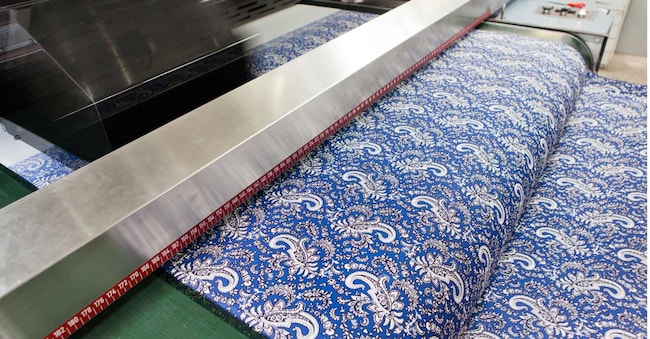
Realizzazione di un tessuto di Canepa

5' min read

Translated by AI
Versione italiana

5' min read

Translated by AI
Versione italiana

A transfer of ownership, a closure that seems imminent: these are the faces of the crisis of the Italian textile industry, an excellence that in 2024 had a turnover of 7.1 billion euros, down 7.7% compared to the previous year, and that is also looking with concern at the next budget in 2025. Just yesterday, Confindustria Moda and Confindustria Accessori Moda presented in Rome the highlights of their Relaunch Plan for 2035, an occasion to recall that Italy is the leading textile manufacturer in Europe but that between 2017 and 2023 it lost more than 4,600 companies in the textile-fashion supply chain.

Canepa "A Como tessuti sono eccellenza"

The first case concerns the historic company G. Schneider Spa, headquartered in Milan, which has announced the sale of all its wool business, with the exception of those in Mongolia and South America, to G. Modiano, another important company in the sector based in London. The most valuable object of the deal is certainly the plant in Italy, i.e. the combing plant in Verrone, the only combing plant in Italy capable of processing not only fine and superfine wools, but also cashmere, other special fibres and the early stages of vicuña, the world's most valuable animal fibre. Controlled by Schneider, other companies such as Marzotto, Loro Piana and Ermenegildo Zegna also entered its capital in 2012 with a 15% share each. The factories in Egypt and the Czech Republic were also sold to Modiano.

Loading...

The Schneider Group has a production capacity of 14,500 tonnes of wool and more than 600 tonnes of speciality fibres; in 2023 it had a turnover of approximately EUR 170 million.

G. Modiano, founded in 1957, has concentrated its production in Nejdek, Czech Republic, where one of the most modern and efficient wool washing and combing plants in the world is located. Now in its third generation, the company founded in 1922 by Giovanni Schneider in Sydney, Australia, has focused on wools of excellent quality and micronage and has increasingly focused on the perceptibility and sustainability of its supply chain, including through the creation of the Authentico brand.

"At a time when the textile industry and fashion brands seemed to give less importance to the excellence of raw materials, we continued to invest in traceability, sustainability, quality and Made in Italy,' said Elena and Giovanni Schneider, who now run the company. 'Like our grandfather and father, we have always sought excellence and believe that we represent luxury at the beginning of the textile supply chain, acting as a link between the agricultural and industrial worlds. We express our sincere gratitude to all those who have contributed to the development of our company and its continuous growth and evolution, believing in us and our values, even in difficult times. We are confident that we have found a new and worthy home for the Schneider Group and that the company will continue to thrive together with G. Modiano Ltd".

"This investment will further reinforce our companies' commitment to innovation, sustainable practices and the preservation of traditional textile know-how," note Lorenzo and Michele Modiano, sons of founder Giuseppe Modiano. "Being both family-owned businesses, we feel a strong sense of ownership for what we do, which gives us the ability to plan for the long term, committed to building on and improving the work of previous generations,

Moving from wool to silk, a more painful case opens up, or rather, reopens: it is since 2017, in fact, that the historic Canepa company has been going through periods of deep crisis and destabilising changes of ownership. After a relaunch that began in 2021 with the umpteenth sale, to the Muzinich fund and Invitalia, with shares of 70% and 30% of the capital respectively, a few days ago the San Fermo della Battaglia-based company declared that it would be put into liquidation by the end of the year, due, as a note from the board reads, 'to the persistent negative trend in economic results, in a very critical general market framework'.

In addition to the San Fermo plant, Canepa owns one in Lurate Caccivio, also in the Como area, and a weaving mill in Melpignano, in the province of Lecce. More than 150 jobs are at risk in San Fermo alone.

In this case, too, the protagonist is a company with a long and glorious history, beginning in the 18th century. It seems that where the main factory stands today there used to be an expanse of mulberry trees, necessary for sericulture. Then, after the Second World War, Marco Canepa took over Serica Lombarda, involving his three sons. One of these, Giovanni, quarrelled with his sisters and founded his own company, today's Canepa, which one of his sons, Michele, an economics student, joined as soon as he was nineteen.

After growing and being appreciated by the most important labels, rising to third star of the district of Como together with Ratti and Mantero, the Canepa family split again: at the end of the 1990s Michele left the company and took over Taroni, another historical name of the Como silk industry, while his sister Elisabetta remained at the helm of Canepa. Michele Canepa, however, in 2019 came back to San Fermo della Battaglia when he saw that the family business was creaking after being sold the year before to the Dea Capital fund. So he bought it back, 100%. In 2021, then, Canepa received an 18 million euro capital injection (9 from Muzinich, 5 from Invitalia and 4 from Michele Canepa), and at the same time launchedan ambitious relaunch plan, which unfortunately did not succeed.

The risk now is that Canepa's heritage of human, technological and cultural skills may be dispersed: the company had launched the patent SAVEtheWATER - Kitotex, which, by using a non-toxic, biocompatible and biodegradable substance of natural origin obtained from the chitin contained in the exoskeleton of crustaceans, makes it possible to reduce water consumption by up to 95% and energy consumption by the same percentage, in addition to the substantial elimination of pollutants. Furthermore, it was the first textile company in the world to adhere to Greenpeace's Detox campaign, for a transparent fashion supply chain free of toxic substances. Not only: its archive is one of the most important in the Italian textile industry, boasting over 15,000 volumes with fabric samples and one of the most advanced digitisation systems in the world.

Despite the fact that the company's top management, shortly before the announcement of the request for liquidation, had signed an agreement with Mimit to lay off the company until March 2026, the company then announced that it wanted to cease operations by next month, explaining that it was studying the formation of a newco into which it would channel part of the resources and save about 50 jobs.

Copyright reserved ©
Loading...

Brand connect

Loading...

Newsletter

Notizie e approfondimenti sugli avvenimenti politici, economici e finanziari.

Iscriviti