
Critical minerals: Tajani says, ‘We are working towards an agreement with the Democratic Republic of the Congo’
Conference in Rome: “Focus on exports: businesses and regions of Central Italia, looking ahead to the 2026 National Export Conference”. Bianchi (Confindustria): “Small businesses are export champions; now we must support them in integrating into overseas value chains”

Key points
- Tajani: ‘The US and Europe are crucial, but the aim is also to diversify’
- Bianchi (Confindustria): ‘Small businesses are export champions; now we must support them in overseas value chains’
- [Tripoli (Unioncamere): ‘Businesses in Central Italy are already key players, with potential still very high’
- key point]
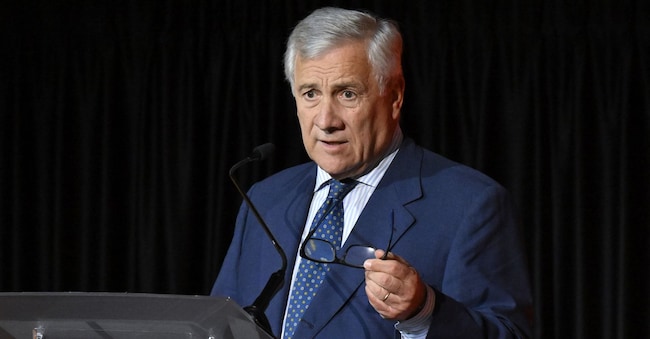
One of the key issues in foreign policy, which is also of strategic importance to the business world, is that of critical raw materials. “For the first time, Italia has a genuine foreign policy on critical raw materials,” emphasised Deputy Prime Minister and Foreign Minister Antonio Tajani in a message sent to the conference: “Export Objective: Businesses and Regions of Central Italia, towards the 2026 National Export Conference”, organised by the Ministry of Foreign Affairs and International Cooperation. “We have already signed dozens of agreements in this area, the most recent with the United States and Argentina. We are now working on a similar political agreement with the Democratic Republic of the Congo as well,” added Tajani, “an important African country under the Mattei Plan, rich in critical minerals that are crucial for our businesses.”
Following Turin and Bari, on Tuesday 6 October it was the turn of Rome and Central Italia. Over 1,200 companies took part in the event, which was held at the ‘Ennio Morricone’ Auditorium Parco della Musica. More than 600 meetings were held with the heads of the commercial sections of the Italian embassies and with experts from ICE, SACE, SIMEST and CDP.
“I wanted to expand the internationalisation team in collaboration with Unioncamere, with whom we signed a major partnership agreement in recent months,” Tajani noted. “And today we are launching a new application as part of the Export Plan. It is a further practical and operational tool for accessing contacts, opportunities and resources from the ‘Sistema Italia’ network, for every market of interest, always at your fingertips on your mobile phone.”
The minister sent a clear message: “Despite wars, tariffs and energy crises, Italia’s exports continue to surge,” he noted. “In 2025, our exports reached a record high of 643 billion. In the first seven months of 2026, exports grew by 4.6 per cent, almost double the European average. We are aiming to reach 700 billion by 2027. I expect Central Italia to make a key contribution. With the strongest export growth – up 11.6 per cent in 2025 – confirmed again in 2026, we’re heading in the right direction!”, Tajani emphasised.
Tajani: ‘The US and Europe are vital, but the aim is also to diversify’
“Our watchword,” emphasised the head of the Ministry of Foreign Affairs, “is diversification. The United States and Europe remain key markets, but I wanted to step up our efforts in all high-potential markets. Together with Confindustria and over a hundred companies, we were the first to visit Argentina and Brazil following the European Union’s agreement with Mercosur. We are giving a strong boost to our partnerships with India and Asia, the Gulf, Africa and the Balkans. We have initiatives underway and planned across every continent.”

