
Defence, Crosetto: 'Reorganisation plan by February'. Portolano: 'Hybrid threats are a structural element of security'
Institutions, armed forces and companies discuss tools to cope with an increasingly complex environment
by Carli, Dominelli, Fontana and Miglietta
 Aggiungi Il Sole 24 Ore
ai preferiti su Google
Key points
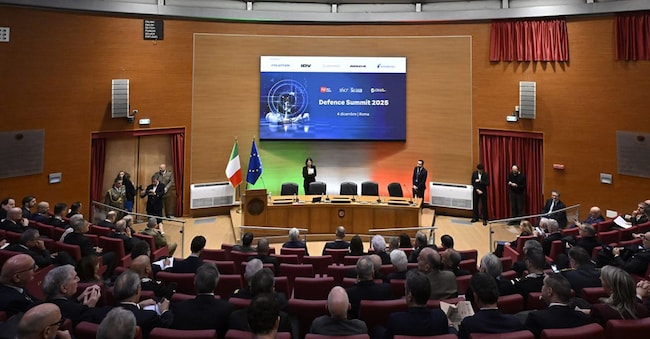
The changed geopolitical context has changed and broadened the spectrum of threats that must be faced. And this entails a profound reorganisation of the system, which was highlighted yesterday by the Defence Minister, Guido Crosetto, during the first edition of the Defence Summit, which took place on Thursday 4 December. Curated by Il Sole 24 Ore and the Instituto Affari Internazionali in collaboration with the Centro alti studi per la difesa, the event was attended by more than 1,800 participants, including both those present in the hall and those connected remotely. "I want to bring the theme of the total reorganisation of defence to Parliament in January-February: it means building a defence from the point of view of men, regulatory and legal instruments at 360 degrees to meet the challenges of the future," explained the Defence Minister, who in the morning had illustrated at a hearing before the Defence Committees of the House and Senate on the multi-year defence planning document for the three-year period 2025-2027 and who yesterday closed the event hosted by the Casd. Whose president, Stefano Mannino, in his opening speech, emphasised the need for increasingly specialised skills to build a resilient and flexible defence model. Which increasingly has to reckon, said the editor of Il Sole 24 Ore, Fabio Tamburini, with hybrid wars, against which we must oppose 'completely different instruments from conventional ones', always bearing in mind Article 11 of the Constitution, according to which 'Italy repudiates war as an instrument of offence against the freedom of other peoples and as a means of settling international disputes'. Bearing in mind, as noted by the president of the Istituto Affari Internazionali, Michele Valensise, that the complexity of the scenario 'leads to the interconnection of operational domains'. And it requires strategic alliances such as between Italy and Germany, according to the German ambassador to Italy, Thomas Bagger.
In short, the responses must be carefully modulated following a precise course that the Undersecretary of State for Defence, Isabella Rauti, declined to describe as follows: 'We must be able to respond proactively with an integrated response'. Which, specified the Undersecretary of State for Defence, Matteo Perego di Cremnago, also passes "through the strengthening of cooperation between Europeans".
The path, therefore, seems to be marked out. And, in the development of a new model, a crucial role will have to be played first and foremost by the companies, which will have to step up their efforts. "Doubling the production capacities of companies over the next few years is possible but difficult, especially for the complex world of medium and small suppliers, for whom access to credit is more complex," stressed Giuseppe Cossiga, President of the Federation of Defence, Aerospace and Security Companies. "The system is complex, government, armed forces, industry, the civil world, credit, everyone must be involved," he added. "Multiplying production capacities will also require increasing the demand for raw materials, from the most advanced to the simplest," Cossiga continued, "from steel to powders for light munitions." For Cossiga, there is no shortage of problems: 'Today only one Swedish company produces the special steel for tank armour for the whole of Europe. What happens if everyone increases demand? We then need basic materials such as explosives and powders for light ammunition. The West has forgotten that drones and AI are needed as well as rifles and pistols'.
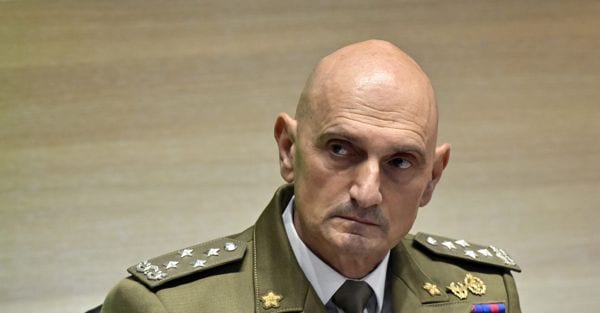
Chief of Defence Staff Portolano: "Hybrid threats are now a structural element of security"
Their top brass also spoke at the event, starting with Luciano Portolano, Chief of Defence Staff, who pointed out that 'hybrid threats are now a structural element of security'. "Increasing strategic complexity and rapid decision cycles require not only speed of action, but above all the ability to build a unified and shared understanding of the battlefield," continued Portolano. "My intention, among other things, is to connote the Military Instrument with the necessary flexibility, understood as the ability to constantly adapt to the needs (even the most onerous) dictated by constantly evolving scenarios. In this articulated framework, the tipping point of Multi-Domain Operations is the ability to merge, interpret and make available to Commanders the enormous amount of data generated in all operational domains, in order to pursue greater connectivity capacity and the necessary security and resilience of the cyber-space. Therefore,' added Portolano in his speech, 'in the modern operational environment, data (its availability, integrity, accessibility and protection), becomes both a central resource of national security and the foundation of a new way of conceiving command and control, which must, however, continue to be based on the indispensable principles of simplicity, linearity, unity of command and widespread control'.
While Carmine Masiello, Chief of Staff of the Army, sent out a clear message: 'We cannot relegate the problem of defence and security to the military alone'. And precise actions are needed, as highlighted by Salvatore Luongo, General Commander of the Carabinieri Corps: "We need to replenish the workforce and have regenerated operational forces, also in terms of age.

