The Sin

Crotone, the reclamation of one of the most polluted sites in Europe begins. But if there is wind, the site stops

400,000 tonnes of pollutants resulting from the zinc hydrometallurgical process must be disposed of, but if there is wind above 30 km/h (maybe even less), gusts are a problem
by Donata Marrazzo

(Adobe Stock)

5' min read

5' min read

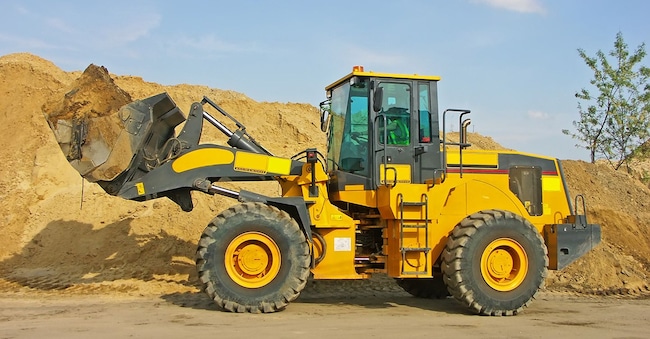
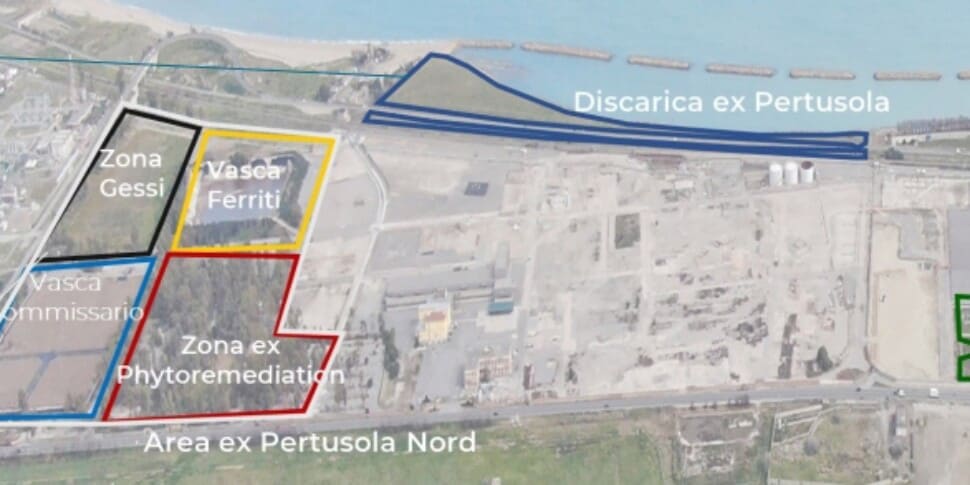
10.30 a.m. on a weekday at the end of summer in Crotone, clear skies and little wind. Over 30 km/h (but perhaps even less) gusts would be a problem here. On Via Leonardo da Vinci, between the sea and the mouth of the Esaro river, excavators are in action and the trucks for the reclamation of the landfill site serving the former Pertusola Sud are filling up with earth. Which looks like just dirt, but instead it is industrial waste, 400,000 tonnes of pollutants from the zinc hydrometallurgical process: zinc ferrites with heavy metals such as cadmium, arsenic, manganese and germanium. Also cubilot, used in the past as an inert material for building roads. Even rare earths. The caissons are covered with a thick blue cloth.
(Per gentile concessione della Gazzetta del Sud)

The Integral Reclamation of the Crotone Sin

After at least 25 years of controversy and postponement - suspended projects, ministerial decrees, warnings and appeals to the Tar - Eni Rewind, the owner of the area, is carrying out the integral reclamation of one of the most polluted industrial sites in Europe, that of the landfill of the French Société Minière et Métallurgique de Penna Roya, which in the early 1900s produced electrolytic zinc, and that of Montecatini, which before becoming Enichem, in the city of Pythagoras, produced fertilisers and fertilisers for agriculture, with the Società Meridionale Ammonia. Specifically, "up to now, materials totalling around 11.3 thousand tonnes have been removed and transported to the 'D15' deposit, inside the site," says Eni Rewind, "of which 2.5 thousand tonnes have already been disposed of at the Cisma landfill in Sicily".

Loading...

The wind stops the construction sites

.

The problem is that if the wind rises above the threshold, and it happens often in that area, the construction site stops. The risk - of course - is to raise toxic particles in the air. Work is being carried out in the open air and instead of that, bulkheads are needed, or rather, a tensile structure, as required by the Paur, the single regional authorisation measure, which secures all the phases of the landfill, also establishing that it is the regional environment agency that monitors and controls operations. But despite a stipulated agreement and the deployment of five new units (there were 17 during the first phase of the operational project that began in 2019), no one inspects.

Characterisations after each collection

.

Foggers keep the soil moist, piezometers monitor the water table, and workers exposed to pollutants work wearing overalls, masks and gloves. The waste is taken from the landfill at sea, stored in protection and safety bays, characterised (i.e. defined by type and hazardousness) and sent to authorised facilities.

The final destinations

.

"The non-hazardous waste will be delivered to contracted landfills in Sicily, Tuscany, Piedmont and Veneto," adds Eni Rewind, "while the hazardous waste will be disposed of in Sweden at two landfills in the cities of Kumla and Sundsvall, owned by the company Fortum, for which the necessary cross-border notifications have been authorised, i.e. up to 45,000 tonnes, by July 2026. They will leave the port of Gioia Tauro, closed in containers, for Europe's largest hydrometallurgical recycling plant.

The extraordinary commissioner's operational power-duty

.

The extraordinary commissioner delegated by the government for the reclamation of the SIN, Emilio Errigo, who for years has been pushing for controls and technical tables and has denounced in his communiqués 'reticence, resistance, systemic distortions and faulty investigations' regarding a reclamation process that has been denied for too long, claiming his 'operational power-duty', today rejoices at the sight of the trucks leaving Crotone, but is not resigned to having to take the materials out of the region. "This year we will dispose of a small part and then what will we do with the rest?" Obviously the question is rhetorical, with an implicit answer inside. Because on the reclamation of Crotone, the Paur dictates the law, its constraints and prescriptions established to protect territories and communities. But the intention is to overcome it. Or cancel it.

European Regulation 2024/1157

.

"As of May 2026," the company's note continues, "EU Regulation 2024/1157 will apply, which prohibits the export of waste unless it can be demonstrated that 'the waste cannot be disposed of in a technically feasible and economically viable manner in the country in which it was generated'. It is expected that it will therefore not allow for new transboundary notifications, which are generally valid for 12 months'. So, the European regulation overcomes the Paur?

The Paur of Discord

.

The Paur dates back to August 2019 and prohibits the delivery of waste from the Sin area reclamation in the region. Attempts to 'circumvent' it - a decree by the Ministry of the Environment and an order by the Extraordinary Commissioner - in order to have the materials disposed of in a plant in the Crotone area were definitively thwarted by a ruling of the Regional Administrative Tribunal that upheld the appeal filed by the Region, Province and Municipality.

Oliverio, you cannot economise on reclamation

"But here they want to save on the costs of a reclamation that Ispra estimates at almost two billion euro, leaving the community of Crotone exposed to the contamination of poisons with serious health consequences," denounces former regional president Mario Oliverio, author of the Paur and promoter of the Fuori i veleni committee. Crotone wants to live -. Now they are looking for a new instrument, commissioner Errigo has announced, a decree-law to cancel a regional measure that has already withstood appeals, ordinances and even a ministerial decree. This would open an unprecedented institutional conflict. And the European directive that would prohibit the export of waste from May 2026 is also cited out of hand. The regulation also provides for several exceptions, such as the case of territories without plants,' Oliverio concludes. Postponed until after the elections, the new services conference to discuss, at the Ministry of the Environment, precisely the approval of the 'Operational Land Reclamation Project'.

Waste as a resource

.

In the meantime, science and technology are pointing out new paths to the recycling of waste materials, as will be done, for example, by the Swedish companies to which Crotone's hazardous waste will be delivered. But also in Calabria, Unical, together with Arpacal and the Catanzaro-based Ettore Majorana laboratory, is working on the study of the characterisation of contaminated materials, 'not only to assess their impact on the territories and establish their threshold,' as Arpacal technician Salvatore Procopio explained at a recent conference, 'but also to make the most of every component of industrial waste and turn it into a resource. Do you know how much germanium goes for? Sixty thousand euros per kilo'.

Copyright reserved ©
Loading...

Brand connect

Loading...

Newsletter

Notizie e approfondimenti sugli avvenimenti politici, economici e finanziari.

Iscriviti