
Cryptocurrencies and art: what future prospects between innovation and tradition?
Auction houses integrate innovative solutions to meet the needs of digital customers and the use of blockchain technologies, but the traditional sector remains tied to conventional payment methods

5' min read
Key points
5' min read
Bitcoin is in a recovery phase, having emerged from the so-called 'cryptocurrency winter' when values fell below $20,000, freezing the growing Nft market. According to a report published last August by NFTevening, since the dramatic collapse in 2023, the average Nft owner has suffered a 44.5 per cent loss on their investment and 95 per cent of Nfts are considered 'dead'. What has happened in recent weeks involving cryptocurrencies has nothing to do with Nfts but with the traditional art market.
What, then, does the recent cryptocurrency rally mean for the art and collectibles market?
On 22 November, Bitcoin soared to an all-time high, surpassing USD 98,000 (EUR 94,760) with an increase of 120% since the beginning of the year. Driving the rally wasDonald Trump's decisive victory in the US elections and promises to make the US 'the cryptocurrency capital of the planet'. Events that brought the global crypto market to a value of USD 3 trillion: the figure is updated to mid-November and is up 79.2% compared to January 2024, when the total turnover of Bitcoin, Ethereum and other crypto was around USD 1,680 billion.

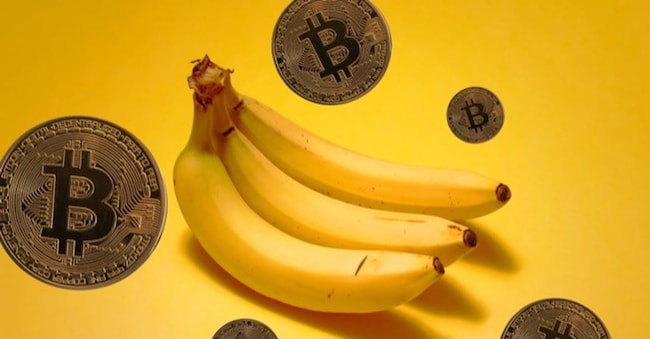
Raising the profile of cryptos was the purchase of Comedian, Maurizio Cattelan's viral silver-taped banana by Justin Sun, founder of cryptocurrency platform Tron (TRX) for $6.24 million (about TRX 32 million) in Sotheby's "The Now and Contemporary" evening auction on 20 November. Sun's Tron blockchain network facilitates a large volume of USDT stablecoin transactions. In March last year, the entrepreneur proposed buying the failing Swiss investment bank Credit Suisse for $1.5 billion to 'integrate it into the Web3.0 world.
What is the significance of buying a conceptual artwork with payment in crypto?
For Sun, the work represents a marketing opportunity and his gesture not only reinforces his public image, but also underlines the role of cryptocurrencies as a means of participation in mainstream markets, and the inclusion in the auction can be seen as a further step towards their mainstream acceptance. However, the road is still uphill, there are many open questions about cryptocurrencies, not to mention the extreme volatility.
Auction houses and crypto
.Sotheby's and Christie's have introduced crypto for digital art transactions, whereas for physical art it is a rare event. In 2021, Sotheby's allowed bids in ETH (Ether) for two works by Banksy, 'Trolley Hunters' and 'Love Is In The Air' (2006), becoming the first live auction with cryptocurrency as the standard currency for real-time bidding on physical artworks. Rival Christie's operates its Christie's 3.0 platform completely on-chain, i.e. with transactions verified and recorded on an Ethereum blockchain (ETH) for digital art only. However, as Christie's points out, many collectors prefer to pay for digital art purchases in traditional currency to preserve crypto as an investment.
And the Italian auction houses?
"At Pandolfini," explains CEO Pietro De Bernardi, "we have adopted a rigorously selective approach to the implementation of cryptocurrencies as payment instruments, maintaining a position of absolute caution even with regard to emerging sectors, including NFT, which also present a natural predisposition to the use of such instruments. This choice,' De Bernardi continued, 'is a precise corporate strategy aimed at combining technological innovation with maximum financial transparency, to guarantee full traceability of transactions, ensure maximum transparency in financial flows, and fully comply with anti-money laundering regulations, also to protect customers and market integrity. For Pandolfini, the prospect of future adoption in the art market "is not precluded, but must be accompanied by a comprehensive regulatory framework, effective control systems, and traceability mechanisms comparable to those of traditional financial systems; in the medium term and on a large scale, we envisage a possible scenario of progressive integration, subject however to the fulfilment of certain conditions such as full legislative compliance, the implementation of advanced protection systems, and the significant mitigation of money laundering and volatility risks," concludes Pandolfini's CEO.

