
Cryptocurrencies: when uncertainty fuels risk-taking
October is Financial Literacy Month, which is measured in terms of knowledge of economic phenomena such as inflation and returns, in terms of behaviour – from managing the family budget to the ability to cope with the unexpected – and in terms of attitudes towards investment and risk
by Giovanni S.F. Bruno and Chiara Oldani
 Aggiungi Il Sole 24 Ore
ai preferiti su Google
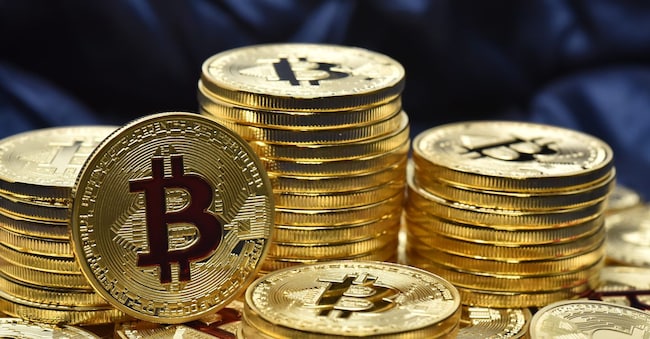
October is Financial Literacy Month, which is measured in terms of knowledge of economic phenomena such as inflation and returns, in behaviour – from managing the family budget to the ability to cope with the unexpected – and in attitudes towards investment and risk. Economic and financial knowledge is also acquired at school, whilst behaviour is influenced by experience and the example set by one’s family. But it is above all when investing one’s savings that understanding the relationship between risk and return becomes essential.
In Italia, there is plenty of room for improvement. Even amongst young adults, basic financial literacy is limited: in the Bank of Italy’s survey of 18–34-year-olds, only 35 per cent answered questions on inflation, interest rates and risk diversification correctly (Bank of Italy, 2024).
Within the vast financial landscape now available to investors, cryptocurrencies deserve particular attention. They are digital assets characterised by high volatility and risks that differ from those of traditional financial instruments. Regulation does not eliminate market risk nor does it guarantee the capital invested. It is therefore essential to understand these risks before deciding whether to invest in this asset class.
The characteristics of the crypto market can make it difficult to interpret what we observe correctly. In our study of the daily prices of Bitcoin (BTC), Ether (ETH) and Ripple (XRP) between 2018 and 2024, we sought to identify episodes of explosive price behaviour using econometric tests. The evidence shows that, for Bitcoin – and to a lesser extent for ETH – there were multiple phases of explosive price growth, followed by corrections that were sometimes sharp; for XRP, however, no significant evidence of such episodes emerged (Oldani, Bruno, & Signorelli, 2025). Cryptocurrencies, therefore, do not all necessarily behave in the same way, and rapid price growth should not automatically be interpreted as a return that is set to last.
How does the cryptocurrency market react when uncertainty surrounding economic policies (interest rate cuts, tax increases, etc.) rises? The results show a positive and statistically significant relationship between uncertainty regarding economic policies and the trading volumes of the most popular cryptocurrencies, particularly when structural changes in the digital market are taken into account (Oldani, Bruno, & Signorelli, 2026).

