
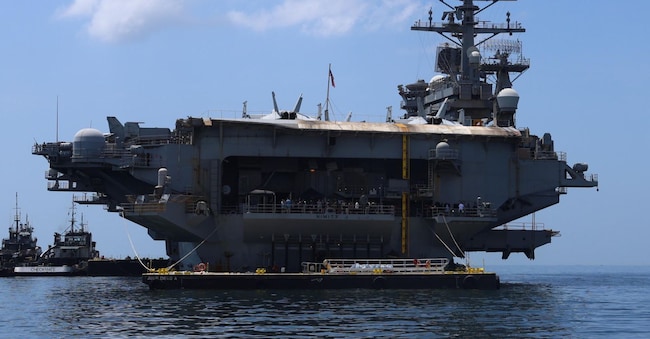
Cuba, the US aircraft carrier Nimitz deployed in the Caribbean
In the same hours, the US Supreme Court authorised the lawsuits concerning US assets seized from Cuba in 1960

Key points
- Supreme Court allows lawsuits on assets seized in 1960 from Cuba
- China and Russia issue declarations of solidarity with Cuba
- Guzman (Cuban Ambassador to the UN): 'We talk to the US, but only with reciprocity'
A 333-metre-long American aircraft carrier. It is called Nimitz and is deployed in the southern Caribbean Sea on the day of the indictment of Raul Castro, former president of Cuba. Nimitz's objective is to intimidate or perhaps attack, who knows, an island that is going through a dramatic energy and food crisis, caused by the blockage of most of its power plants, which are on the verge of a fuel shortage.
Raul will be 95 in a few days and his pueblo has slipped into destitution after the US embargo became even harsher. Havana is not allowed to import oil...
"Welcome to the Caribbean, Carrier Strike Group Nimitz!" wrote US Southern Command, responsible for operations in Latin America excluding Mexico, on its Twitter account. "Carrier USS Nimitz, Embarked Air Wing, USS Gridley and USNS Patuxent (T-AO 201) represent the ultimate expression of readiness and presence, unmatched range and lethality, and strategic advantage," the post added.
The American warship will remain in the region to intensify Washington's pressure on the Cuban government. Military sources have told the New York Times that the administration intends to use the Nimitz, and its fighters, as a show of force, but not as a platform for a massive military operation, a role that the aircraft carrier Gerald Ford played when the blitz that led to the capture of Nicolas Maduro in Caracas on three January was launched.
In the same hours, the US Supreme Court authorised the lawsuits concerning US assets seized from Cuba in 1960. The wise men sided with the US port company whose assets were confiscated in 1960 when Fidel Castro came to power in Cuba and nationalised private companies. With eight votes in favour and one against, the Supreme Court agrees with the Havana Docks Corporation. It is a decision that could pave the way for similar claims by other American companies.

