Central America

Energy crisis in Cuba: prolonged blackouts and protests in Havana over oil and fuel shortages

It is the consequence of the embargo imposed by the US since January. The shortage of energy resources has caused power cuts of up to 22 hours, triggering demonstrations and political tensions between the Cuban government and the US
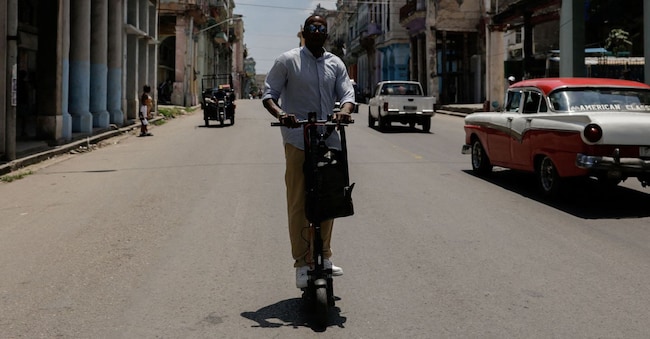
Un uomo guida un monopattino elettrico per strada prima che Cuba annunci l'introduzione, a partire dal 15 maggio, di nuovi prezzi variabili alla pompa per riflettere meglio i costi effettivi dell'importazione di benzina e gasolio, nel contesto dell'attuale blocco statunitense sulle forniture di carburante, all'Avana, Cuba, l'11 maggio 2026. REUTERS/Norlys Perez    REUTERS

3' min read

Translated by AI
Versione italiana

3' min read

Translated by AI
Versione italiana

Cuba was left without oil and fuel, leaving parts of Havana in the dark for up to 22 hours a day.

That is why protests erupted in the island's capital yesterday under the motto 'turn on the light' and 'the people, united, will never be defeated'.

Loading...

It was the Cuban Energy Minister, Vicente de la O Levy, who said that Cuba remained 'without reservations', explaining that 'the electricity grid is in a critical state'.

The same minister added that 'the sum of the different types of fuel: oil, fuel, of which we have absolutely nothing; diesel, of which we have absolutely nothing... the only thing we have is gas from our wells, where production has increased'.

The minister added that "the situation in the country is extremely tense".

It was no coincidence that last night protests erupted in the capital against the worst blackouts in decades.

The situation is the consequence of the blockade imposed in January by the Trump government against the island, which was effectively cut off from deliveries of energy products, for which it depended on Venezuela and Mexico.

The US has threatened tariffs on any nation that supplies the Caribbean island. However, the energy minister said that 'Cuba is open to anyone who wants to sell us fuel'.

Since December, only one Russian tanker has supplied the island with almost 10 million people in April.

Last week the UN called Washington's embargo illegal, saying it 'impedes the Cuban people's right to development while undermining their right to food, education, health and water and sanitation'.

U.S. renews offer to Cuba of humanitarian aid worth one hundred million

On 13 March, the US renewed its offer of $100 million in aid to Cuba, pressurising it to cooperate as it faces a severe economic crisis and US sanctions.

Secretary of State Marco Rubio, speaking last week in Rome, reported that Havana had rejected a $100 million assistance plan, a fact denied by the Caribbean country.

However, the State Department renewed the proposal, which comes after the US imposed new sanctions against key sectors of the Cuban economy under state control.

'The regime refuses to allow the United States to provide this assistance to the Cuban people, who desperately need it due to the failures of a corrupt regime,' the State Department stated, stating that 'it is up to the Cuban regime to decide whether to accept our offer of assistance or to deny vital aid, ultimately holding the Cuban people accountable for obstructing vital assistance.

The Department specified that support would include direct humanitarian assistance from Washington and funding for 'fast and free' Internet access, presumably for the benefit of dissidents.

Rubio, leadership change needed, ruined economy

US Secretary of State Marco Rubio said the Cuban leadership needs to change, while Washington yesterday renewed its offer of $100 million in aid, provided the communist-led island agrees to cooperate.

Cuba, located 150 kilometres off the coast of Florida, is experiencing a severe economic crisis, aggravated by an energy shortage that on Tuesday again left 65% of the country in the dark.

Cuban leaders blame US sanctions, but Rubio, an American of Cuban descent and a critic of the Castro government, argues that the real problem lies in the Cuban system itself, in particular corruption within the armed forces.

'It is a ruined and dysfunctional economy, and it is impossible to change it. I wish it were different," he told Fox News. "We will give them a chance. But I don't think it's going to happen," Rubio added. "I don't think we can change the trajectory of Cuba as long as these people are in power."

Copyright reserved ©
Loading...

Brand connect

Loading...

Newsletter

Notizie e approfondimenti sugli avvenimenti politici, economici e finanziari.

Iscriviti