
Cuba, US indicts former President Raul Castro
The Florida grand jury formalised the proceedings

Key points
- Raul Castro is accused of shooting down two small aircraft with four crew members on board in 1996
- Havana claimed to have defended itself against an attack in 'Cuban waters'
- It was later established that they were international waters
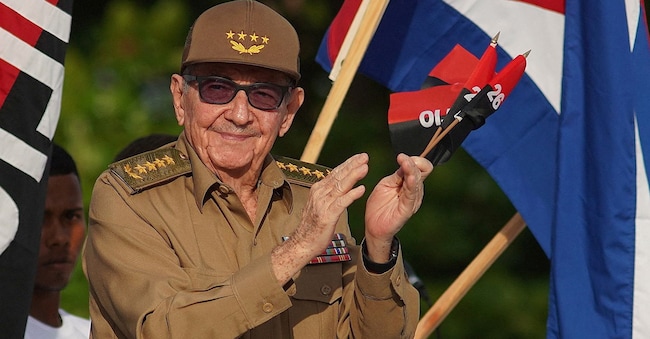
The US offensive against Cuba becomes even more pressing. The US Department of Justice has indicted Raul Castro, 94, former Cuban president and brother of Fidel (who died in 2016). The indictment turned into formalised proceedings. Raul is accused of the downing, in the 1990s, of two planes carrying humanitarian aid for migrants, in which three American pilots died. The charges relate to events that took place in 1996.
Aircraft shot down in 1996
At the time of the downing of the aircraft, Castro was Minister of Defence. The four crew members - Armando Alejandre, 45; Carlos Costa, 29; Mario de la Peña, 24; and Pablo Morales, 29 - lost their lives in the crash. According to independent investigations conducted by the United Nations, the Inter-American Commission on Human Rights (IACHR) and others, the shooting undoubtedly took place in international waters. This turned the incident into an 'attack against defenceless civilians'. It did not occur, as Cuba claimed at the time, on the island's territory, which would have constituted a legitimate act of self-defence. Fidel Castro stated that the Cuban government had claimed that the attack was a legitimate response to the intrusion of aircraft into Cuban airspace.
The filing of the charges, handled by Justice Department prosecutor Jason Reding Quiñones, of the Southern Judicial District of Florida and ideologically aligned with Trumpism, is the culmination of a series of pressure measures taken by Washington against the island, from sanctions against its leaders to the imposition of a de facto energy embargo, following the cancellation of Venezuelan oil supplies on which the island depended and the signing, on 29 January, of an executive order opening up the possibility of tariffs and secondary sanctions against countries supplying fuel to Cuba.
New threats from Trump
In the same hours, US President Donald Trump declared: 'The regime in Havana today represents a direct betrayal of the nation for which the founding patriots fought and gave their lives,' said US President Donald Trump in his presidential message for Cuban Independence Day. And he again threatened Cuba's establishment: 'This is our hemisphere and those who destabilise it and threaten the United States will have to face the consequences', recalling what happened to Nicolas Maduro.

