
Cucinelli invests in production base. China's push
The exclusive luxury of the cashmere maison barrier against the geopolitical unknown. New boutiques in Miami, Toronto and Macao. The supply chain risk

6' min read
Le ultime da Radiocor
Ex Ilva: in gara anche la ceca Ce Industries (Tg3)
*** Mps: Moody's, da Ops no effetti immediati su rating ma rischi di esecuzione
*** Mps: fonti Mef, quota "congelata", no interferenze con operazioni in corso
6' min read
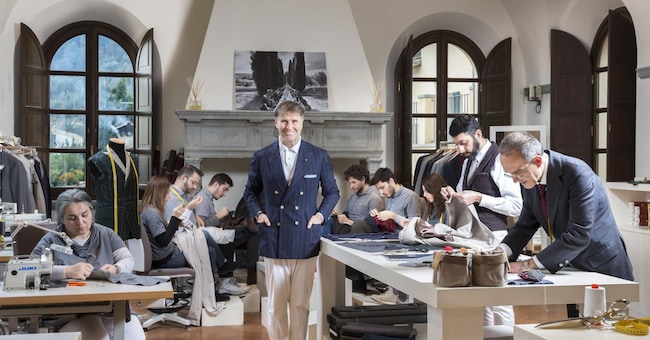
Expanding the production base. This is one of the focuses of Brunello Cucinelli. The cashmere maison, whose top management the Letter to the Saver heard from, will have completed the expansion of the factory in Solomeo and the construction of the new men's tailoring facility in Penne (Pescara) in 2025. This is a commitment that obviously implies outlays. In 2023, Cucinelli's total capitalised investments will stand at around 78 million. Of this, a large part (around 40%) is in the retail distribution network. The remaining 60% is, on the one hand, directed towards IT and digital (10%); and, on the other hand, concerns production and logistics (50%). Within the latter percentage is included, precisely, part of the effort on the production expansion front. Obviously, the Capex related to structural measures are accounted for over several years. In 2024, the effort will be significant and, also for this reason (in addition to the postponement of some expenses), capitalised investments should settle at around 9% of turnover. Then, in 2025, the ratio of Capex to revenue is expected to return to around 8%. Beyond percentages, the aim of the project is to push industrial expansion. Among other things: in the area of men's outerwear. So much so that - it should be noted - the Penne factory will support up to 35% of the entire company's production of this type of product for the next 4-5 years. On closer inspection, it is no coincidence that Cucinelli wanted to create the new facility in that area. In the area the tradition, and culture, of artisan tailoring for men is deep-rooted and of a high standard. This is an essential characteristic for the creation of exclusive, high quality products which - too often forgotten in contemporary luxury 'drugged' by marketing and events - constitute the true element of success of the business model.
All as easy as drinking a glass of water, then? The reality is more complicated. Saver points out one thing: in America, several luxury companies have indicated that they are facing weak demand from their customers. Which could be a problem for Cucinelli itself. The company rejects the fear. The company indicates that, even in January, it did not notice any similar dynamics. Evidently, underlines the cashmere maison, the positioning in exclusive and absolute luxury, which has always distinguished it, allows it to be unscathed by the trend in question.Having said this, however, a further objection can be raised. The wars in Palestine and Ukraine, together with geopolitical and macroeconomic instability create insecurity. A context, facilitated by what the sociologist Zygmunt Bauman has called 'the economic policy of uncertainty', in which the very propensity to spend on voluptuous goods - such as luxury goods - can be eroded. Cucinelli, though aware of the situation, invites a more nuanced analysis. Wishing for the peaceful settlement of the wars that are bloodying our time, he points out the following aspect: we are unfortunately witnessing, is the indication, a general habituation to both the wars in progress and the underlying alea - not only economic - that characterise our time. Consequently, Cucinelli concludes, there is no particular risk perceived with regard to the propensity to spend.
Geographies and China
So far, some suggestions on investments for the production base and demand variables. Another aspect to be analysed, however, is the geographical division of revenues. At the end of 2023, the breakdown of turnover is as follows: Europe accounts for 37.6% of the total; the Americas and Asia weigh 35.5 and 26.9% respectively. Against this background, and net of the desire to grow in all areas, how can the breakdown change in the medium term? The answer is that the three different areas could each generate one third of the turnover. This is a trend that, among other things, signals the acceleration of business in the Far East. Essentially: in China. Currently, the revenues generated in the former Middle Kingdom are worth 12-13% of the total turnover. The prospect is that it could reach 16-18%. The trajectory is not the result of an ad hoc strategy for that country. Cucinelli, both in terms of products and commercial proposition, has a similar approach in all the markets where it is present. In this sense, the greater expansion estimated in China is also, and above all, the effect of the company's lower presence in that country. However, the saver expresses a doubt. The contrasts between Beijing and Washington, aggravated by the Taiwan issue, may penalise Western companies, including Cucinelli. The cashmere maison rejects the fear. The company, it is explained, in all the states where it is present, including the former Middle Kingdom, studies and confronts the cultures it encounters. A knowledge that allows integration, and mutual respect, with the local reality. Not only that. The Chinese, says Cucinelli, appreciate the group's high quality products and craftsmanship. As well as, as indicated in the motivation for the GQ Designer award received in China, the ability to distinguish itself in lifestyle. So, for the company, there are no specific problems on this front.
Direct and wholesale shops
But it is not just a question of geography. Sales channels are also important. In 2023, the turnover split is as follows: retail is worth 65.5 per cent of the total while the remaining 34.5 per cent is the prerogative of wholesale. The company has in the past indicated to Letter to the Saver that a balanced split would be 60% retail and 40% wholesale.
Beyond this, digital must also be remembered. At present, direct online sales (via the Internet boutique) are around 7% of turnover. To this value, moreover, must be added the online multi-brand, which is worth 5% of revenues. In short: the Internet has its relevance. Not only for purchases per se. But also because, it is recalled, more than 50% of customers arriving in the physical shop have already seen the product on the site. Which, on the one hand, underlines the intertwining of the physical and digital channels; and on the other, Cucinelli emphasises, reaffirms the importance of having a presentation of the garments on the online of the highest level.


