Cultivating the luxury of waiting: a comfort bubble in the daily hustle and bustle
In a world where everyone runs fast and devices zero out downtime, there is a new dimension of pleasure: that suspended moment in which stopping becomes a privilege of intimacy and rediscovered space.
6' min read
6' min read
He was waiting for his flight at the Cologne/Bonn airport, intrusive music was coming out of the loudspeakers: he tried to ask himself what would be the most appropriate music to defuse the anxiety of waiting. It was 1978 and Brian Eno revolutionised the recording world by composing Ambient 1: Music For Airports, an album that invented a new musical genre: four tracks with piano solos, filtered voices in a loop of overlapping sounds that create ethereal and repetitive soundscapes. The soundtrack becomes an important ingredient of emotional design. But if the aim of that composition - as he himself said - was to "induce calm and create a space to think", today, almost 50 years later, it is legitimate to wonder - notwithstanding the pleasantness of listening - whether airport music could still be the ideal background to our expectations. Back then these were suspended times, at most occupied by reading a crumpled magazine left on a coffee table, now the technological revolution has invaded them completely. We live in a historical phase in which, on the one hand, we are productive in every moment of our lives and, on the other hand, even when we have fulfilled all our professional duties, we are subjects of what the Korean philosopher Byung-Chul Han in his book Infocracy (published by Einaudi) calls the 'information regime': we want to know everything, immediately, all the time. The deduction is simple: tech devices are the protagonists of our waits, whether in an airport, in a doctor's office or in a beautiful 5-star hotel lobby.
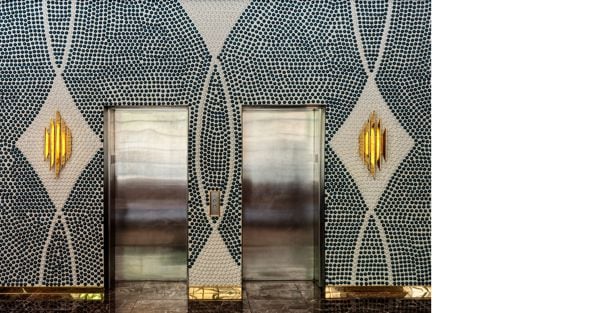
"The aim of the contemporary design of these spaces is to create, for our wandering lives, bubbles of almost neo-domestic comfort, where we can work, read, create, inform ourselves," says architect Francesco Scullica, lecturer in Interior Architecture at the Milan Polytechnic, who quotes me the thesis just discussed by one of his students, Sara Fesa, entitled A-tendere. Waiting that is reconstructed through emotionality and materiality. The topic is a hot one. At the last edition of the Salone del Mobile, an installation by director Paolo Sorrentino and set designer Margherita Palli was dedicated to waiting told as a metaphor for living. Design has long been concerned with giving a face and an identity to what the anthropologist Marc Augé called "non-places", because they lack identity, relationships and history, and in recent years it has managed to create such incredible waiting structures in the world that they sometimes become destinations themselves. In 2026, New York's JFK Airport, which has undergone a total renovation in recent years, will have a terminal, terminal six, dedicated to contemporary art, with 18 artists called upon to create site-specific works. Singapore's Jewel Changi Airport, one of the busiest on the planet, a case study of Fesa's thesis, has terraced gardens with 200 species of trees, the tallest indoor waterfall, hedge and mirror labyrinths, for walking courses, slides, a swimming pool, but also isolated, quiet spaces where one can feel at home and enjoy, here too, splendid works of art.
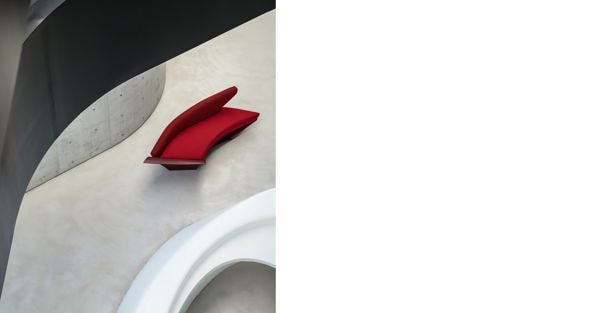
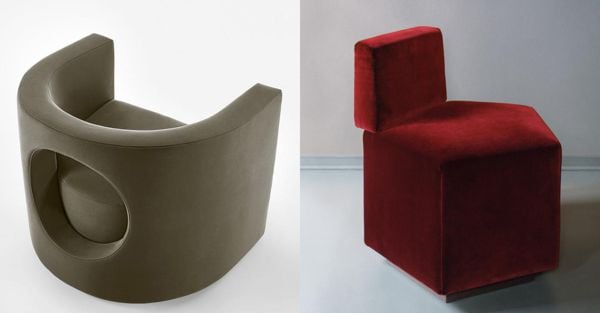
Extreme examples certainly, but in fact design can play a decisive role in creating relationships between man and objects, between man and his surroundings, in allowing him to recognise himself in what he sees around him, to build a sort of autobiographical selfie with the place. "This is why projects in this field have recently taken a multidisciplinary approach," explains Gabriella Bottini, neurologist, professor of Neuropsychology at the University of Pavia and director of the Cognitive Neuropsychology Centre at the Niguarda Hospital in Milan. 'In Pavia we have just launched a PhD on this topic, in collaboration with the University of Lausanne and the architecture and engineering firm Lombardini22. The objective, through studies in the field and in virtual reality, is to focus on our cognitive and emotional behaviour in these suspended places where we often experience, especially in the medical field, situations of fragility, in order to then provide the most suitable inputs for design: in waiting rooms we often have cognitive-interpretive difficulties, a distorted perception of time, we are bored and annoyed by noise pollution and overcrowding. From the world of design we expect solutions that favour multi-sensory integration, because it is a fundamental ingredient of our ability to adapt: we need places where our routes are very clear, with panels that update us on waiting times, there is well-calibrated light, areas separated from each other. And design objects with rounded shapes that immediately offer an idea of comfort to our brain, which tends to create expectations and anticipations of what is to come'.
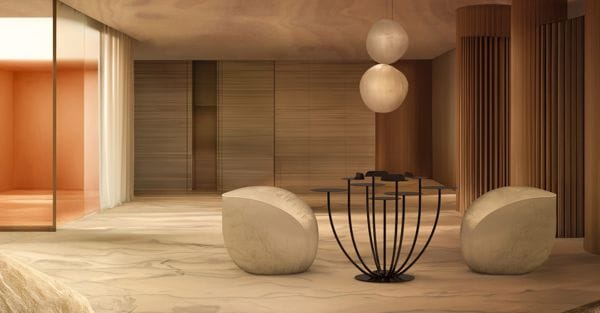
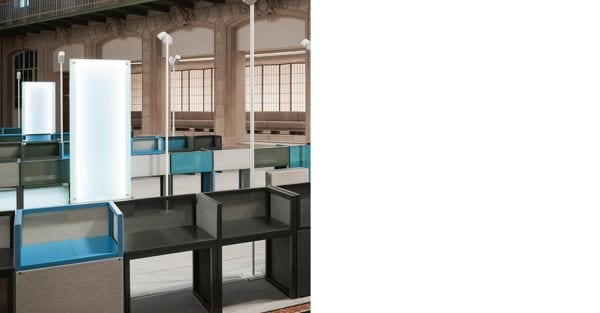
On the subject of furnishings, there are many designed ad hoc, but in addition to the historic Made in Italy brands that dress lounges all over the world, there is one, Orografie, created with the objective of providing a design response to the new rituals of living to which the digital world has now accustomed us. And to do so, not surprisingly, it involves scouting young Product Design graduates who have precisely grown up with these rituals. "Among our products best suited to the needs of these suspended spaces is nontavolo," explains art director Vincenzo Castellana. "Designed by the very young Giorgio Pagani, it deconstructs the table archetype, abolishing the single top and fragmenting it into a game of levels. On one top we can place the computer for a videocall, on the other put a snack. And while everyone can have many small spaces to themselves, there is a central element that brings them all together, brings glances together and also creates a connection between those present".
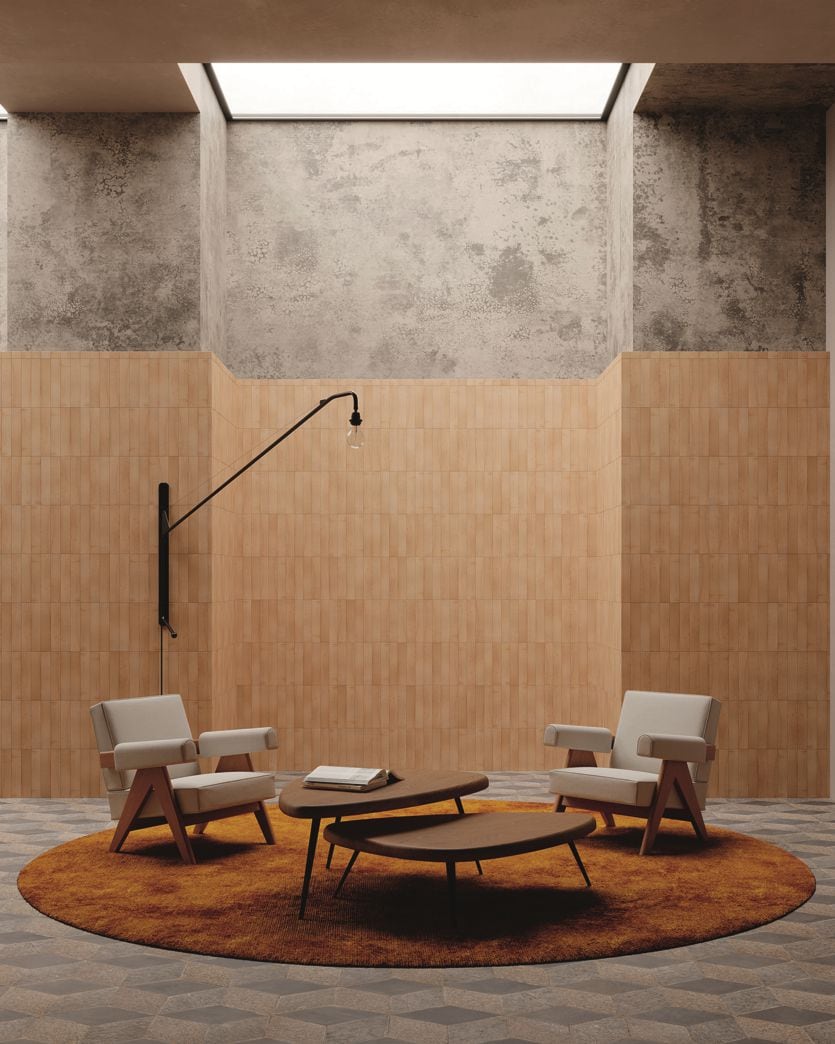
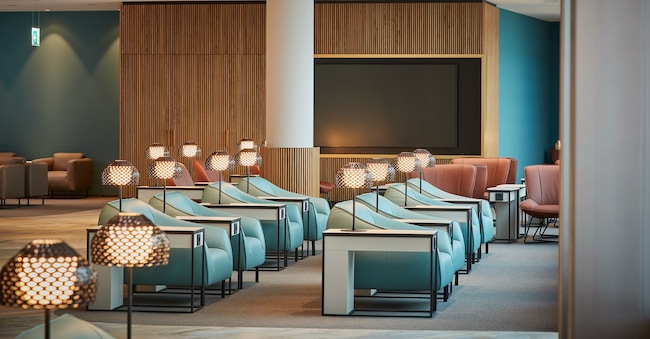
But let's get back to the subject of flights: the most beautiful lounge in the world, according to the latest Priority Pass Excellence Awards, is the one in Terminal 1 of Vienna Airport, and the top rated pluses are the differentiation of services according to travellers - singles, families and business travellers -, natural lighting, comfortable workstations, an extensive art collection and the possibility to enjoy the view of the runway, as well as Viennese coffee and pastries, of course. "Any reference to the identity and culture of the place makes these spaces much more welcoming to those who frequent them," says architect Ugo La Pietra, one of the pioneers to deal with the design of these places, who tells what emerged from an Aldo Morelato Foundation conference, Il Mobile Significante - L'oggetto d'arredo nei luoghi dell'attesa.