
Cultural consumption on the upswing after Covid
TV on demand, cinema and concerts go up

4' min read
4' min read
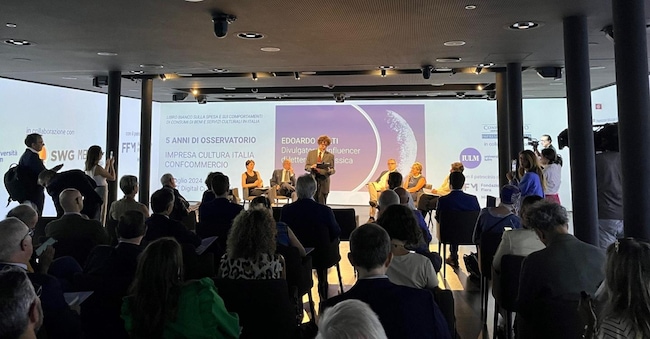
How has the cultural consumption of Italians changed? This is the question posed by Impresa Cultura Italia-Confcommercio and to which it has sought an answer through research conducted by its Observatory with SWG, presented on 16 July at Meet Digital Culture Center in Milan, under the patronage of Fondazione Fiera Milano. The observation period, which runs from 2019 to the autumn of 2023, is particularly interesting because it takes a snapshot of the pre-Covid data, the pandemic crisis and the recovery, showing the different reactions in the various sectors of culture. Digitalisation, accelerated by the pandemic, has certainly changed the approach to cultural services, but it is not the only change; there has been a real shift in consumer perception. "At one stage, during Covid, culture was seen as a distraction, a way to fill time, disconnected from the concept of knowledge and emotion," commented Domenico Barbuto, Secretary General of Agis during the presentation event. 'Now it is back to being knowledge and not accompaniment'.
"Culture today is a sum of stimuli," said Carlo Fontana, President of Impresa Cultura Italia - Confcommercio. "There is no such thing as high or low culture, culture is so broad and differentiated that it must be able to develop identities within differences.
Cinema is not dead
.The evolution of the last five years varies greatly depending on the context. The audiovisual sector is the one that has shown the most profound changes, mainly due to the growth of pay-TV and on-demand streaming services. During the pandemic there was a surge in subscriptions, which then settled at 60-70% of households with an active subscription. Traditional TV is in crisis and not only because of the type of offer, but also because of the passive viewing model, while on-demand TV responds to the contemporary lifestyle.
This is not to the detriment of cinema. In fact, although totally wiped out in 2020 and punished by the fear of contagions and crowded spaces in the immediate aftermath of Covid, with the end of the pandemic, cinema has recovered, albeit sometimes suffering from seasonal effects, because it is considered much more engaging and exciting (43% of respondents said so). Thus, the abandonment of the cinema is not because of the spread of streaming, but if anything because of the aftermath of the Covid experience and the need to reduce expenditure due to inflation.
The printed paper swing
.As far as print media is concerned, 2020-21 saw a surge in newspapers due to the need for information, along with books and comics, but this was followed by a steady decline. Today, only 15% of Italians habitually read printed newspapers and 13% from paid apps, while the majority get their information through free sites. Only for books does there seem to be a trend reversal. Worth noting is the relationship between the number of consumers and average expenditure. As the number of consumers increases, average expenditure decreases, and vice versa: a situation indicative of a market that contrasts two types of consumers, with on the one hand a hard core with higher expenditure and on the other more occasional buyers. The need to decrease spending due to inflation also had an effect here.

