
Culture as social infrastructure. The Ministry of Culture allocates 29.4 million to Southern Italy
In October, a call for proposals for local regeneration projects focusing on culture and social inclusion. The focus is on the regeneration of public spaces and cultural welfare

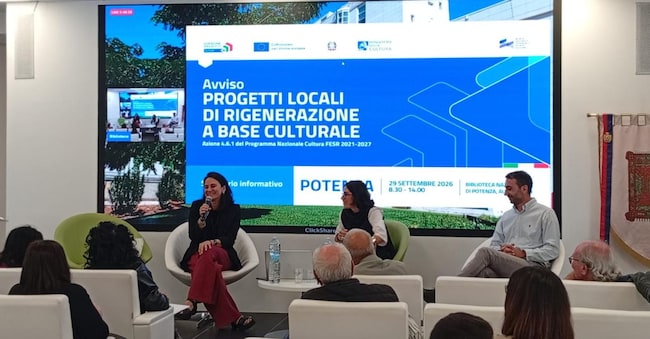
The Ministry of Culture is set to publish an interesting call for proposals for the implementation of local culture-based regeneration projects, aimed at the regions of Southern Italy as set out in the National Culture Programme 2021–2027. Promotion of the initiative has been entrusted to the National School of Heritage and Cultural Activities, which, in recent months, has supported the launch of the call for proposals through a comprehensive programme of outreach and support across the regions. The initiative has involved more than 600 people, including local government officials, cultural practitioners and professionals, in training workshops and discussion sessions dedicated to the opportunities offered by the scheme. Following the most recent meeting, which took place on 29 September at the National Library of Potenza, the call for applications is expected to be published in the coming days (October).
Key points
The beneficiaries will be the communities of Basilicata, Calabria, Campania, Molise, Puglia, Sardinia and Sicily, which will receive a total allocation of approximately 29.4 million euros, with the breakdown by region being purely indicative at the time of publication. Project proposals may be submitted by any municipality either individually or as part of a consortium, provided that the consortium comprises no more than five municipalities, each with a population of no more than 5,000 inhabitants, and that they are located in the same region within contiguous territories. The most innovative aspect of the Call for Proposals lies in the definition of a ‘local regeneration project’, understood as an experimental approach which, through participatory methods, promotes citizens’ involvement in cultural life. The key challenge lies in the complexity of building networks, collaborations and synergies in marginalised or disused areas. The aim is to harness the transformative power of cultural experience, seeking to achieve long-lasting social, cultural and environmental impacts. In practical terms, projects must contribute to the regeneration and repurposing of underused or disused public spaces, which must be allocated to cultural and creative activities capable of strengthening collaboration between institutions, citizens and local stakeholders. The Call also aims to encourage the direct involvement of local communities – with a particular focus on young people – in artistic and cultural creation processes, promoting active participation and the reconstruction of local identities. Particular emphasis is also placed on social inclusion and accessibility, with a view to reaching all sections of the population, including the most vulnerable groups. Finally, projects will be required to develop forms of cross-sectoral collaboration with sectors such as health, education, employment and social services, highlighting the role of culture as a driver of development and territorial cohesion. As mentioned, the Call for Proposals is open to all local authorities in the seven target regions, with conditions varying according to their size and territorial characteristics. The entire territory in the case of small municipalities with a population of fewer than 5,000 inhabitants characterised by economic and social fragility, or specific areas identified as fragile or marginalised, in the case of larger municipalities or those with a population exceeding 50,000 inhabitants.
In the latter case, projects must relate to a specific suburban area, such as a suburb or neighbourhood, or focus on a specific theme, such as cultural education for children or cultural welfare aimed at particular disabilities or medical conditions. It is also possible to combine these two dimensions, integrating the territorial approach with the thematic one within the same project. Municipalities must also involve universities, businesses and third-sector organisations.
Funding is provided for the costs necessary to carry out cultural activities and services such as exhibitions, live performances, cultural heritage education and digital communication; as well as cross-sectoral collaboration, particularly between institutions responsible for services in the cultural, social, health and welfare sectors. Each project must include at least one cultural site. The planned investment may range from a minimum of 500,000 euros to a maximum of 1.2 million euros. For groups of local authorities, the ceiling increases by 10 per cent, rising to 1.32 million euros. In addition, there is provision for possible additional co-funding by the applicant, up to 20 per cent of the eligible grant. Public funding covers 100 per cent of the eligible costs of projects with a minimum duration of 12 months and a maximum of 24 months. Applications from municipalities with the highest municipal fragility index (Istat) and from those classified as peripheral and ultra-peripheral in the 2020 Map of Internal Areas will be given favourable consideration.
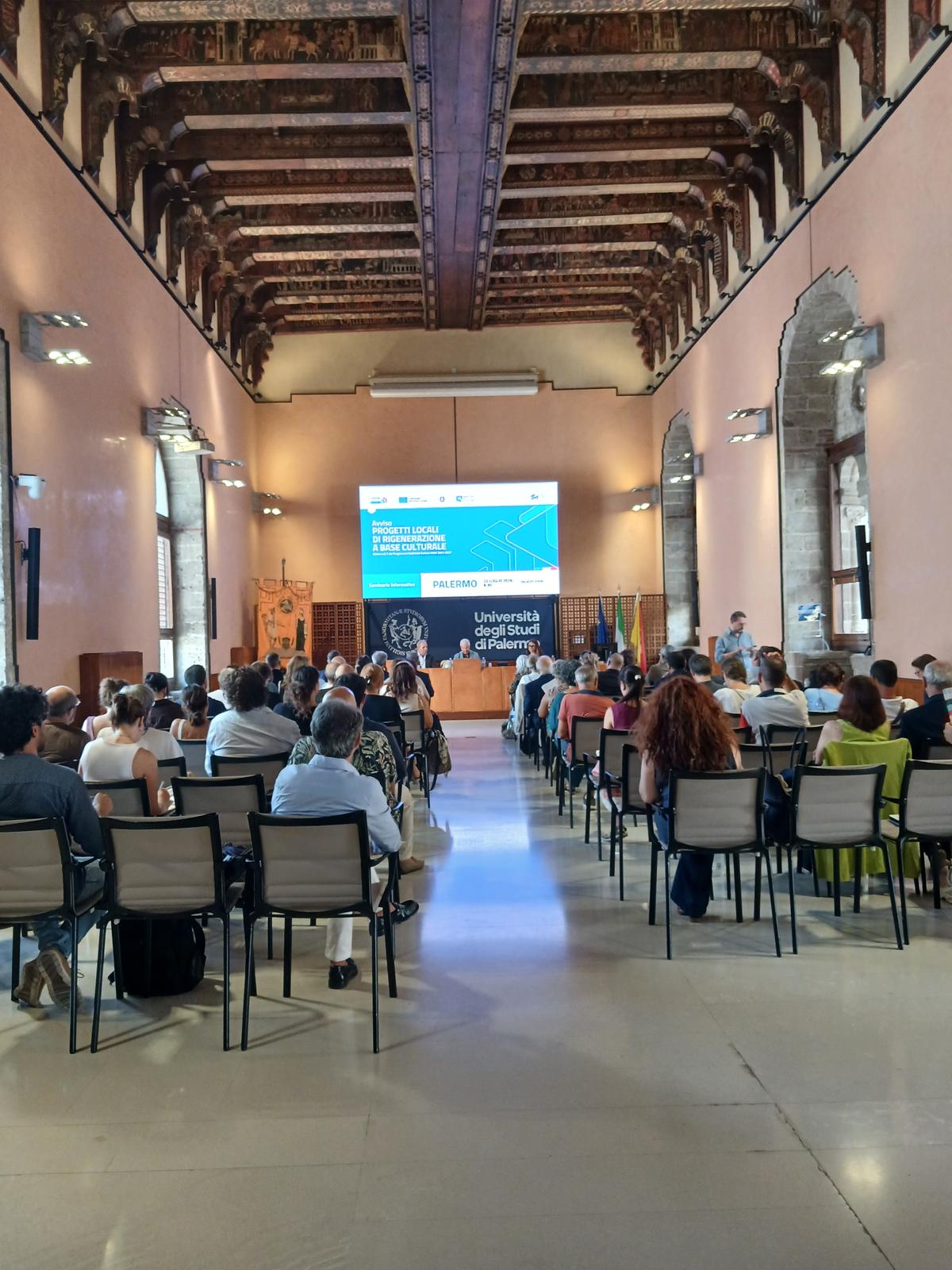
A statement from President Villanacci
As explained by Gerardo Villanacci, president of the National School of Heritage and Cultural Activities, “the Ministry of Cultural Heritage and Activities’ (MiC) decision to combine financial support with a structured support programme represents an element of particular strategic value. Through training and specialist support, the School will assist beneficiaries in building models of collaborative governance, managing partnerships and developing practices of cultural participation’. With this decision, the Ministry of Cultural Heritage and Activities (MiC) is capitalising on the School’s many years of experience working alongside local communities. Villanacci concludes by saying that ‘investing in people means creating the conditions for the impact of interventions to be consolidated over time and to produce lasting results’. We would add that it is high time the logic of impact assessment was extended to all cultural projects and venues.

