
The relevance of a message that is becoming increasingly necessary

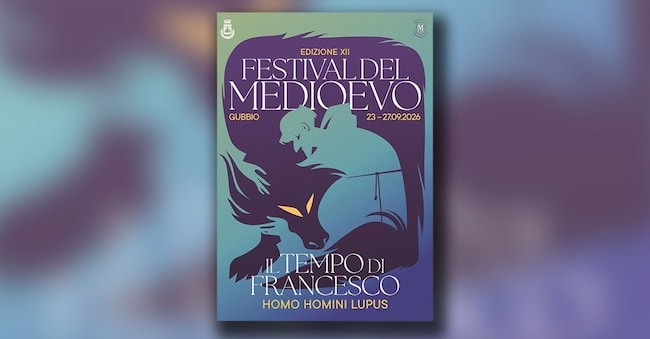
As the eighth centenary of the death of Francis of Assisi approaches, Franciscan studies have seen all manner of new developments emerge: new sources containing Francis’s writings reproduced in full, such as the Oratio composita a beato Francisco discovered by Aleksander Horowski, or in their earliest known versions, such as that of the Exhortatio ad laudem Dei discovered by Roberta Iannetti, or even a Vita ritrovata discovered by the author of this article, which is gaining an ever-increasing number of corroborating accounts, coming not only from Italia but also from Hungary and Croatia.
This leads to two observations: on the one hand, Francis of Assisi is undoubtedly the best-documented figure of the Middle Ages, with some thirty texts written in his own hand or dictated by him (quite a feat for a ignorans et idiota, as he described himself) and around thirty biographies written in the century following his death; on the other hand, we have access to all these sources, translated into numerous modern languages. So much so that we have more information about Francis than his contemporaries and anyone before us.
If, therefore, an effort has been made to gain a better understanding of Francis of Assisi, do we have the opportunity to understand him better? New interpretations have also multiplied: on his fraternal relationship with creation, on the distribution of roles within the nascent Franciscan fraternity, on his relationship with otherness and with the Roman Church, and on the bond between Francis and Anthony, Francis and Clare, and Francis and Elijah. But what is new is not merely the previously unknown. Etymologically, it is what is valid now: novus and nunc share the same root, just as new and now do in English. The true novelty of Francis lies in the relevance of his message, which has never been more necessary than in today’s world.
(*) Jacques Dalarun, a medieval historian, is Director of Research Emeritus at the Institut de recherche et d’histoire des textes of the CNRS

