
Cybersecurity changes: leaves Frattasi, in pole Quacivi
The prefect's resignation reached Giorgia Meloni officially for 'personal reasons'. Probable successor the former Sogei chief executive

Key points
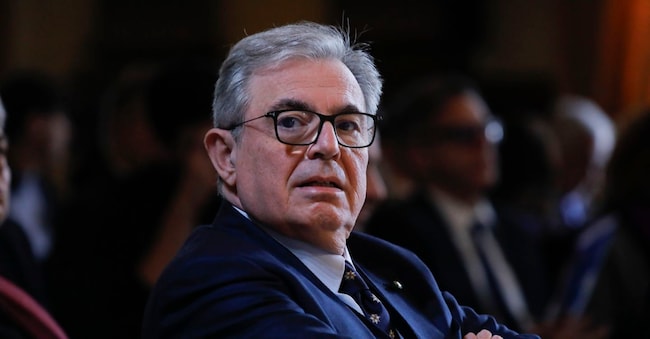
The resignation 'for personal reasons' of prefect Bruno Frattasi as director general of the National Cybersecurity Agency arrived almost a year early on Giorgia Meloni's desk. Frattasi had been appointed on 9 March 2023 during the Council of Ministers meeting in Cutro. The choice of his successor could come as early as Friday's Council of Ministers meeting, if the ongoing discussion on his successor is positively resolved in these hours. In pole there is the former CEO of Sogei, Andrea Quacivi, although among the favourites was also the prefect of Rome Lamberto Giannini.
The rise of cyber attacks
The proposal is up to the President of the Council. And the decision is a strategic one, considering the progressive increase in cyber attacks also in Italia: according to the Operational Summary Acn, 436 cyber events were recorded in March, substantially stable compared to 435 in February, when, however, they had increased by 94 per cent compared to January. There were 313 incidents recorded, an increase of 81 per cent compared to 174 in February, when they had already risen by 60 per cent. The growth is mainly due to the entry into force of the obligations under the Nis 2 directive, which has expanded the number of entities monitored and obliged to report, to around 22,000, half of which are private companies. Under attack are mainly telecommunications, healthcare and manufacturing.
The example of Milan Cortina
The alarm, in times of hybrid warfare, is very high. And on several occasions the Agency had ended up in the crosshairs for snags in the network, from the attack on the Uffizi to that on giants such as Almaviva and Ibm. Frattasi recently claimed the Milan Cortina Olympics as a concrete example of the effectiveness of Italy's protection system: the Games required a massive deployment to defend itself, especially in the first days, from Ddos-type attacks directed against institutional sites that fortunately did not affect digital services.
With that page closed, the challenge left to whoever succeeds him is that of coordination with the other subjects of the 'quadrilateral' seen at work precisely at the Games: Defence, the Postal Police with Cnaipic (the National Computer Crime Centre for the Protection of Critical Infrastructures) and, of course, intelligence.
Friction with the government in recent years
In recent years, there has been no lack of friction in the Government: a bill presented to the Chamber of Deputies in September by the chairman of the Defence Committee, Nino Minardo, which aims to give the Armed Forces a more operational role in the cybernetic domain, had caused discussion. A sort of opening to a corps of military hackers, however, remained at the post, also due to the diffidence of the undersecretary Alfredo Mantovano, who is in charge of the secret services and cybersecurity. His is the main say in the change at the top of the Acn. With Quacivi, a manager expert in big data, on the launch pad.


