Bikeconomy

Cycling takes Milan by storm: the Bike Hub, a platform for cycling tourism

The Milan, Monza, Brianza and Lodi Chamber of Commerce is bringing the Bikeconomya project to a close with the creation of an integrated cycle tourism district that combines services, expertise, history and culture. With accommodation, restaurants and bike repair shops, some 80 businesses are taking part in the initiative centred on cycling.

5' min read

Translated by AI
Versione italiana

5' min read

Translated by AI
Versione italiana

There’s the hotel just a stone’s throw from the centre of Milan, which offers a specialist workshop and a ‘champion’s’ breakfast, and the historic residence on the banks of the River Adda, which offers e-bike hire. There are long-established bicycle retailers, who not only offer expertise, passion and maintenance services but also organise guided tours of the city, and trattorias along the Navigli and near the rice fields of Lombardy serving dishes steeped in history. There’s a tandem hire service – the two-person bike that turns exertion into an opportunity for connection – and a multi-purpose cultural centre housed in an early 20th-century farmhouse in the Lodi area, bringing together music, culture and cuisine, along with a luggage service that takes your bags to your evening destination. There’s the tavern that doubles as an olive oil mill near the River Ticino, and the café where you can have a coffee and chat about bicycles – and even get them repaired.

There are now around eighty operators – though this number is growing by the day – taking part in the Gran Milano Bike Hub platform, an initiative by the Milan, Monza, Brianza and Lodi Chamber of Commerce that aims to lay the foundations for a shared cycle tourism district, built day by day in collaboration with local businesses and professionals.

Loading...

An economy without borders

It may seem strange, but even in Milan and the surrounding area, we can talk about cycle tourism. “The system was already in place, but the pieces needed to be linked together to create a complete ecosystem that integrated facilities and services, drawing on the skills and human capital we have been developing for years through a training programme tailored to the needs of industry professionals,” explains Alessandra Lupis, head of regional marketing at the Chamber of Commerce.

This is how the project that gave rise to Gran Milano Bike Hub came about; it was presented at the opening of the International Bike Festival in Misano and takes the form of a dedicated portal showcasing routes – both long-distance and circular – points of interest, accommodation and catering facilities, and specialist cycling service providers in an area that links Brianza and Monza with the Lodigiano region, passing through Milan.

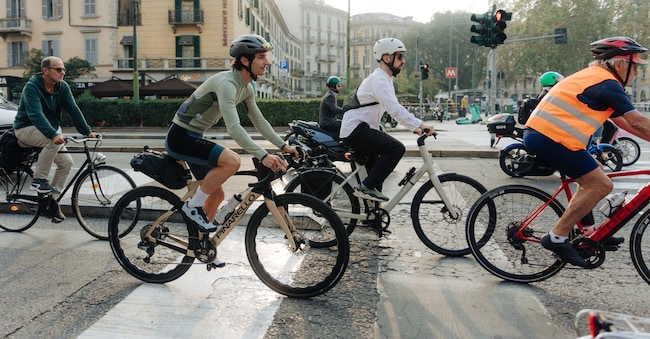
In fact, cycling knows no boundaries, and the cycling economy is also capable of diversifying, influencing various sectors with the aim of raising awareness of cities and local areas through sustainability and ‘slow mobility’, accessible to all. Thus, the project for the fourth officially registered bike hub in Italia – the first to involve a major city – aims to take cycling beyond Milan, where the expansion of the cycle path network, with the aim of reaching 350 kilometres by early 2027, is driving the adoption of cycling as a means of simplifying travel and reducing the impact of pollution.

For the past three years, the Milan, Monza, Brianza and Lodi Chamber of Commerce has been running the ‘Bikeconomy’ project, which offers an integrated set of initiatives and measures aimed at providing support, training and the creation of services to develop the economic potential of the cycling sector. Already, Milan and the surrounding area of the provinces of Lodi, Monza and Brianza form the heart of the national cycling economy, ranking first in Italia both in terms of the concentration of businesses – 6 per cent of the national total – as well as for the number of employees (7 per cent) and turnover, which accounts for 10 per cent of the national total.

A history of innovation

On the other hand, we must not forget that, right from the very beginning, the bicycle in Milan has never been merely a means of transport. In 1894, the Italian Cycling Touring Club was founded in the Lombard capital, destined to change the very concept of travel forever. In 1909, the first, legendary Giro d’Italia set off from Piazzale Loreto. And it was in the area around Milan that some of the world-renowned frame-builders of ‘heroic’ cycling emerged, with historic brands such as Bianchi, De Rosa, Cinelli, Colnago, Masi, Drali and Guerciotti – names that have made it the moral and technical capital of bicycle craftsmanship.

To ensure this historical and cultural heritage is not lost, the project aims to support the various economies that revolve – it is fair to say – around the bicycle, in all its forms. Thus, under the auspices and guarantee of the Bike Hub brand, it becomes an original way to enjoy a cultural experience that connects the different facets of a city which has undergone a radical transformation in recent years.

In the very spirit of culture and expertise, the Chamber of Commerce’s project began with a school specialising in the cycling sector across a broad spectrum, which has already trained 500 young people – who now form the foundation upon which the Milano Bike Hub’s high-quality, professional offering is being built.

It therefore offers a flexible and convenient way to explore the capital of design, cycling through historic neighbourhoods and past new architectural landmarks, discovering how the city is reinventing itself and engaging with contemporary trends, whilst also offering a unique way to experience the atmosphere of the streets of the Quadrilatero, a world-renowned centre for fashion and luxury, as well as to discover the finest local trade and craftsmanship.

Loading...

All this by making use of the increasingly integrated network of cycle paths which, despite the political controversy, have criss-crossed the city.

The opportunities offered by cycle tourism

Cycling also allows you to explore beyond the city limits, travelling just a few kilometres from the skyscrapers to the unexpected landscapes of the Navigli, all the way to the rice paddies, Cistercian abbeys and ancient taverns, making the most of a completely flat terrain that is perfectly suited to cycling. And, if needed, you can even avoid excessive exertion by using electric-assist bikes.

The Bike Hub platform also caters to large numbers of cycle tourists, aiming to develop a network of long-distance routes – such as the St. Moritz–Milan or Cortina–Milan routes – which utilise the Milan–Monza– Lodi axis, as well as the classic ‘daisy-shaped’ routes that circle the Lombard capital, designed to reveal a region full of surprising discoveries, not yet fully explored by bicycle.

The stated aim is therefore to create a platform that enables the cycling sector to develop the entire economic value chain, which can guarantee not only development and growth, but also historical continuity, the enhancement of local areas and innovative expertise that will pave the way for a bright future for the regions of Lombardy.

Copyright reserved ©
Loading...

Brand connect

Loading...

Newsletter

Notizie e approfondimenti sugli avvenimenti politici, economici e finanziari.

Iscriviti

Tutto mercato WEB