Severe weather emergency

Cyclone Harry: over 2 billion in damage and a risk of a fall in GDP for Sicily, Calabria and Sardinia

Businesses and enterprises destroyed in Sicily, Sardinia and Calabria. Tourism and agriculture are the hardest-hit sectors. Businesses are sounding the alarm: immediate action is needed, with nearly 2 billion in potential further losses due to the halt in production. The issue of compensation under natural disaster insurance policies

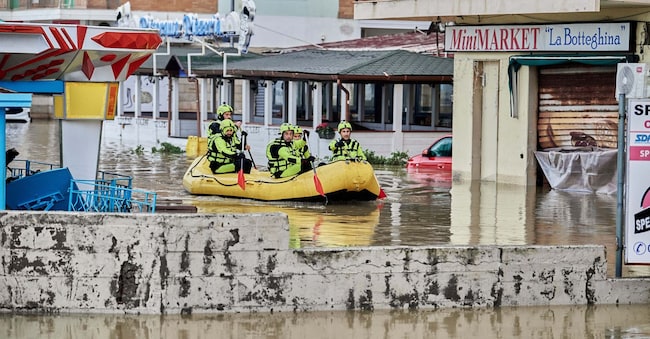
In Calabria. Tante le zone costiere della regione colpite dalle mareggiate legate al ciclone Harry. Foto IPP - Antonio Moniaci/  LiveMedia Catanzaro Italy Photo Press

4' min read

Translated by AI
Versione italiana

4' min read

Translated by AI
Versione italiana

PALERMO – The sea has taken everything: the beach, the houses, the lidos, the streets. And it threatens to take away hope as well. Because the disaster is plain for all to see. In Sicily, Cyclone Harry has struck hard: from Messina to Capo Passero, but also across western Sicily, with the worst of it in the Messina and Catania areas (including the provincial capital).

In short, Sicily’s tourism industry is in a right mess. We need to start here to take stock, to work out what needs to be done now to salvage what we can, to get the tourism sector back on its feet, and to prevent this disaster from having long-term consequences, with tourists abandoning Sicily as a destination, never to return.

Loading...

But the same applies to Calabria and Sardinia. And the same applies to other sectors as well: agriculture, first and foremost.

The total estimated damage across the three regions currently stands at around two billion, but the figure is subject to change: following the latest meeting of the crisis management committee set up by the President of the Sicilian Region, Renato Schifani, the estimated damage stands at just over one billion. However, it is clear that the total is set to rise.

Maltempo in Sicilia, Schifani: "Regione e Stato insieme per affrontare l'emergenza"

There is another factor to consider, however, and it concerns Gross Domestic Product, particularly if swift action is not taken to get production back on track: the true economic impact of Cyclone Harry lies, in fact, in the loss of production output.
In highly seasonal economies, some of the lost value added is not recouped in the following months. This is why, beyond the direct damage estimated by the regions, Cyclone Harry is likely to result in 2026 in a loss of GDP of between 0.8% and over 1% in the most exposed areas: which, to put it simply, amounts to a loss of just under two billion.

Frana Niscemi, Schlein: "I 100 mln stanziati dal Governo sono insufficienti, si usi 1 mdl del progetto del Ponte"

‘A credible estimate that highlights the urgent need to take action to prevent the consequences of the event from resulting in significant losses in terms of growth and employment.

“Only a swift recovery can prevent the decline of these regions’ strategic sectors – tourism and the agri-food industry – which have driven economic growth in recent years,” says Luca Bianchi, director of Svimez –. We must move swiftly from emergency management to drawing up a programme of structural interventions, starting with the mobilisation of available resources, drawing in particular on funds from the Sicilian Region’s Development and Cohesion Fund, which has earmarked 1.2 billion for measures relating to ‘climate risks and adaptation’, to be committed by 2029.”

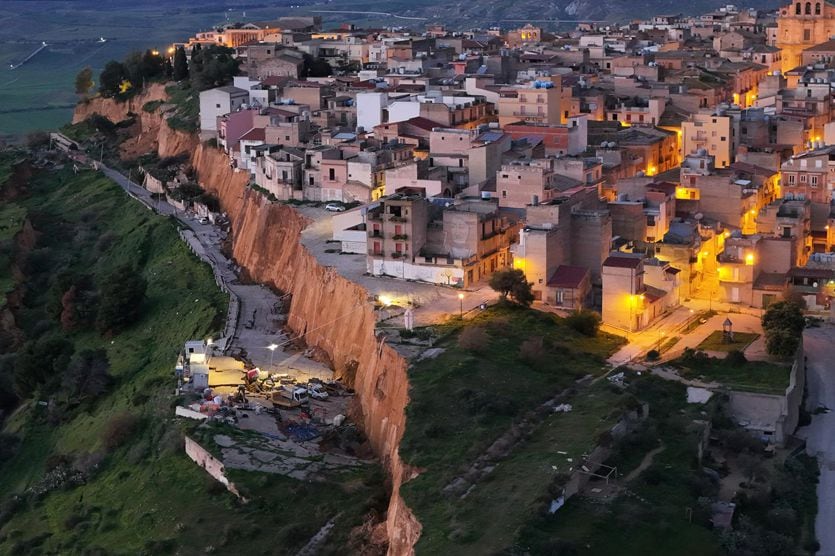
In Sicilia. Tra gli effetti del maltempo anche i crolli nella città di Niscemi. (foto Alberto Lo Bianco/LaPresse)

The GDP estimate is in line with the views of business leaders: ‘The extreme weather events of recent weeks,’ comments Sicindustria’s president, Luigi Rizzolo, ‘are having an economic impact that extends well beyond the areas directly affected.

We have launched a detailed monitoring programme for our member companies, but it is already clear that the impact is not limited to businesses located in the most exposed areas. For this reason, we believe it is essential that the scope of the support measures is not limited to narrow geographical criteria.”

La frana di Niscemi vista dall'alto, il sopralluogo aereo dei vigili del fuoco

Of course, the sector hardest hit remains tourism. ‘The entire coastline from Catania to beyond Taormina has been devastated. In some areas, the sea has eroded seven to eight metres of the coastline, sweeping away everything in its path. The most serious damage has been to the beaches, but Harry has also caused severe damage to the most exposed hotels: in the Catania area, many beach facilities are built on the rocks and have been literally swept away,” says Ornella Laneri, director of the company that owns the Four Points by Sheraton hotel in Acicastello and chair of the tourism section of Confindustria Catania. ‘Now a second problem is emerging, perhaps even more complex: that of reconstruction permits.’ Even though we are talking about removable structures, design modifications, technical and safety checks are required, which demand time and human resources – and, with the season approaching, there is simply no time. Added to this is a practical but crucial issue: the materials needed for reconstruction – starting with the pipes required for the platforms – are becoming increasingly difficult to source.

Maltempo nel Catanese, i danni sul lungomare di Mascali

There are quite a few unresolved issues.

The cyclone also starkly highlighted the limitations of compulsory natural disaster insurance policies: those businesses that had complied with the statutory insurance requirement (not all of them had taken out a policy) found themselves effectively unprotected because the mandatory cover only applies to floods, landslides and earthquakes, whilst the most serious damage was caused by storm surges, an event excluded unless covered by costly policy extensions; the result is that businesses, tourist facilities and manufacturing operations have been left without compensation, suffering substantial losses including those due to business interruption, inevitably bringing the reliance on public funds – which the insurance system was supposed to reduce – back into the spotlight.

And then there is the application of the Bolkestein Directive in the areas hit by Cyclone Harry, for example, which risks causing a short circuit: whilst the deadline to launch tenders for beach concessions by 2027 approaches, current operators – already hit by severe damage and lacking resources – have no incentive to invest in rebuilding beach facilities that are, in any case, destined to be put out to tender, with the result that recovery is stalled, the coastline is left deserted, and the way is paved for legal disputes and compromised tourist seasons.

Copyright reserved ©

Brand connect

Loading...

Newsletter

Notizie e approfondimenti sugli avvenimenti politici, economici e finanziari.

Iscriviti