Test drive

Dacia Bigster Mild Hybrid G-140: how the game-changing SUV performs

Three-cylinder turbocharged 140 hp engine, petrol/LPG dual fuel system and 48 volt mild-hybrid system. We tested it on a trip from Milan to Val Seriana, between motorway, city and mountain bends.

by Danilo Loda

3' min read

Translated by AI
Versione italiana

3' min read

Translated by AI
Versione italiana

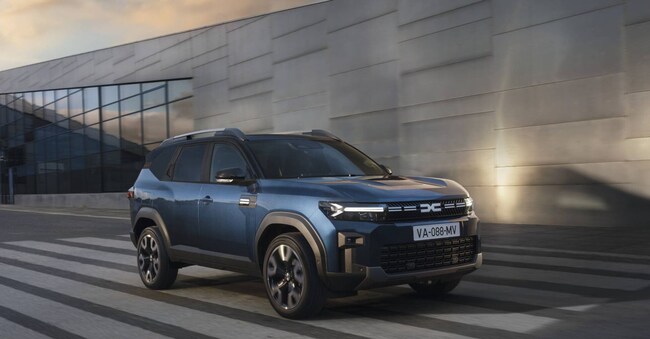
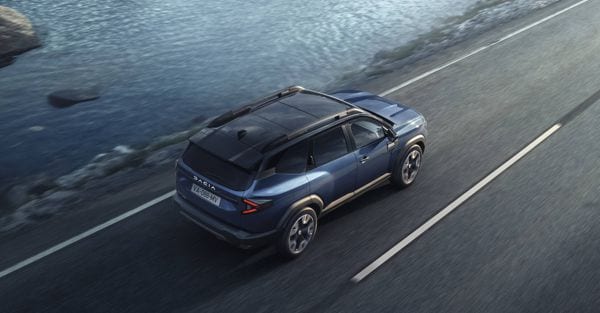
With the Bigster Mild Hybrid G-140, Dacia moves up a category and tackles the medium SUV segment head-on, where the likes of the Qashqai, Tucson and 3008 are playing. But it does it its way: no frills, lots of substance. Just over 4.6 metres long, with strong lines and a clean silhouette, the Bigster looks like the Duster's big sister, but with more adult ambitions.

Under the bonnet is the new 140-horsepower 1.2-litre three-cylinder turbocharged engine, combined with a 48-volt mild-hybrid system and dual petrol/LPG power supply. It is an almost unique combination on the current scene, combining efficiency, low running costs and performance appropriate for a family suv. Top speed is 180 km/h, while fuel consumption remains low, especially in LPG mode, where CO₂ emissions are reduced by around 10 per cent compared to a conventional petrol.
Loading...

Discreet but concrete technology

The Dacia mild-hybrid does not try to impress with graphics or contrived driving modes: it only intervenes when needed. The small electric motor assists during starts and acceleration, while the 0.84 kWh battery recharges during braking and deceleration. The transition between petrol and LPG is practically imperceptible, a sign of mature technical refinement.

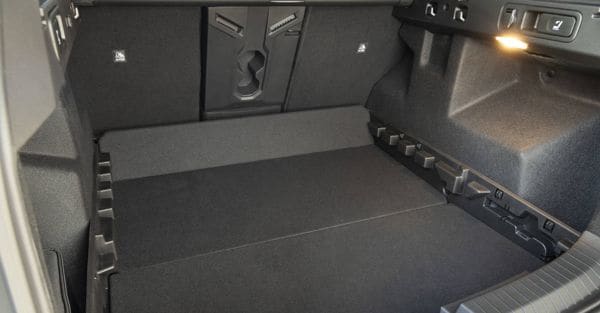
The LPG tank is located under the luggage compartment floor and does not penalise the 612 litre capacity, a value at the top of its category. With two tanks of 50 litres each, the Bigster claims a combined range of 1,450 kilometres. A figure that, in practice, translates into fewer stops, less refuelling anxiety and a freedom of movement that few SUVs can offer today.
Inside, the Bigster confirms Dacia's new styling direction: simple lines, but more refined materials and solid trim. The electric driver's seat, dual-zone climate control, adaptive cruise control, keyless entry and wireless charging are elements now common in more expensive models, but here they already come from intermediate versions.

The interior is spacious and bright, and even in the back those over six feet tall find plenty of space.

The infotainment is intuitive and well integrated, with a touch screen and clean graphics. On the dashboard, a dedicated gauge shows the amount of LPG available and the overall remaining range, a useful detail that many competitors overlook.

The test drive: from Milan to Val Seriana

To test its promise in the field, we took the Bigster from Milan to the Val Seriana, as far as Oltressenda Alta, a small town on the slopes of Mount Alben. A route of around 120 kilometres between motorways, state roads and mountain roads, perfect for testing all the souls of the SUV.

On the motorway, the Bigster proves to be stable and quiet: the engine runs relaxed, the acoustic comfort is good and the suspension filters bumps well. On urban stretches, the three-cylinder is supple and ready, while the visibility and raised riding position make life easier in traffic.

It is, however, on Bergamo's hairpin bends that the Dacia surprises: the steering is sincere, the set-up remains composed and the electric support softens uphill restarts. The Bigster always behaves predictably and confidently, without excessive rolls or abrupt reactions.

With the Bigster, Dacia proves that technology can be accessible and useful at the same time. The 48V mild-hybrid helps to contain consumption (around 15km/l) without complicating driving, while LPG continues to be a current, economical and suitable solution for the Italian context. It is no coincidence that over 67% of the European LPG market carries the Dacia brand, and four out of five Italian customers choose bifuel.

Prices and versions

The Bigster Mild Hybrid G-140 starts at 24,800 euros (Essential), rises to 25,800 euros for the Expression and reaches 27,800 euros for the more complete Journey and Extreme. A 4x4 automatic version will also arrive in the coming months for those seeking greater versatility.

Copyright reserved ©
Loading...

Brand connect

Loading...

Newsletter

Notizie e approfondimenti sugli avvenimenti politici, economici e finanziari.

Iscriviti