
Dacia Duster Hybrid G-150 4x4: desert test of the only bifuel hybrid SUV with all-wheel drive
The renewal of the Romanian suv's range brings to debut a version that can also run on LPG and with a rear-mounted electric motor that not only forms four-wheel drive but can also propel it to zero emissions.

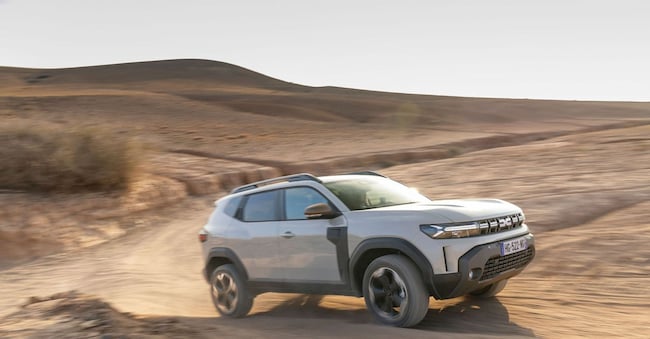
The renewal of the engine range with which Dacia has updated all its models with thermal engines, reinforced by the long-awaited arrival of dual-clutch gearboxes for some of them, culminates with the sophisticated Hybrid G-150 4x4 propulsion system that is at the top of the offer of the Duster and Bigster SUVs. Developed by the Romanian brand, and not inherited as it has been so far from 'mother' Renault like almost all technologies, but which in the future could perhaps equip some of the French brand's models, the system is an absolute novelty that combines low running costs and record-breaking total autonomy with the ability to move optimally in all driving situations and on all types of terrain. We tested it behind the wheel of a Duster mainly in the Agafay desert near Marrakech, Morocco.
Dacia Duster Hybrid G-150 4x4, like 'her' there is none
The technology concentrate of this version of the Duster consists of a 1.2-litre mild hybrid 48V turbocharged three-cylinder with 140 horsepower in a petrol/LPG dual-fuel unit mated to a six-speed dual-clutch gearbox and a rear-mounted electric motor with 31 horsepower and its own two-speed gearbox. One is short to benefit both thrust during acceleration and recovery and the management of traction on low-grip surfaces, and the other is long to push the car up to 140 km/h and, if conditions permit, even in electric mode. In short, they manage the operation of the electric unit according to driving conditions, the five car configurations of which three are dedicated to slippery surfaces and the most demanding off-road situations, tuning as required with that of the mild hybrid engine. In addition, this gearbox automatically shifts into neutral when the electric motor is not needed, thus reducing friction and consumption. The electric motor is powered by a 0.84 kWh battery, which is recharged both when slowing down and, when necessary, by the motor-generator integrated in the thermal unit so that there is no lack of all-wheel drive when needed.
The system, which develops a total of 154 horsepower and 230 Nm of torque, benefits the Duster's versatility of use, resulting in average petrol and LPG consumption of 7.2 and 5.6 litres per 100 kilometres respectively. Considering the two 50-litre tanks, Dacia claims a range close to 1,500 kilometres. The adoption of the rear-mounted electric motor has imposed on the Duster's general architecture only a revision of the rear suspension layout to accommodate it.

