
Dacia Spring, how it looks and goes, the small electric car that costs little
Fresher in look and richer in technology, it now has statutory ADAS, adjustable steering wheel and two-way charging
4' min read
4' min read
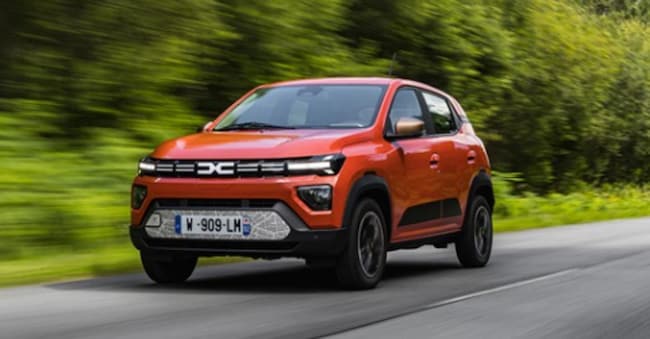
BORDEAX - The electric car for the city, practical and with an affordable price is the theme for 2021 for the Dacia Spring which, after more than 150,000 units sold, is being revamped in the middle of its life cycle with changes to the aesthetics and improvements to the interior, on-board equipment and driveability.
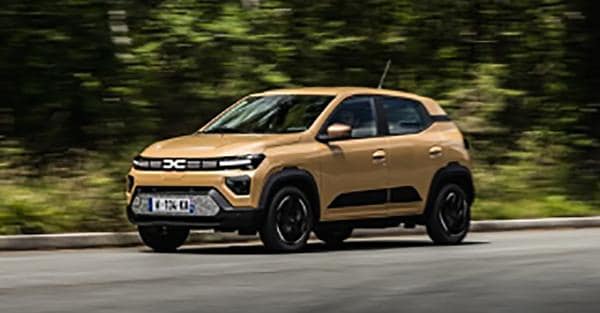
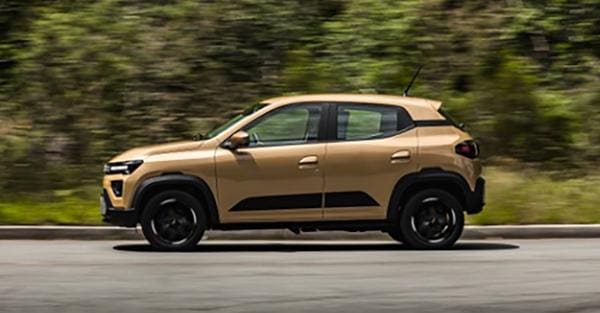
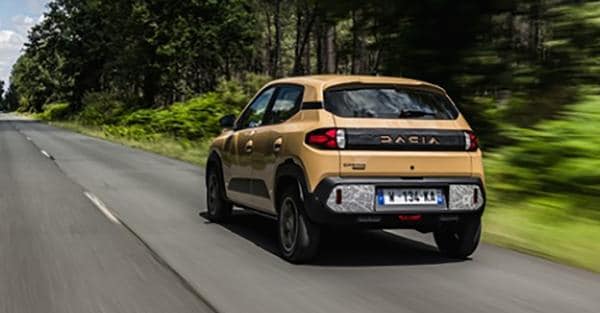
The new features are immediately visible with the front end reminiscent of the other models in the range, the new Y-shaped light signature and the redesigned bumpers that are made of coloured, unpainted plastic to better resist scratches, and also bring a knurled finish. New air intakes, new wheel arches and new tailgate and bonnet behind which there is also more usable space. The luggage compartment capacity has in fact increased to 308 litres (+6%) which can be expanded to 1,004 by folding the backrest down in one piece, while a small 35 litre frunk has been created in the engine compartment. All with roominess and accessibility that is not bad for a crossover that is only 3.7 metres long and, electric or not, is in a size range where the offer has thinned out considerably in recent years. The other visible changes are those related to the colours (two are new) and the wheels, not only in terms of design, but also in terms of size since there are now also 15" diameter wheels.
Loading...
The suspension has been revised and completely new is the steering box, which now also allows steering column height adjustment. The steering wheel is also new, with a hexagonal rim like the Duster and the latest Renault models. The info-telematics part is also taken from its famous sibling, with two solutions: a docking station and an app that allow you to control your smartphone via the controls on the steering wheel spokes, or a complete system with a 10" touch screen, wireless interconnection with devices of any kind, rear view camera and online navigation with eight years' subscription and two USB-C sockets. Charging and climate control can also be programmed via app. The instrumentation now has a 7-inch digital panel and is much richer in information. Another new feature taken from the Duster is YouClip, the system that allows you to anchor certain accessories including a 3D-printed cup holder. In all, there are compartments for 33 litres.
In general, the perceived qualitative improvement is clearly noticeable, with less hard, better matched plastics and a more pleasant and lively choice of shapes and colours, in particular for the dashboard lid, the white and copper-coloured air vents and the new gear lever that, as before, does not have the P position so that to lock the vehicle you have to put it in N and pull the handbrake lever, but has the B position to have more engine braking and recover more energy on release. There are no major changes to the propulsion system, which is centred on the 26.8 kWh (net) NCM battery with a 7 kW charger as standard and the option of a 30 kW DC charger with the novelty of being able to power external devices such as an e-bike, a barbecue or a dinghy pump by means of an adapter to be fitted to the socket (600 euros). There are two motors: one 33 kW and another 48 kW with the paradox that the former has a higher torque and expressed differently (125 Nm between 0 and 2,521 rpm versus 113 Nm between 500 and 4,057 rpm).
Numbers that seem modest, but are part of an overall balance that is the Spring's strong point: lightness at 984 kg. When the facts are put to the test, this makes it possible to have low consumption and to be able to recharge the car even from the domestic socket where the energy needed for daily needs can be recovered in 3 or 4 hours with all the benefits of the case even on energy costs. It is no coincidence that the small Romanian electric has earned Green NCAP five stars. Another important innovation is in the safety equipment with the introduction, by law, of automatic emergency braking, lane keeping systems, driver fatigue alert, emergency call and speed limit warning. There is also a button that allows selective disengagement of ADAS: up to five ADAS can be included in this function.


Brand connect
Loading...
