
From item-by-item calculations to refunds: the EU’s guidance on the €3 tariff on small parcels
Furthermore, a few days ago, the Customs and Monopolies Agency published a circular setting out the requirements
by Lorenzo Pace
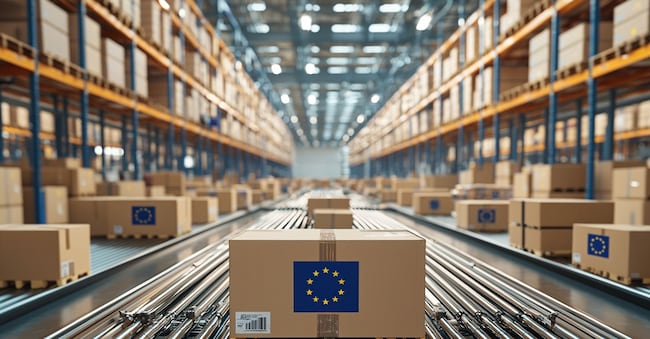
How are tariffs calculated, who pays them, and what happens in the event of a return? With just a few hours to go before the new €3 tariff on mini-parcels from outside the EU comes into force, the guidelines — in a question-and-answer format — published by the European Commission are proving useful.
These guidelines were also reiterated by the Customs and Monopolies Agency in Circular No. 17/2026 of 25 June, which translated those instructions into specific requirements for Italian operators. The picture that emerges clarifies certain points that had remained in the shadows during the public debate.
The calculation mechanism
The first concerns the calculation method. Tariffs are not applied to the parcel but to the individual item, identified on the basis of its tariff classification. The Commission’s guidelines illustrate this with an example: a consignment containing five identical T-shirts is subject to a charge of 3 euros, as it consists of a single product category; a consignment containing one T-shirt and one watch is subject to a charge of 6 euros, as these are two distinct categories. The relevant distinction is therefore not the number of items but the variety of product categories contained in the consignment.
The Adm circular specifies that the levy is linked to the declaration lines: where several goods can be correctly traced back to a single item in accordance with the rules of the customs dataset, the tariffs are applied only once. From a technical perspective, the Q&A clarifies that operators must use one line for each group of goods with the same tariff classification in field H7, with the option to specify the quantity in the ‘description of goods’ field.
Who pays
The second point concerns the party liable for payment. The party responsible for payment is the declarant: the seller or importer of the goods, whether they are an IOSS holder, a beneficiary of special arrangements or their indirect representative. Only in cases defined by the Commission as ‘extremely rare’ does the payment fall to the end consumer, in Member States that offer a free online declaration system for private individuals.

