Art Trips

Dance, music and site-specific sculpture: seven thousand square metres of creative magic

The Nike of Samothrace in the Louvre and Carla Fracci's ballet company. Rossella Bisazza describes the origins of her cultural and philanthropic passion.

by Patrizia Sandretto Re Rebaudengo
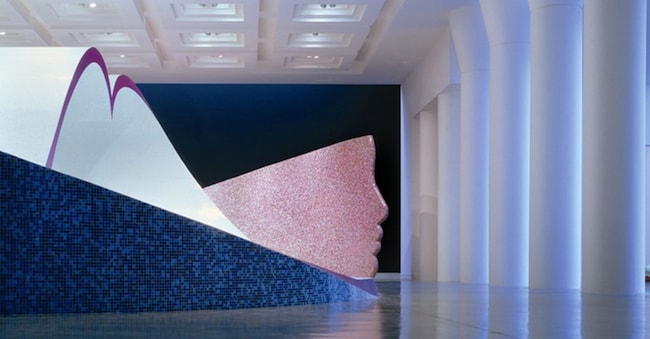
“Love Over All” (2003), di Fabio Novembre. ©Ottavio Tomasini

4' min read

4' min read

Rossella Bisazza grew up surrounded by a love of art and culture. She comes from a family of visionary entrepreneurs: her father Renato founded the company in 1956 in Montecchio Maggiore, in the province of Vicenza, producing a glass mosaic that would soon become a high-end material and an emblem of Made in Italy. Thanks to his far-sightedness and collaborations with designers such as Alessandro Mendini, Patricia Urquiola, Marcel Wanders and Ettore Sottsass, the mosaic stopped being considered a simple wall covering and became a creative language and design surface. After a career in the world of dance, Rossella joined the company and in 2012 took on the role of vice-president of the Fondazione Bisazza, a reality that has transformed the former industrial plant into a cultural institution dedicated to art, architecture and design. We met at the charity dinner she organised for the IEO-Monzino Foundation, of which I have the honour of being president. Rossella showed me an extraordinary collection of site-specific works made with mosaic tiles, signed by international artists and architects, and told me how the passion for art that has accompanied her since childhood has over time become a true cultural and philanthropic mission.
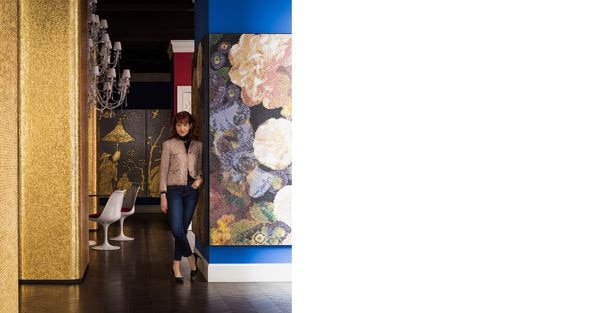
Un ritratto di Rossella Bisazza.

W WHEN AND HOW DID YOU START COLLECTING AND HOW DID YOUR PASSION FOR ART BEGIN?

Loading...

My love for art - as well as for classical music, dance and opera - started when I was a child. My parents used to take me and my siblings to museums, exhibitions, concerts and dance performances. I vividly remember the moment when, at the age of eight, I entered the Musée du Louvre for the first time and was thunderstruck by the Nike of Samothrace. My first choice was ballet, which I practised with dedication until I made it a profession: for twelve years I danced in Carla Fracci's company. The bond with the arts has never been broken and today I continue to cultivate it - and share it - in my role as Vice President of the Foundation that bears our name.
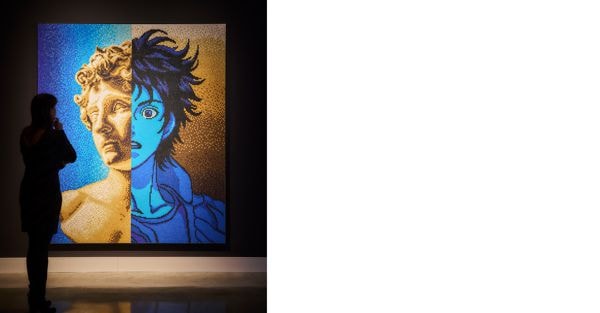
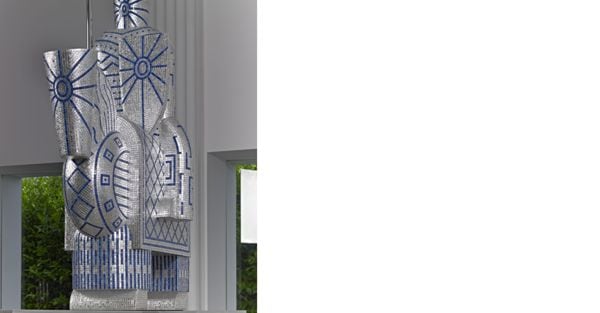
“Fractured Idols VI Mosaic” (2024), di Daniel Arsham. ©Lorenzo Ceretta

HOW WAS THE COLLECTION OF THE BISAZZA FOUNDATION ESTABLISHED AND WHICH CRITERIA GUIDED THE CHOICE OF ARTISTS AND PROJECTS?

The Bisazza Foundation is a private non-profit organisation, open to the public, that was born from the desire to explore the expressive potential of mosaic in a contemporary key. It houses a permanent collection of works and site-specific installations, commissioned over time from leading international artists and designers. Each of them has been invited to freely interpret the mosaic according to their own creativity. The result is a series of unique works, surprising in their diversity and intensity, which tell of all the versatility of this material, capable of dialoguing with very different languages and sensibilities.
HOW WAS THE IDEA BORN TO TRANSFORM THE FAMILY INDUSTRIAL SPACE INTO AN ART FOUNDATION AND WHAT WERE THE MAIN CHALLENGES?

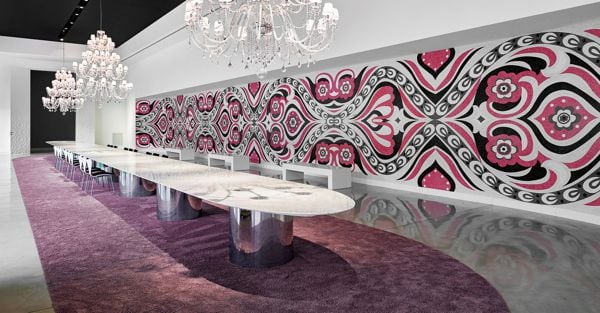
In order to best accommodate the works, all of monumental dimensions, it was necessary to work on the industrial spaces, which cover a total area of 7,000 square metres, to transform them into large exhibition halls. The conversion involved a complex architectural and structural redevelopment work, which lasted several years.

la Sala Pucci della Fondazione Bisazza. ©Matteo Imbriani

PHOTOGRAPHY HAS AN IMPORTANT FOCUS IN YOUR COLLECTION. HOW DID THIS INTEREST COME ABOUT AND HOW DOES IT TRANSLATE INTO YOUR PROJECTS?

My interest in photography was born thanks to my brother Piero, President of the Foundation, who strongly wanted the Photography of Architecture collection, a reflection of his personal passion and the dialogue between the photographic image and architecture. This section brings together works by great masters such as Hiroshi Sugimoto, Nobuyoshi Araki, Gabriele Basilico, Candida Höfer, Axel Hütte and Julius Shulman, to name but a few. Our commitment to photography is not limited to the permanent collection and images related to the architectural landscape: among the temporary exhibitions we have hosted, I would like to mention the retrospective dedicated to Norman Parkinson, who revolutionised the language of fashion photography. An exhibition that retraced twenty years of his career through visionary shots, in which models no longer pose in studios, but come to life in new and unexpected contexts - streets, beaches, exotic places - anticipating a sensibility that is more relevant today than ever before.

“Il Cavaliere di Durer” (2011), di Alessandro Mendini. ©Lorenzo Ceretta

WHAT ARE THE MAIN GOALS OF THE FOUNDATION TODAY?

The Bisazza Foundation was set up with the aim of increasing attention and sensitivity to the knowledge of mosaic art, a very ancient discipline that has its roots in the classical world. In fact, the term mosaic derives from the Latin opus musivum, meaning work of the Muses, in reference to the patron divinities of the arts.

The FOUNDATION OFFERS AN IMPORTANT EDUCATIONAL PROGRAMME, AIMED ESPECIALLY AT THE YOUNG GENERATIONS. CAN YOU TELL US ABOUT IT?

The Bisazza Foundation not only addresses an adult public, but also devotes great attention to the younger generations. Since its opening, it has wanted to be an open space, capable of welcoming children, young people and university students on a path of approach and discovery of art and design through the works on display. Every week we organise guided tours and creative workshops designed for young children, so that they can activate their imagination and experience mosaics first-hand. The tesserae, colours and shapes become tools for play and knowledge: a way of educating the eye and enhancing manual skills.

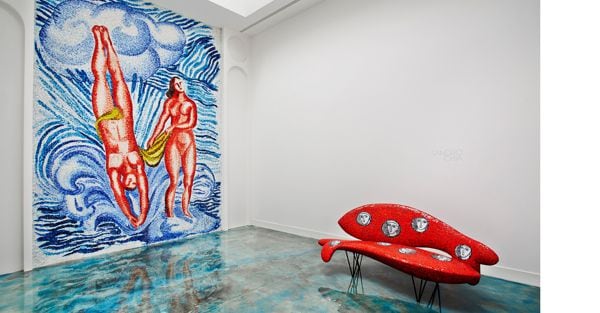
“Bagnanti Intelligenti” (2002) e Divano a mare 2003, di Sandro Chia. ©Matteo Imbriani

WHICH ARE YOUR FAVORITE ADDRESSES FOR A VACATION IN THE SURROUNDINGS OF THE FOUNDATION MUSEUMS, HOTELS, RESTAURANTS, SHOPS NOT TO BE MISSED?

I love visiting the architectural and cultural wonders of Vicenza: the Olympic Theatre and Villa La Rotonda by Palladio, the Jewellery Museum, located inside the Palladian Basilica, and the Gallerie d'Italia in Palazzo Leoni Montanari. For a special lunch or dinner, I choose the Garibaldi restaurant, where star chef Matteo Grandi reinterprets tradition in an eclectic key. For shopping, I recommend Atelier di Clara Vatrella, in Palazzo da Schio.

Copyright reserved ©
Loading...
Loading...

Newsletter

Notizie e approfondimenti sugli avvenimenti politici, economici e finanziari.

Iscriviti