The interview

Pirondini (Amundi Us): 'Dangerous valuations: there is a speculative bubble on the Magnificent 7'

by Morya Longo
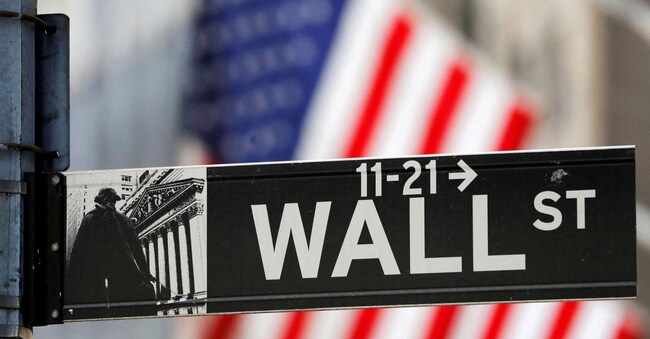
Concentrazione. A Wall Street 10 aziende pesano per un terzo dell’indice

3' min read

3' min read

"In some sectors of the financial markets I believe there are speculative bubbles. Today, the Wall Street index is concentrated on a few companies as never before in history: 34% of the S&P 500 is made up of only 10 companies. This, in my opinion, is a risk factor with 500 red lights. In the past, when the stock market exceeded certain concentration thresholds, normalisation always came". Marco Pirondini, chief investment officer of Amundi Us, goes against the tide and speaks openly of a speculative bubble on big tech. "Wall Street's rally has been limited to a few companies, such as the magnificent 7," he observes. "But with rate levels so high, I believe their valuations are dangerous. By now, the time horizons of investors are too short: this pushes traders to focus on the details, but to lose sight of the elephant in the room'.

Let's start with the elephant then. In fact, from the seven elephants. The high valuations are justified by the fact that these are not new companies, as was often the case during the 2000 bubble. Here we are talking about giants grinding out tens of billions in profits every quarter. Strong realities, in short.

Loading...

True, but that does not mean that there are no risks. For example: what will be the role of regulation on these companies? Will it always be accepted by the public and politicians that these big tech companies make so much profit and are so powerful? I mean that dynamics may emerge in the future that can change the growth rate of their profits. Think of Intel: it used to be a monopolist, today it has lost its edge. Are we sure that the same thing cannot happen to the other big techs?

Are there other slices of the market at risk?

Spread products, such as corporate bonds. Because, despite high rates, spreads are very low. This is a cause for concern, so we underweight the sector.

If spreads are low there must be a reason...

Of course: the reason is that there is still an incredible excess of liquidity in the market. Central banks have been injecting liquidity for years to drive up asset values. Now they are draining it, but actually very little: there is still plenty of it. And when there is too much liquidity, where does it go? On speculation. Add to that the rosy mood of investors and you can see that spreads and financial conditions in general are too accommodative. That is why on some asset classes there are bubbles in my opinion. But not on all of them: most of the market today presents opportunities.

For example? .

For example, stock markets outside the United States. The difference in valuations with the Wall Street stock market is huge. And then I think today it makes sense to move more to value.

One of the big issues in the markets is the inflation trend. Is it really going down in your opinion?

I believe that central banks' rate hikes are slowing down economic activity: in the short term this will bring inflation down. But in the long term inflationary pressures remain strong.

Why?

Because there are epochal phenomena that push it up, even if they are balanced by phenomena that contain it. But, when the two forces are added together, I believe that we will not see the low inflation of the last 15 years again.

What are the inflationary phenomena?

Geopolitics above all. The world is becoming multipolar and this is forcing companies to rethink their supply chains to make them more secure. Whereas in the past relocation was only done to reduce production costs, today one must also think about security. And this increases costs. The energy transition is another inflationary factor, as is the ageing population. Reducing the labour force, in fact, by definition creates upward pressure on wages and prices. There is, however, the technological transition and the AI revolution that have a deflationary effect. It is therefore difficult to estimate the impact of all these forces combined today, but inflation will certainly not return to the levels of recent decades.

Copyright reserved ©
  • Morya Longo

    Morya LongoVicecaposervizio

    Luogo: Milano

    Lingue parlate: Italiano, inglese

    Argomenti: Finanza, mercati azionari e obbligazionari

    Premi: Vincitore del premio State Street 2018 – Giornalista dell’anno, autore del miglior scoop

Loading...

Brand connect

Loading...

Newsletter

Notizie e approfondimenti sugli avvenimenti politici, economici e finanziari.

Iscriviti