
Daniele Kihlgren, the man who turned a village into a hotel
The entrepreneur who transformed the Abruzzo village of Santo Stefano di Sessanio into an international model of hospitality – saving the houses, honouring the past and inventing a new form of luxury – has passed away

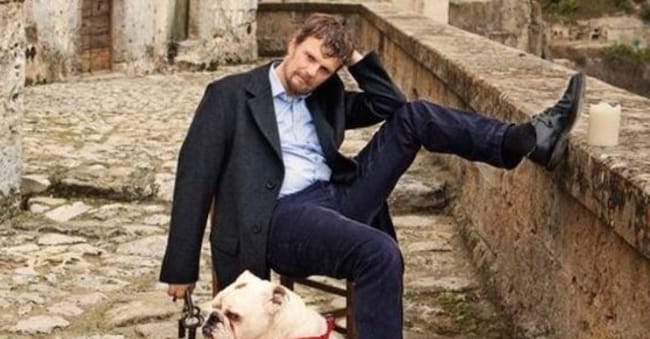
Sometimes, the best ideas come disguised as eccentricity. Daniele Kihlgren – who passed away today aged 60 after battling HIV throughout his life, having contracted it from a needle when he was 19 (we take the liberty of mentioning this, as you never made a secret of it, even going so far as to recall it in your autobiography, *The Torments of Young Kihlgren, Acts One and Two*, published by Baldini+Castoldi) – possessed that particular kind of intelligence which enables one to recognise an idea before the world has found the words to define it. When he arrived in Santo Stefano di Sessanio, in Abruzzo, in the late 1990s, he saw not merely an ancient village, nor a handful of houses to save from dereliction, but a hotel and – above all – a different way of conceiving it: not to build a new structure, but to take the village as it was, house by house, room by room, and transform it into a place of hospitality without erasing its memory. Thus Sextantio was born, one of the most successful and visionary projects in Italian hospitality. The idea was to distribute the rooms amongst the village’s homes, to turn the distance between one house and another into the hotel’s corridor, the square into its lobby, and history into its décor. The result was hailed by the international press as a radical innovation, even capturing the attention of The New York Times.
Success came, but later. First came the ingenuity of the project. He did not, therefore, invent the ‘albergo diffuso’, but he brought it to a fully-fledged, radical and international form, taking an existing idea and refining it to such a degree of perfection that it became a globally recognised model. Kihlgren – whom I have met many times over nearly 20 years – had realised that true luxury could be precisely what the hotel industry had almost always sought to eliminate: imperfection, individuality and the passage of time. The rooms at Santo Stefano retained (and still retain) the stones, the wood, the ironwork and the objects of everyday life. The heating is concealed beneath the floor; the technology remains invisible, leaving the materials themselves to tell their own story. You can sit on the terrace even in the coldest seasons, with ice and snow, enveloped in a comfort that needs no showing off. Even the smallest details adhere to this philosophy. The toothbrush is made of wood; the toothpaste reflects an almost archaic and natural approach to personal care; the rooms are lit mainly by candles; guests wash in a basin set within a bath; and the blankets and fabrics are typical of the local tradition. The walls, dark as if the smoke from the fireplaces had deposited its soot there over decades, retain that patina without compromising on cleanliness. Everything seems antique, yet nothing is left to chance, for it is the result of meticulous design – the most difficult kind: the kind that must remain unseen. The anthropological work of Annunziata Taraschi, the hotel’s manager, was also fundamental; she helped to reconstruct the material culture of Santo Stefano and Abruzzo through objects, customs, testimonies and craft techniques. The women of the village thus once again became the custodians of a body of knowledge that time threatened to erase, and the fabrics, blankets, utensils and domestic practices were incorporated into the project not as folkloric decoration, but as authentic fragments of a civilisation. Thanks to him, the village has become a veritable cultural entity. Born in Milan, the son of a Swedish entrepreneur and a mother from the Miklesi family of Abruzzo – linked to the cement works in Pescara – Kihlgren came from a northern entrepreneurial background where the word ‘development’ had long held an eminently industrial meaning. He was exceptionally skilful at harnessing that energy and applying it to a seemingly opposing idea: creating value without exploiting the place, doing business through conservation, and demonstrating that the past can be an economic resource without becoming a commodity stripped of its identity. After Santo Stefano came Matera, with Sextantio Le Grotte della Civita. Here, the principle found an even more extreme setting: rock-cut dwellings, hewn stone and subterranean spaces. Once again, the project did not impose an image on the site, allowing the site itself to suggest its own form. Later, Kihlgren brought this same sensibility to Africa, culminating in the Nkombo project in Rwanda, where hospitality was interwoven with social initiatives and an increasingly explicit focus on the poor and local communities. Business and philanthropy thus came to be part of the same concept of responsibility. He devoted himself to fundraising and supported healthcare projects and initiatives aimed at the most needy, focusing particularly on those parts of the world where poverty is not a sociological category but a daily reality.
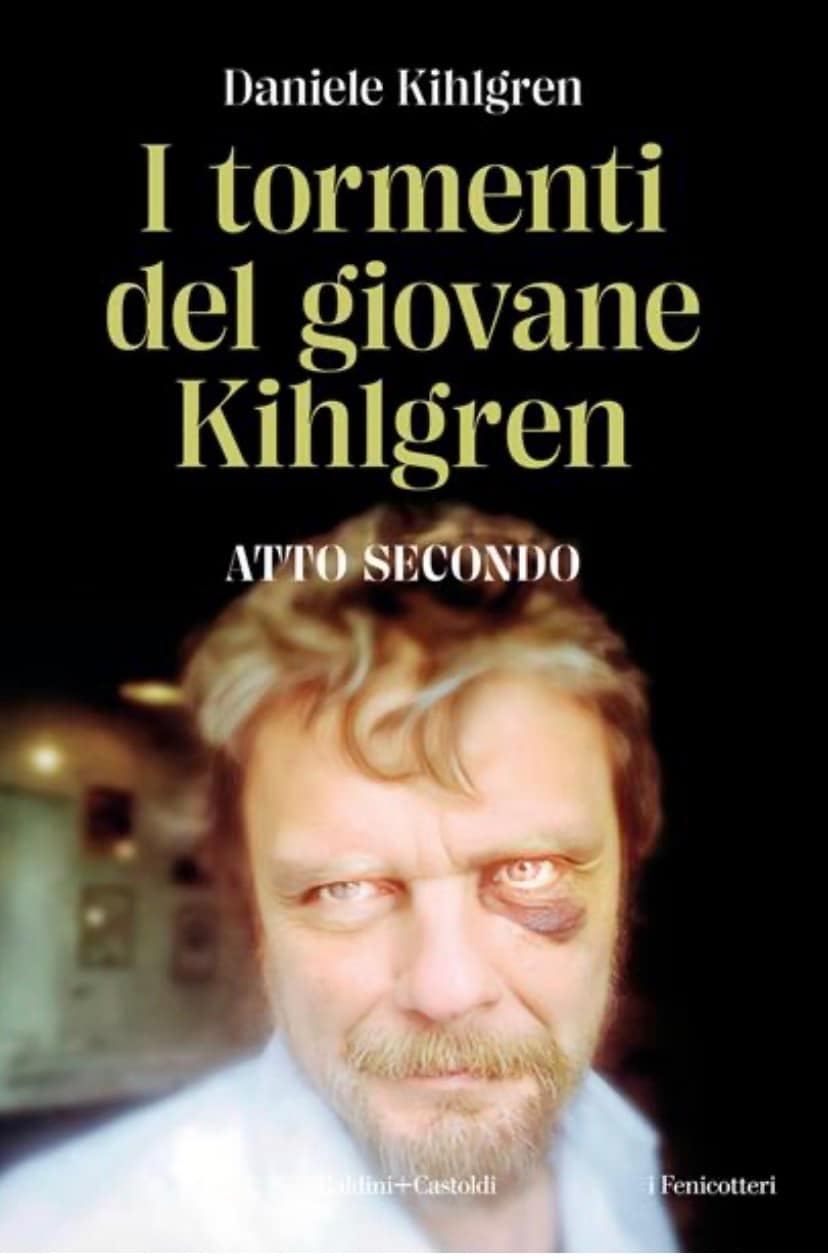
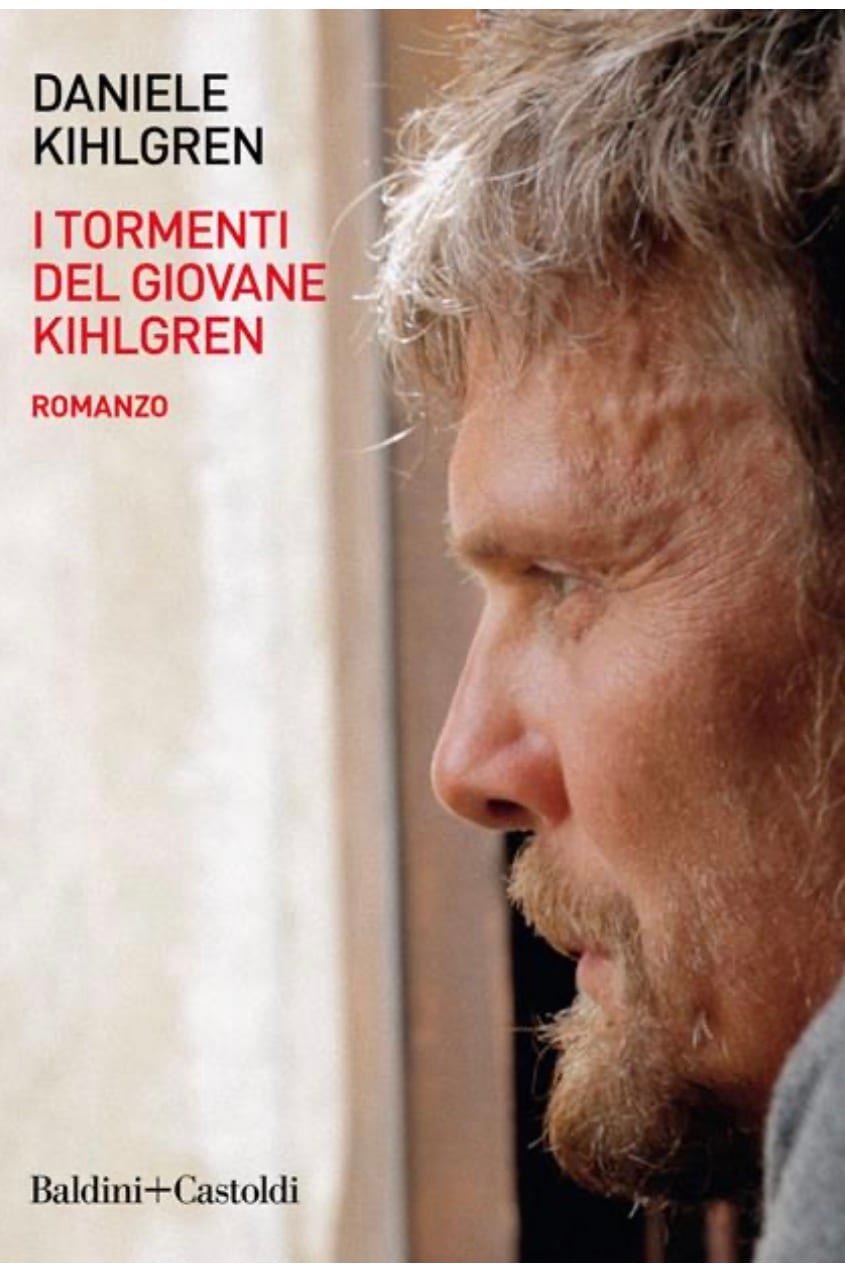
His autobiography, as mentioned, published by Elisabetta Sgarbi, recounts with irony and a certain bluntness the journey of this entrepreneur who was not one for convention. The book, too, ultimately suggests a personality resistant to celebratory formulas, and this is perhaps why it is fitting today to remember him through the things he left behind rather than through adjectives. Santo Stefano di Sessanio remains his most eloquent work: a lesson in style even before it is one in architecture, business or tourism; an Italian lesson in the highest and least rhetorical sense of the term; the symbol of an idea – his own – that a place’s economic value is proportional to the depth of respect shown towards it. It is a simple thought and, for that very reason, still revolutionary. Perhaps the most fitting way to remember him is precisely the one he would have preferred: to look at an old stone, realise that it is still there, and understand that someone had the wisdom not to replace it.

