
Data centres: a look inside Microsoft’s facility in Settala
The group is looking into new investments in northern Italia

Key points
- In the data centre
- Three infrastructure projects in Lombardy
- Government strategy
- Community protests
- Water and energy
- Generators
- Boston Consulting Group
Once you’ve put on your high-visibility vest, safety shoes, goggles and earplugs, you enter the realm of data. Where calculations are transformed into services. And cables into artificial intelligence. Welcome to the heart of the Microsoft data centre in Settala, some twenty kilometres from Milan.
In the data centre
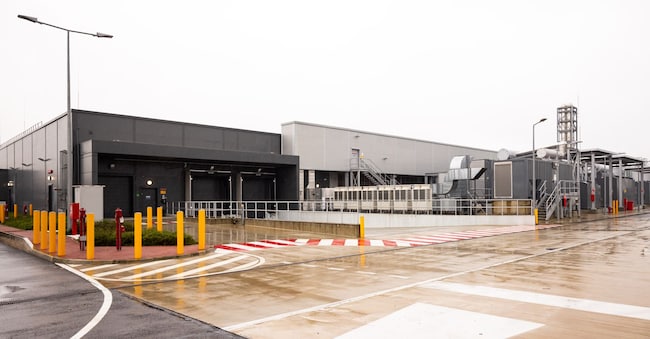
Once the large security door has been opened and you’ve passed through the metal detector checks, the vault of our times swings wide open. Where almost everything is top-secret. Corridors and rows of metal cabinets – the racks – are filled with servers that power the cloud. And so, potentially, they hold the keys to all the services that are now part of our daily lives, from public administration to medical appointments, digital payments and video calls. Spanning 5,000 square metres, the data hall is the control room of the Mil 01/02 campus, namely the Settala data centre with its two facilities built along the Paullese, a main road lined with warehouses in the midst of Black Friday and trees in flamboyant autumn colours.
Three infrastructure projects in Lombardy
There are three computing facilities, all in Lombardy , in which Microsoft has announced investments totalling 4.3 billion. “We’re not ruling out others, not necessarily here,” Vincenzo Esposito, CEO of Microsoft Italia, told IlSole24ore. Not in Lombardy, but ‘not in the South’: the focus ‘at present’ is, however, on other areas in the north of the peninsula, ‘for a connectivity ecosystem and greater proximity to the rest of Europe’. And thus to other potential customers. An apparent contradiction in a world of ‘virtual clouds’ and digital connections.
Government strategy
Southern Italy, on the other hand, is at the heart of the government’s strategy: on Tuesday, the “national guidelines for the siting, construction and management of data centres in Italia” – as stated in the header of the ten-page document (see Il Sole 24 Ore, Saturday 21) – were forwarded by the Under-Secretary to the Prime Minister’s Office, Alessio Butti, to Mase and Mimit. This is the first step towards classification, because “data centres,” he says whilst visiting the one in Settala, “are not all the same”. In total, there are around 200 already operational in Italia, in a ‘Wild West’ of authorisations from local authorities, caught between companies’ requests and, not infrequently, protests from local communities.
Community protests
As in San Bovio, a hamlet of Peschiera Borromeo, where Microsoft has been granted permission to build on the derelict site of the former Postalmarket. The third is in Bornasco, in the Pavia area, where authorisation has been granted for the first building.


