
Data centres, Lombardy law focuses on incentives and urban regeneration
The aim is to push developments on brownfield sites. Charges for greenfield land increase, but urban planning costs are lower for the productive uses to which the structures will refer
by Rossella Savojardo
 Aggiungi Il Sole 24 Ore
ai preferiti su Google
Key points
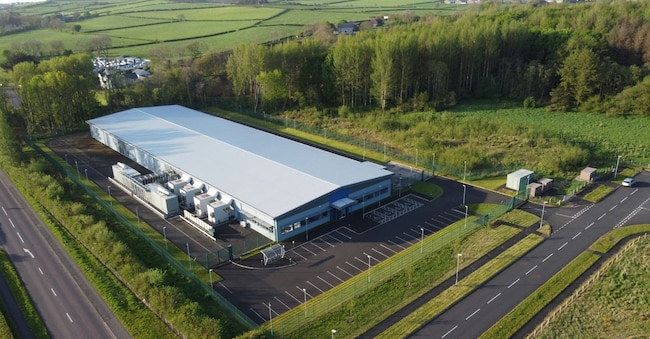
Lombardy is drawing up its own regulations on data centres and is the first in Italia to do so. The objective of the new regional law, approved on 26 May, is to direct data centres towards disused areas for productive use. However, it does not exclude the possibility of settlements also in green or agricultural areas, subject to the payment of higher charges.
One of the main changes is that the law gives the region jurisdiction over single authorisations. This is a novelty given that 'until now, under the threshold of 300 MW thermal power, the competencies on the subject of AIA - and therefore of single authorisation - remained provincial,' explains Silvia Gnocco, partner and co-founder of the SI-Inzaghi studio. Interventions with a power exceeding 10 MW will be qualified as being of supra-municipal relevance and will require the stipulation of a special territorial agreement; if the power exceeds 50 MW, on the other hand, the Region will be responsible for the consultation conference.
Production use
At the same time, strict technical standards are imposed: each project must include an energy report focusing on renewables and waste heat recovery, as well as a ban on the use of drinking water for cooling in favour of recycled and high-efficiency systems. The legislation also introduces a regional counter for data centres and a permanent steering committee to monitor the development of the sector and its energy impact. In the measure, Lombardy identifies data centres exceeding 5 MW as production facilities. "This is the first time in the national panorama that an explicit destination of use has been introduced, up to now some developments had been included in the destination of directional use. The qualification has an impact in terms of urban planning charges: in fact, the productive use envisages significantly lower costs than the office use. In Milan, for example, charges for productive use are around 368 euro per square metre, compared to around 751 euro for office use. The latter category also envisages an additional contribution linked to the cost of construction, equal to about 10% of the estimated metric calculation, which does not apply to productive settlements.
Incentives or increased charges
While the burdens on this front are lower, they will increase in the case of greenfield developments. In fact, the law provides for a 100% increase in charges for interventions on agricultural land and 200% for parks or nature reserves. Specific bonuses are also foreseen for interventions in disused areas, such as the reduction of the surface area allocated to appurtenant parking spaces by 50 per cent (which municipalities can raise to 75 per cent), priority and acceleration of procedures in the allocation of regional funds. From the entry into force, municipalities will have 365 days to survey and map their disused and degraded areas. Compliance will be a bonus criterion for the disbursement of resources, but companies will still be able to submit applications for interventions in those areas.
A standard to accompany the transition
The real relief for operators concerns the transitional rule: 'In the initial version of the text it was foreseen to freeze, until the approval of future regional guidelines, the authorisation procedures presented in the 60 days preceding the law's entry into force,' Gnocco explains. 'A not insignificant obstacle, which without modifications would have created an enormous blockade, stopping many operations for at least six months. However, an amendment has been incorporated into the text of the regulation that mitigates the blockage and accompanies the transitional phase: instances that are already underway (both those relating to environmental assessment procedures and those for implementation planning and building permits) will be able to continue according to the current rules, while those submitted after the publication of the implementation guidelines in the regional bulletin will follow the new regulatory framework.
Brand connect


Newsletter RealEstate+
La newsletter premium dedicata al mondo del mercato immobiliare con inchieste esclusive, notizie, analisi ed approfondimenti
Abbonati